DeepSeek and MiniMax Just Cleared China’s New AI Export Rules — Here’s What That Actually Means
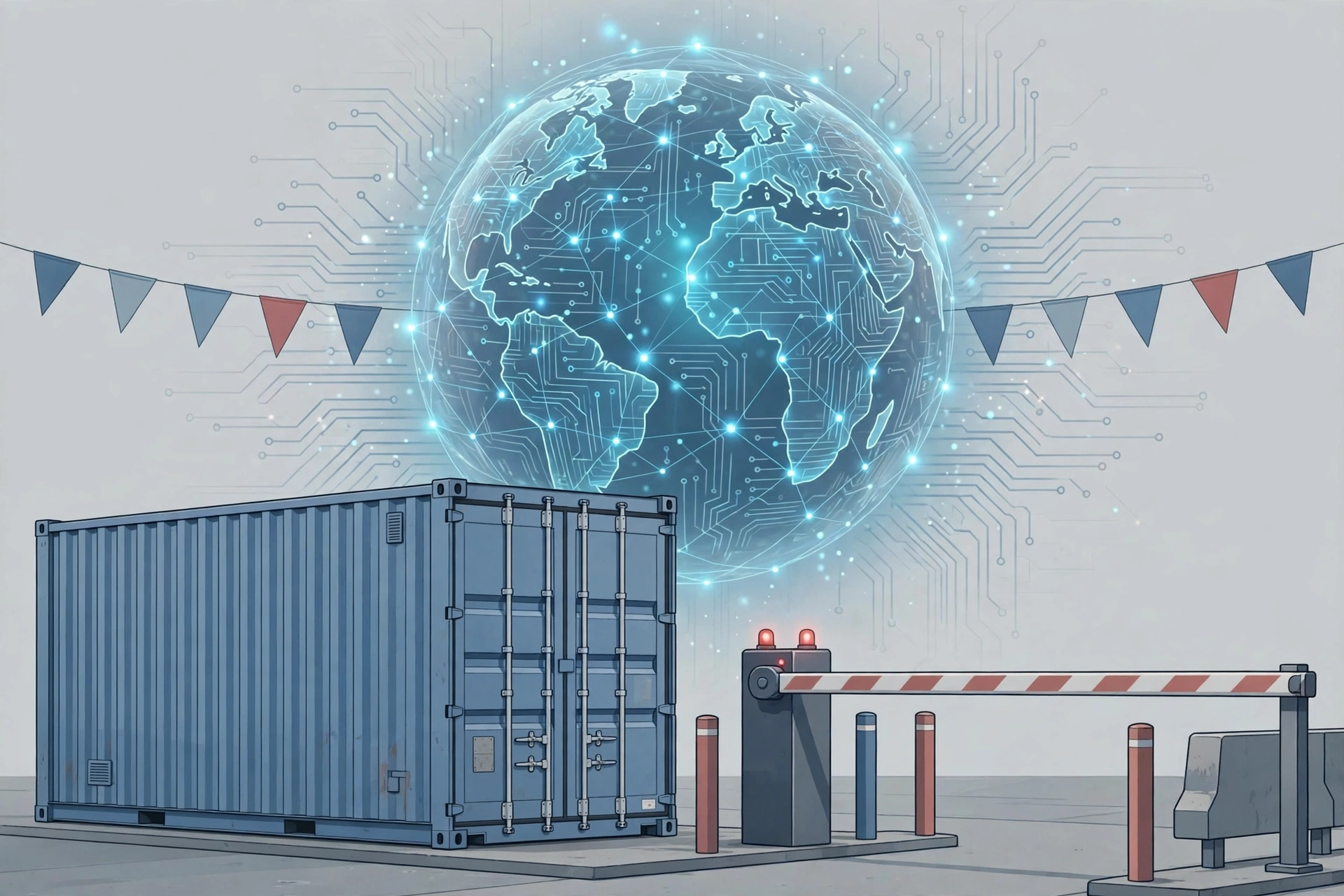
Key takeaway: DeepSeek and MiniMax have become the first Chinese AI developers to complete registration under Beijing’s new AI technology export rules, clearing them to keep releasing open-source models and licensing them overseas. The move, confirmed on October 22–23, 2026, signals that China’s controls are designed to track sensitive AI transfers — not to shut down its open-source AI ecosystem.
What happened
On October 23, 2026, MiniMax Group told the Hong Kong stock exchange it had “duly completed the technology export registration procedures with the Ministry of Commerce required for the open-source release and overseas licensing of certain recently released and upcoming models.” The filing, signed by chairman Yan Junjie, did not name the models covered.
A day earlier, Yuyuan Tantian — a social media account affiliated with state broadcaster CCTV — reported that both DeepSeek and MiniMax had won state approval for global use of their AI models. Reuters reported the claim on October 23, noting that DeepSeek did not immediately reply to its request for comment. MiniMax’s own exchange filing, which followed a day later, independently confirmed its side of the story.
The practical result: both labs can continue to publish open-weight models and license them to users outside China while the new rules are still in draft form.
The rule behind the registration
On October 16, 2026, China’s Ministry of Commerce (MOFCOM) and Ministry of Science and Technology published a draft revision of the Catalogue of Technologies Prohibited or Restricted from Export, opening it for public comment until November 15. The draft proposes adding 40 technologies: 23 in artificial intelligence, 12 in photovoltaics and five in biomedicine. The AI items cover large models, AI agents and computing clusters.
According to the MOFCOM spokesperson, 14 of the 40 technologies would be prohibited outright and 26 would be restricted, meaning exportable only under licence. The same announcement introduced an immediate, temporary pre-export registration requirement: until the revised catalogue takes effect, a Chinese technology exporter must register a listed technology on MOFCOM’s platform before exporting it. That requirement covers assignments of technology to an overseas party, licences for use overseas, and cases where the owner or actual controller of the technology becomes an overseas entity.
This is the registration DeepSeek and MiniMax have now completed. It is not the same as a restrictive licence — the catalogue itself is still a consultation draft, and registration is a separate, lighter step.
What the rules do not cover
The most important detail for ordinary users is what stays outside the controls. China’s commerce ministry has said that most AI technologies will remain freely exportable, and that open-source exports will qualify for simplified or automatic licensing. It has also clarified that serving a model through an API, a website or a mobile app does not count as exporting the underlying technology — so a developer abroad who calls DeepSeek’s API, rather than downloading its weights, is unaffected either way.
MiniMax has also introduced a licence application route for local deployment of its models in certain overseas regions, a sign that the company expects some country-by-country paperwork even as open-source releases continue.
Why this matters
DeepSeek and MiniMax are two of the most widely used open-weight model makers in the world. When Beijing proposed the controls on October 16, developers outside China reasonably asked whether the next DeepSeek or MiniMax release would be delayed, restricted or pulled from global distribution. The registrations answer that question, at least for now: the pipeline stays open.
The approvals also set a precedent. Other Chinese open-source labs — including Alibaba’s Qwen team, Zhipu AI and 01.AI — have not yet been reported as completing the same process, and overseas users have publicly urged them to follow suit. How quickly they register will show whether this becomes a routine compliance step or a selective gate.
There is a geopolitical backdrop, too. Beijing describes the controls as a national-security measure to limit transfers of tools it views as vital, amid competition with Washington. They also mirror years of US restrictions on advanced chip sales to Chinese companies, which began in 2022 and have intensified since. The timing is notable: just this week, Moonshot AI’s Kimi K3.1 Pro landed near the top of global AI benchmarks, underlining how much of the open-model frontier now runs through Chinese labs.
Knowns, unknowns, and what to watch
Known: MiniMax completed export registration for certain models, confirmed by its own Hong Kong exchange filing. Yuyuan Tantian reported DeepSeek did the same. The draft catalogue covers 23 AI technologies and is open for comment until November 15, 2026. APIs, websites and apps are excluded, and open-source exports get a simplified route.
Unknown: Which specific models MiniMax registered — its filing does not say. DeepSeek has not itself confirmed its registration publicly. It is also unclear what the final catalogue will look like after the comment period, or whether any category now listed as “restricted” will end up prohibited.
What to watch: Registrations from Qwen, Zhipu and other Chinese labs; the final catalogue after November 15; and whether any future model release is delayed by the new paperwork. For users, the practical advice is simple: models already public stay public, and nothing in this week’s news requires changing which tools you use.
What this means for you
If you build with, study, or simply follow open-source AI, this is a green light rather than a warning. DeepSeek’s and MiniMax’s models remain available to download, fine-tune and deploy, and the registration process appears designed to be completed quickly rather than to block releases. The risk to watch is not this week’s approvals but the final catalogue: if the draft’s restricted list survives intact, future frontier models could face licence checks before they can be exported — a friction that open-source developers will need to plan around.
The broader pattern of the week is also worth noting. From OpenAI cutting frontier training off the live internet to Nvidia packaging whole AI data centers into shipping containers, the AI industry is moving from open experimentation to controlled infrastructure. China’s export registration is the policy version of the same shift.
Sources
- Reuters: China’s DeepSeek, MiniMax win approval for AI global use, state media-affiliated entity says (October 23, 2026)
- SRN News / Reuters: China’s MiniMax completes export registration for open-source, overseas AI model licensing (October 23, 2026)
- Recatools: MiniMax, DeepSeek register AI exports under China rule (October 25, 2026)
- AI Affairs: DeepSeek and MiniMax complete registration under China’s draft AI export rules
- SiliconReport: DeepSeek and MiniMax complete Chinese export registration (October 22, 2026)
Frequently asked questions
What did DeepSeek and MiniMax actually register for?
They completed technology export registration with China’s Ministry of Commerce, covering the open-source release and overseas licensing of certain recently released and upcoming models. MiniMax confirmed this in a Hong Kong stock exchange filing on October 23, 2026, and the state-media-affiliated account Yuyuan Tantian reported on October 22 that both labs had won approval for global use of their models.
Does this mean China’s AI export controls ban open-source models?
No. The rules are a draft catalogue open for comment until November 15, 2026, and China’s commerce ministry has said most AI technologies will remain freely exportable. Open-source exports qualify for simplified or automatic licensing, and access through APIs, websites and apps does not count as an export of the underlying technology.
Which technologies are covered by the draft controls?
The October 16 draft proposes adding 40 technologies to China’s export catalogue: 23 in artificial intelligence, 12 in photovoltaics and five in biomedicine. The AI items include large models, AI agents and computing clusters. According to the commerce ministry spokesperson, 14 of the 40 would be prohibited outright and 26 restricted to licensed export.
Why did China introduce these controls now?
Beijing frames them as a national-security measure to limit transfers of tools it views as vital, amid geopolitical competition with Washington. They also mirror years of US restrictions on advanced chip sales to Chinese companies, which began in 2022 and have intensified since.
What should developers and users watch next?
Whether other Chinese labs such as Alibaba’s Qwen team, Zhipu AI and 01.AI complete the same registration, what the final catalogue looks like after the November 15 comment deadline, and whether any model release gets delayed or restricted once the rules are final. For now, DeepSeek and MiniMax models already in public use are unaffected.