Apple Launches a 200,000-Person Study to See How People Use AI for Health
Key takeaway: Apple announced the Apple Health AI Usage Study on November 15, 2026 — a US-only research project with clinical AI company OpenEvidence that will enroll up to 200,000 iPhone users to learn how people understand, trust, and act on AI-generated health answers. It is research, not a new Health app or Siri feature.
What Apple announced
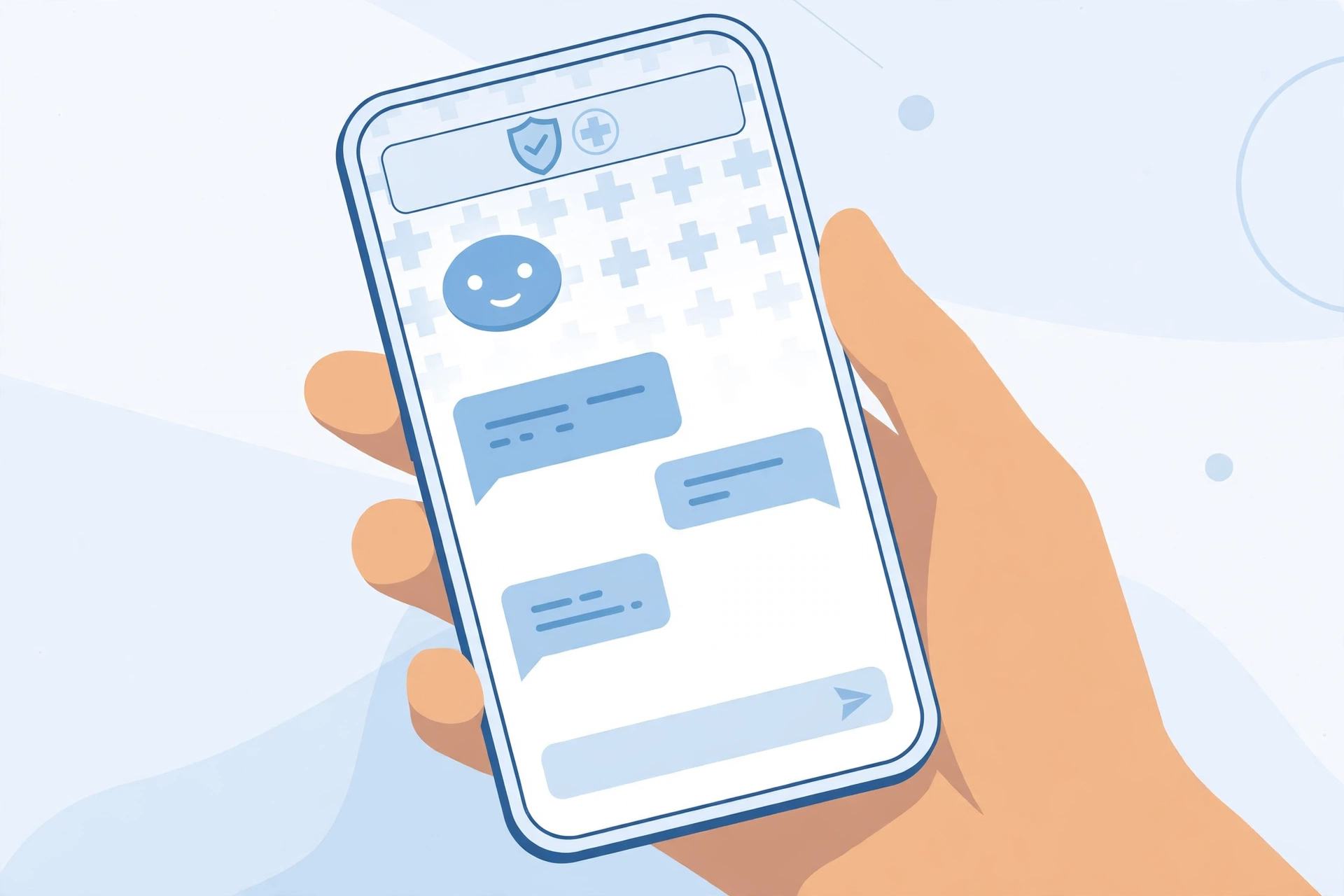
Apple launched the Apple Health AI Usage Study in the United States on November 15, 2026, together with a dedicated iPhone app. The study is a virtual research project, not a product launch: its stated goal is to examine what drives user trust, the quality of AI responses, comprehension, and the everyday health actions people take after asking a chatbot a health question. Apple says the findings should inform the responsible design of health AI experiences for Apple and the wider industry. The announcement was published by Apple Newsroom and independently covered by TechCrunch.
The answers participants receive do not come from Apple’s own models. They are generated by OpenEvidence, a clinical AI platform widely used by healthcare professionals, which draws on medical information from established sources including The New England Journal of Medicine, the Journal of the American Medical Association, and Nature. Apple designed the research experience around that technology, and every answer carries linked, peer-reviewed clinical citations.
How the study works
Participants use a separate study app — not the Health app and not Siri — to ask everyday health questions in plain language. They can explore complex medical information written in approachable language, and they rate each answer on accuracy, detail, and relevance, along with monthly surveys about how they used the information. Participants can also choose to share HealthKit data, such as resting heart rate, activity, sleep, or lab results, to explore how personal data changes the relevance and understanding of answers.
Enrollment is open to up to 200,000 eligible participants aged 21 and older across the United States. To join, participants need an Apple Intelligence-enabled iPhone — iPhone 15 Pro or later — running iOS 26 or later. The study is expected to run for more than 12 months, with participants staying for up to 12 months. The app is available to download now for US users.
What the study will — and will not — do
Apple built the study around three commitments. First, study data will not be used to train AI models. Data is anonymized before it is sent to a secure third-party cloud provider, and OpenEvidence deletes query and response data after 24 hours. Second, participants keep control over whether to share any HealthKit metrics or survey responses. Third, the app has safety guardrails designed to detect certain concerning questions and suggest that the participant follow up with a healthcare provider or other resources.
The limits matter as much as the features. The study app is not meant to diagnose or treat any condition, and it does not replace the advice of medical professionals. Apple says it is studying understanding and trust — not clinical outcomes. As Sumbul Desai, Apple’s vice president of Health and Fitness, put it: “At Apple, we believe responsible innovation starts with scientific rigor and clinical grounding. Health is deeply personal, and conducting a dedicated research study is the most thoughtful way to understand how people engage with, comprehend, and evaluate health AI in everyday life.”
Why Apple is doing this now
People already ask chatbots health questions at enormous scale. OpenAI has said ChatGPT fields around 300 million health-related queries a week, according to TechCrunch’s reporting, and both OpenAI and Anthropic have added health-focused features to their chatbots. Apple is the notable holdout: it has no AI health-answer feature in the Health app or Siri, and it has said nothing about adding one. This study is how Apple catches up on evidence before it ships anything.
The clinical angle is the point. Most health chatbots answer from general web training data; OpenEvidence’s answers are grounded in peer-reviewed literature that doctors already use. Robert M. Wachter, professor and chair of medicine at UCSF, framed the gap in Apple’s announcement: “Patients and clinicians are both turning to AI, but the tools they use are being built and tested in separate worlds. When patients and doctors draw on versions of the same trustworthy tools, patients arrive prepared, conversations improve, and next steps happen seamlessly.”
What is still unknown
Apple has not said whether the study will lead to AI-generated health answers in the Health app or Siri, or when results will be published. The 200,000 figure is an enrollment cap, not a count of people who have signed up. And because the study measures trust and comprehension rather than clinical outcomes, it will not by itself prove that AI health answers make people healthier — only that people understand and act on them in particular ways. Those are the questions to watch over the next year.
Analysis: research first, product later
Analysis: Apple’s move is characteristically cautious, and that is the story. Rather than bolting a health chatbot onto Siri and learning from complaints, Apple is spending a year and up to 200,000 participants learning how ordinary people judge AI health answers before it commits to a product. The bet is that clinically grounded answers, transparent sourcing, and a hard no-training-use privacy line will earn the trust that general-purpose chatbots have not. If the study shows people understand and act on cited, peer-reviewed answers, expect health AI to arrive in Apple’s products with citations attached. If it shows confusion or misplaced trust, expect Apple to stay quiet — and that silence would be informative too.
What is the Apple Health AI Usage Study?
It is a US-only virtual research study announced by Apple on November 15, 2026, run with the clinical AI company OpenEvidence. It enrolls up to 200,000 iPhone users to study how people use conversational AI for health questions, how much they trust the answers, and whether the information changes what they do.
Who can join the Apple Health AI study?
US residents aged 21 and older with an Apple Intelligence-enabled iPhone — iPhone 15 Pro or later — running iOS 26 or later. Participants use a dedicated study app and can stay in the study for up to 12 months.
Will Apple use my health data to train AI models?
No. Apple says study data will not be used to train AI models. Data is anonymized before it goes to a secure third-party cloud provider, OpenEvidence deletes query and response data after 24 hours, and participants control whether they share any HealthKit data or survey responses.
Can the study app diagnose me or replace my doctor?
No. The app is not meant to diagnose or treat any condition or replace professional medical advice. It has guardrails that detect concerning questions and suggest following up with a healthcare provider, and Apple says participants should consult a doctor to address health concerns or verify medical information.
Will AI health answers come to Siri or the Health app?
Apple has not said. The study is a research effort, and Apple has announced no plans to add AI-generated health answers to the Health app or Siri. Whether it does will likely depend on what this study finds.
Sources: Apple Newsroom — Apple launches research study to explore the use of AI for health (November 15, 2026); TechCrunch — Apple launches new app to study how people use AI for health (November 15, 2026); Fierce Healthcare — HLTH26: Apple kicks off 200K-person health AI study (November 16, 2026). Related on USABite: Trusted AI Copilots for Medical Documentation, Does Pi AI Report Your Conversations?, ChatGPT Wallet Explained.