Google Is Putting Website Links Back in the Spotlight in AI Search — Here’s What Changed
What Google announced
In a blog post on October 15, 2026, Hema Budaraju, Google’s vice president of product management for Search, described five changes to how links appear in the company’s AI search experiences. They cover AI Overviews — the AI-generated summaries atop search results since May 2024 — and AI Mode, the separate-window AI search added in March 2025.
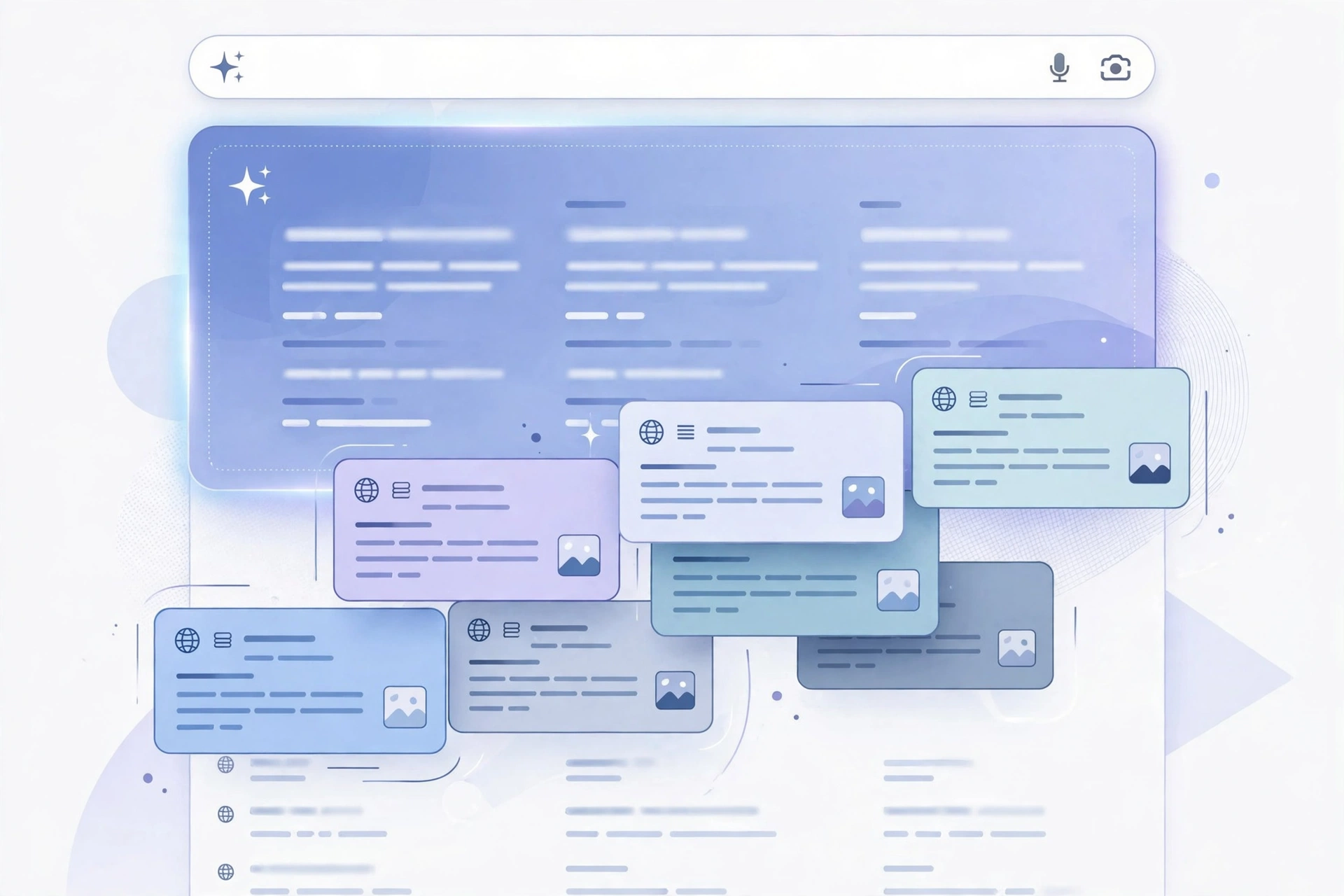
- More inline links, placed higher. Google has made what it calls “substantial increases” to inline links and will now show them “higher up in responses more frequently,” so readers can jump to a source while reading an AI answer.
- A top section for official sites (in testing). For queries where there are “one or two official places on the web” to complete a task or get exact information, Google is testing a dedicated section at the top of some AI responses listing those sites, with a note explaining why each link is useful.
- A redesigned “Dive Deeper” section. Related-article links at the end of some AI responses get image thumbnails and a more clickable design.
- News carousels go global. The carousels showing timely articles — including content from users’ chosen Preferred Sources — are rolling out to more locations and languages. Google says Preferred Sources usage has grown more than sevenfold since the start of 2026.
- Clickable creator names (in testing). AI Mode video results will show clickable creator and publisher names that lead to their Search profiles, giving viewers context on who made the video and their broader work.
Why now: publishers say AI answers are eating their traffic
As AFP reports, the announcement lands as brands and news publishers warn of a sharp decline in referral traffic. According to a Chartbeat report, news publishers saw a 40% drop in traffic from Google between July 2025 and July 2026, and studies show far fewer users open suggested links once an AI summary answers the question directly.
The scale explains the pressure: Alphabet CEO Sundar Pichai said AI Overviews had more than two billion monthly users in over 200 countries (Q2 2025 results). In August, Apig — a group representing daily newspapers in France — alerted the country’s competition authority, arguing AI summaries breached agreements reached with publishers in 2022.
Analysis: a real concession, but not a fix
For publishers and independent sites, this is Google’s most meaningful concession to the zero-click era — but expectations should stay measured. More prominent links only help pages Google actually cites. If an AI answer doesn’t reference your site, it still gets nothing.
The details point to where the upside concentrates. Preferred Sources turns loyal readers into a ranking asset: users who pick your outlet get your articles in the AI-answer carousel. The new official-site section favors authoritative single-source destinations for task queries — government services, official documentation, a brand’s own support page. And clickable video-result names could help smaller creators convert one viewed clip into subscribers.
Google has a strong incentive to keep publishers on board: its AI answers are only as good as the open web they are built on — the same open web behind announcements like the Gemini 4 Argon launch and its $3M compute commitment to European AI researchers.
How this affects you as a searcher
Practically, it should be easier to check where an AI answer came from: inline links higher in the response mean less scrolling to find the source behind a claim. And if you set Preferred Sources, your chosen outlets surface more often — a small step toward a search page shaped by your own trusted publishers, not just the algorithm’s picks.
Frequently asked questions
What changed about links in Google AI search?
Announced October 15, 2026: more inline links shown higher in AI Mode and AI Overviews; a test section at the top of some responses listing official sites for task-based queries; a redesigned “Dive Deeper” section with image thumbnails; news and Preferred Sources carousels rolling out to more locations and languages; and clickable creator names on video results linking to their Search profiles.
Why is Google doing this now?
Publishers warn that AI answers are cutting their traffic sharply — a Chartbeat report found a 40% drop in Google traffic to news publishers between July 2025 and July 2026. More visible links respond to complaints that AI summaries keep users from reaching the websites the answers are based on.
What are Preferred Sources?
A feature letting users pick trusted websites and publishers, which Google then prioritizes — including in a news carousel shown with AI answers. Usage has grown more than sevenfold since the start of 2026, and the carousel is expanding to more regions and languages.
Will publisher traffic recover?
Not fully on its own. More prominent links only benefit cited pages, and most users will still get what they need from the summary. But cited sites get a better shot at the click, and publishers that users actively choose as preferred sources gain a new, durable traffic channel.
Sources
- AFP via Malay Mail, “Google moves links higher in AI answers as news publishers report 40pc traffic plunge,” October 16, 2026 — malaymail.com
- 9to5Google, “Google AI Mode and AI Overview updates work to elevate links,” October 15, 2026 — 9to5google.com
- Analytics Insight, “Google Search Updates AI Mode, AI Overviews with More Prominent Links,” October 16, 2026 — analyticsinsight.net
- Le Temps, “Google revamps its AI Mode with more visible links and articles,” October 16, 2026 — letemps.ch