SK Hynix Posts a Record Quarter as AI Memory Demand Soars — and Warns the Shortage Runs to 2030
Key takeaway: SK Hynix reported a record third quarter on October 28, 2026, with revenue of 104.61 trillion won and operating profit of 83.33 trillion won, driven by demand for the high-bandwidth memory (HBM) used in AI data centres. The company also said virtually all of its DRAM and HBM capacity through 2029 is already sold out, and it expects memory supply to stay tight through 2030.
What SK Hynix announced
South Korean memory-chip maker SK Hynix announced its July–September 2026 results on Wednesday, October 28, 2026. Revenue reached 104.61 trillion won, up 327.9% from a year earlier and 31.9% from the previous quarter — its first quarter above 100 trillion won in sales. Operating profit rose 632% year on year to 83.33 trillion won, and net profit climbed 215.7% to 39.77 trillion won, according to the company’s regulatory filing as reported by Yonhap News Agency and Aju Press.
The operating margin of roughly 80% is itself a record, reflecting how tight memory supply has become. SK Hynix has now posted record quarterly revenue and operating profit for six consecutive quarters, a run stretching back to the second quarter of last year, as reported by Malay Mail (AFP). “Amid market conditions in which prices of key products rose on growing demand for AI memory, the company once again achieved record quarterly revenue and operating profit, driven by its competitiveness in high-value-added products,” SK Hynix said in a statement quoted by Yonhap.
What is HBM, and why does it matter?
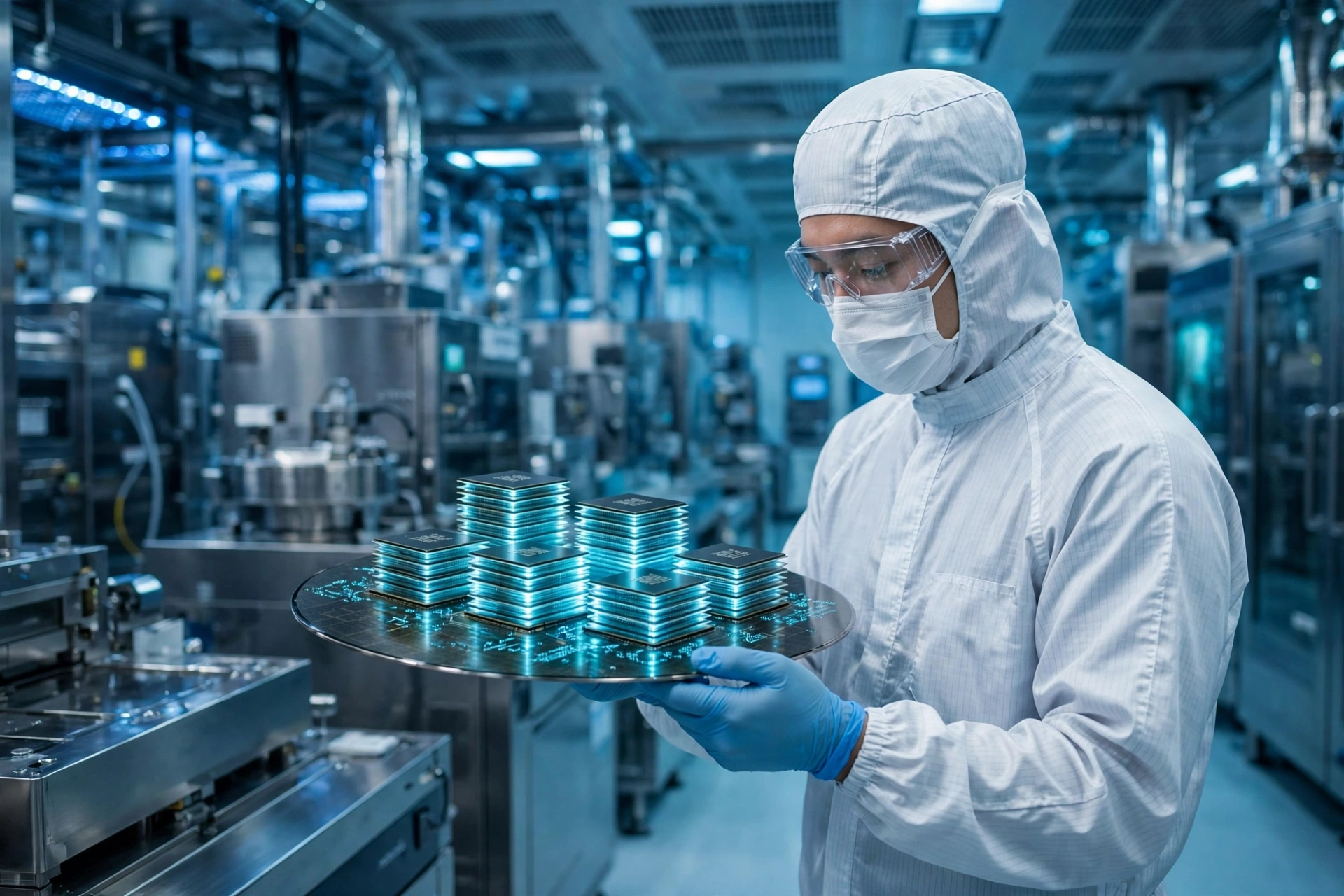
High-bandwidth memory is not the RAM in a laptop. It is a stack of memory chips placed right beside an AI processor, feeding it data fast enough to keep up with training and running large AI models. Without enough HBM, even the most powerful AI chip sits idle waiting for data — which is why HBM has become one of the most contested components in the AI build-out.
SK Hynix said shipments of HBM4, its newest generation, began in earnest during the quarter, and it expects HBM4 to pass the older HBM3E in both shipments and revenue in the fourth quarter of 2026, as its M15X plant in Cheongju reaches full capacity. Each new HBM generation carries more capacity and bandwidth per stack, letting AI systems handle bigger models without adding as many chips.
| HBM3E (current generation) | HBM4 (new generation) | |
|---|---|---|
| Role | The workhorse memory in today’s AI accelerators | The successor now ramping up in production |
| SK Hynix outlook | Overtaken in shipments and revenue in Q4 2026 | Expected to lead shipments and revenue from Q4 2026 |
| Production | Established lines | M15X plant in Cheongju moving to full capacity |
Knowns, unknowns, and what to watch
Known: record revenue, record operating profit, a near-80% margin, capacity sold out through 2029, and long-term deals with 14 major customers covering over half of 2027–2028 capacity. Unknown: how long today’s prices hold — memory is famously cyclical, and the 2030 forecast is a company forecast, not a guarantee. What to watch: Samsung’s HBM4 ramp, whether hyperscalers keep signing multi-year deals, and whether SK Hynix’s expansion lands on schedule.
Comparison: memory now sets the pace of the AI boom
The AI boom is no longer just about who designs the best processor — it is about who can secure memory, power, and manufacturing capacity. Germany’s Infineon just announced a €1.1 billion power-chip investment in Austria aimed partly at AI data centres, and reports emerged that OpenAI plans to buy Google’s AI chips. The contrast with Nvidia’s deepening partnership with Meta is instructive: Nvidia designs the accelerators, SK Hynix supplies the memory beside them, and both are capturing outsized value from the same build-out.
Cost: what the shortage means for prices
For ordinary buyers, the direct effect is higher memory prices. Server DDR5 shipments rose more than 40% quarter on quarter while average DRAM prices rose by a high-20s percentage, according to CNBC figures cited in coverage of the results. If you are planning a PC build or a server purchase, buying sooner rather than later is the practical hedge; waiting for a price drop that SK Hynix itself does not expect before 2030 could cost more.
Prerequisites and risks
For businesses buying AI capacity, the prerequisite has changed: a purchase order is no longer enough. Customers are now signing long-term agreements years in advance. Two caveats deserve attention. First, operating profit beat the FnGuide consensus of 76.96 trillion won, but net profit of 39.77 trillion won came in below one average analyst estimate of 59.67 trillion won cited by Yonhap — headline records and market expectations are different things. Second, the broader debate about AI spending has not gone away: a memory shortage is good for SK Hynix today, but it is also a cost pressure on every AI company buying its chips.
Analysis: the bottleneck has moved
Analysis — not a reported fact: When a memory supplier can sell out three years of production in advance and post an 80% operating margin, it holds real pricing power over the entire AI stack. The open question is whether that power survives the capacity expansions now under way — including SK Hynix’s own — or whether today’s shortage plants the seeds of the next downturn.
Frequently asked questions
Why did SK Hynix’s profit jump so much?
Demand for AI memory — especially high-bandwidth memory used beside AI accelerators — pushed both volumes and prices sharply higher. Revenue rose 327.9% year on year to 104.61 trillion won, while operating profit rose 632% to 83.33 trillion won, giving an operating margin of about 80%.
What is HBM and how is HBM4 different from HBM3E?
HBM is specialised memory stacked next to AI processors to feed them data at very high speed. HBM4 is SK Hynix’s newest generation, now ramping up at its M15X plant in Cheongju, and the company expects it to overtake HBM3E in shipments and revenue in the fourth quarter of 2026.
How long will the memory shortage last?
SK Hynix forecasts demand will exceed supply through 2030, and says virtually all of its DRAM and HBM capacity through 2029 is already sold out. That is a company forecast, not a guarantee, and memory markets have historically swung between shortage and surplus.
Will this make phones and PCs more expensive?
It can. Average DRAM prices rose by a high-20s percentage in the quarter, and when memory costs rise, device makers often pass some of the increase on. Buyers planning a purchase may face higher prices while supply stays tight.
What should investors and AI builders watch next?
Watch Samsung’s HBM4 ramp, whether hyperscalers keep signing multi-year supply deals at current prices, and whether SK Hynix’s capacity expansion stays on schedule. Also watch whether record margins persist or fade as new supply comes online.
Sources
- Yonhap News Agency — SK hynix logs record profit in Q3 on AI chip supercycle (October 28, 2026)
- Aju Press — SK hynix Q3 operating profit tops $63B, more shareholder rewards (October 28, 2026)
- Malay Mail (AFP) — SK hynix quarterly operating profit surges 630% on AI chip demand (October 28, 2026)
- Nikkei Asia — SK Hynix quarterly profit soars sevenfold to $63bn on strong memory demand (October 28, 2026)