SpaceX Closes $40 Billion in GPU Debt as Musk Warns 200+ Neoclouds Face a Shakeout
Key takeaway: Elon Musk said on Sunday, October 25, 2026, that SpaceX has closed $40 billion of debt to buy graphics processing units (GPUs), the chips that power AI systems, for deliveries in the first half of 2027. He also warned that debt markets have nearly shut to companies without revenue outside AI data centres, predicting that most of the 200-plus “neocloud” firms renting out GPU capacity will fail or consolidate.
SpaceX is best known for rockets and the Starlink satellite internet service. But it has also been building a business that rents out access to advanced chips to companies that need AI computing power — the same kind of business as the neocloud firms Musk says are now in trouble. That tension is what makes his post worth reading carefully: it is both a financing announcement and a warning about the market SpaceX itself is entering.
What Musk actually announced
In posts on X on Sunday, Musk said SpaceX had closed $40 billion of debt for GPUs, describing it as “primarily callable debt for GPU purchases that will arrive in Q1 and Q2” of 2027, and adding that it would not be “a major factor” in the current quarter, according to MarketWatch and Reuters, via The Hindu BusinessLine. Callable debt can be repaid early, which matters here because Musk has said he expects much of it to be repaid early — a claim reported by CoinDesk from the same X posts.
Musk credited two things for the deal: SpaceX’s investment-grade credit rating and revenue that does not depend on AI data centres — rocket launches and Starlink. His exact framing, quoted by multiple outlets, was: “As of the past few weeks, debt markets have almost entirely shut off access to money for any company that doesn’t have substantial revenue independent of AI data centers.” Reuters had earlier reported that SpaceX was in talks with banks and asset managers to raise $40 billion for Nvidia AI chips, though Musk’s posts did not name lenders or disclose interest rates and terms.
What is a neocloud, and why is it suddenly risky?
A neocloud is a newer company whose main business is renting out AI computing power — rows of GPUs in data centres — to AI developers and other firms. Unlike Microsoft, Amazon or Google, which sell many other products and services, a neocloud’s revenue depends almost entirely on that one bet: that demand for AI compute keeps growing, and that customers keep paying enough to cover the enormous cost of the chips, power and buildings.
That model worked while lenders were eager to fund it. It gets fragile when lenders pull back, because a neocloud must keep buying expensive hardware to stay competitive, yet its only income comes from renting that hardware out. If customers delay, renegotiate, or default, there is no second business to absorb the blow. Recent anxiety around the bonds of CoreWeave, one of the best-known neocloud firms, has already fed wider market jitters, MarketWatch notes — and Musk’s warning landed in that same nervous week.
SpaceX vs a typical neocloud: the comparison that explains the deal
| SpaceX | Typical neocloud | |
|---|---|---|
| Revenue beyond AI data centres | Yes — rockets and Starlink | Little or none |
| Credit standing cited by Musk | Investment grade | Often below investment grade or unrated |
| Access to new debt now, per Musk | Closed $40 billion | “Almost entirely shut off” |
| If GPU demand cools | Other businesses keep generating cash | Rental income falls with little cushion |
This is the core of Musk’s argument: the same $40 billion that looks like a vote of confidence in AI is, in his telling, evidence that only diversified borrowers can still raise it easily.
What does this cost, and who pays if it goes wrong?
The headline number is the debt itself: $40 billion, for chips arriving in the first and second quarters of 2027. What it will cost SpaceX in interest is not public — Musk did not disclose rates or terms, and SpaceX did not immediately reply to press requests for comment. That gap matters: a cheap, early-repayable facility is very different from expensive long-term debt, and readers should not assume either until terms emerge.
If the bet goes wrong, the cost falls in stages. First on SpaceX, which must service the debt whether or not the GPUs earn their keep. Then on customers, who could face higher rental prices or disrupted capacity if providers fail. Then, more broadly, on lenders and investors exposed to AI infrastructure debt — which is why a financing story about one company moved wider market sentiment. For ordinary users, the practical effect is indirect but real: the price and availability of AI services depend on how many providers survive to supply the compute behind them.
Knowns, unknowns, and what to watch
Known: Musk says $40 billion of mostly callable GPU debt is closed, for Q1–Q2 2027 deliveries; he says debt markets have tightened sharply for firms without non-data-centre revenue; he predicts “guppy-level death and consolidation” among 200-plus neoclouds, with only a few surviving; and he says SpaceX will not buy any neoclouds, calling that “pointless.”
Unknown: the lenders, interest rates, covenants and exact repayment schedule; whether “closed” means fully priced and committed, a point Reuters reporting flagged as unclear from Musk’s post alone; and which specific neocloud firms, if any, are already in distress beyond the bond-market pressure already reported around CoreWeave.
What to watch: Microsoft and Alphabet report on Wednesday, October 28, and Amazon on Thursday, October 29 — the week’s earnings will show whether the biggest AI spenders are still expanding capital spending or starting to discipline it. Also watch for any neocloud bond, refinancing or customer announcements in the coming weeks: Musk’s prediction will be tested quickly if lenders stay shut.
What this means for you
If you buy AI services, rent GPU capacity, or build a product on rented compute, this is a supplier-risk story, not just a Musk headline. Diversify providers where you can, check contract terms for what happens if a provider fails or is acquired, and avoid locking a whole product to a single small provider without a fallback. If you only use AI tools as an end user, the likeliest effects are slower price falls — or price rises — for AI services if capacity consolidates, rather than any immediate outage.
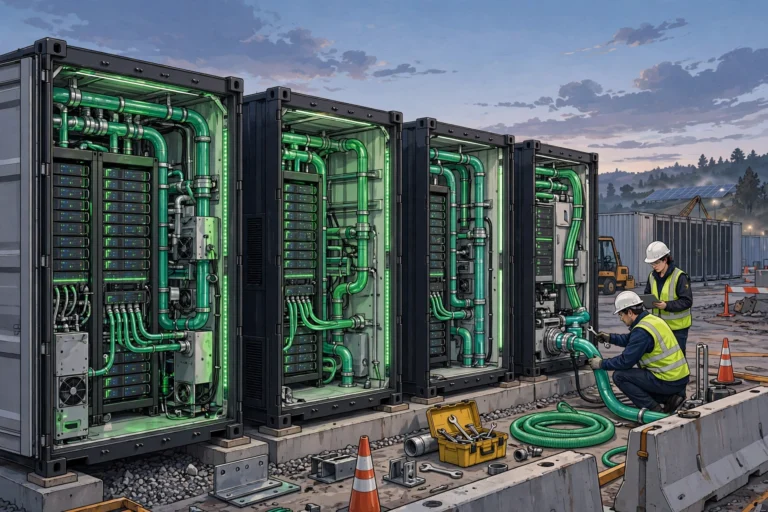
Related reading on USABite: Nvidia’s DSX POD puts an AI data centre in a shipping container, DeepSeek and MiniMax clear China’s new AI export rules, and Oman’s $3 billion, 400MW AI data centre — three recent pieces on how fast AI infrastructure is being built, and who is paying for it.
Analysis: Musk is an interested party here — SpaceX competes in the very market he says is about to consolidate, and a shakeout would benefit a surviving, well-funded entrant. His warning may prove right, but it should be read as both a market signal and a competitive claim. The verifiable facts are the debt announcement and the tightening credit backdrop; the “guppy-level death” forecast is his prediction, not a reported outcome.
Frequently asked questions
What did Elon Musk announce about SpaceX and GPUs?
Musk said on X on October 25, 2026, that SpaceX closed $40 billion of debt to buy GPUs, describing it as primarily callable debt for chips arriving in the first and second quarters of 2027. He said the deal would not be a major factor in the current quarter and that he expects much of it to be repaid early.
What is a neocloud?
A neocloud is a company whose main business is renting out AI computing power, especially GPU capacity in data centres, to AI developers and other firms. Unlike large cloud providers with many product lines, neoclouds depend almost entirely on AI infrastructure revenue, which makes them more exposed when lenders tighten credit.
Why does Musk say neoclouds are in trouble?
Musk says debt markets have almost entirely shut off money for companies without substantial revenue independent of AI data centres. Without new borrowing, firms that must keep buying expensive GPUs to stay competitive face failures or consolidation, in his view, with only a few of the 200-plus neoclouds surviving.
How is SpaceX different from a neocloud?
SpaceX has rocket launch and Starlink satellite internet revenue alongside its growing AI compute business, and Musk cites its investment-grade credit rating. That diversification, he argues, is why SpaceX could close $40 billion of debt while pure-play neoclouds cannot borrow as easily.
Will SpaceX buy struggling neoclouds?
No, according to Musk himself. In a follow-up post he wrote, “SpaceX is not buying any neoclouds. Pointless.” That rules out, for now, the most obvious consolidation path — a SpaceX rescue of smaller rivals.
Sources: MarketWatch; Reuters via The Hindu BusinessLine; CoinDesk.