What Is AI Trend Analysis? How AI Spots Patterns and Forecasts What’s Next
Key takeaway: AI trend analysis uses machine learning models trained on historical and live data to detect patterns and forecast future trends. Techniques like time-series forecasting, regression, and NLP sentiment analysis help businesses predict demand, market shifts, and customer behavior — with far more speed and scale than traditional manual analysis.
AI trend analysis is one of the most practical ways businesses now use artificial intelligence. Instead of analysts poring over spreadsheets to guess where a market is heading, AI systems process massive amounts of data, spot patterns humans would miss, and predict what is likely to happen next. Here is how it works, the techniques behind it, and where it is actually useful.
What AI trend analysis means
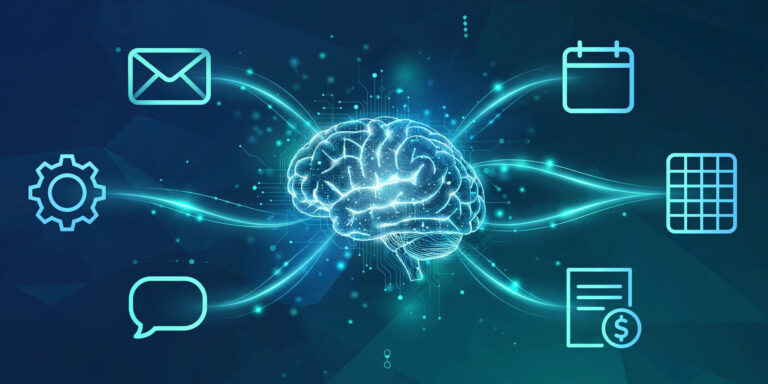
AI trend analysis is the use of artificial intelligence — mainly machine learning and statistical models — to examine historical and real-time data, identify patterns, and forecast future trends. It answers a simple question: based on everything that has happened, what is likely to happen next?
According to IBM, predictive analytics is a branch of advanced analytics that makes predictions about future outcomes using historical data combined with statistical modeling, data mining techniques, and machine learning. AI trend analysis is predictive analytics applied specifically to trends: sales direction, market movements, customer behavior shifts, and seasonal demand.
Unlike descriptive analytics, which only explains what happened in the past, AI trend analysis focuses on the future. That forward-looking view is what makes it valuable for planning — from a retailer deciding how much stock to order to a bank assessing where loan defaults are heading.
How AI trend analysis works
The process follows a consistent workflow. As Zoho’s analytics team explains, AI forecasting typically moves through four stages:
- Data collection: gathering relevant data from many sources — sales records, web traffic, social media, economic indicators, weather data, and more.
- Data preparation: cleaning and formatting the data, handling missing values, and removing outliers so the model trains on reliable inputs.
- Model training: applying machine learning algorithms (such as regression, ARIMA, or neural networks) to learn the patterns and relationships hidden in the data.
- Forecasting: running the trained model on new data to generate predictions, then feeding results back in a loop so the model keeps refining itself as conditions change.
That feedback loop matters. A model that predicted retail demand accurately last year can drift as consumer behavior shifts, so trend-analysis systems are continuously retrained on fresh data.
Main techniques used in AI trend analysis
Different problems call for different models. The most common techniques, described by TierPoint and the Pecan AI team, are:
| Technique | How it works | Best for |
|---|---|---|
| Time-series analysis (ARIMA, Prophet) | Analyzes data points ordered over time to find seasonal and repeating patterns | Sales forecasts, stock trends, website traffic |
| Regression models | Estimates how changes in one factor (price, ad spend) affect an outcome like revenue | Marketing ROI, demand modeling |
| Classification (logistic regression, random forests) | Sorts outcomes into categories, e.g. will a customer churn or stay | Churn prediction, risk scoring |
| NLP sentiment analysis | Reads unstructured text — reviews, social posts, surveys — to gauge public sentiment | Brand monitoring, product feedback |
| Deep learning / neural networks | Multi-layered networks that find complex, non-linear patterns | High-frequency trading, image and sequence data |
Where businesses use AI trend analysis
Retail and e-commerce: Retailers forecast product demand by combining purchase history, browsing behavior, and seasonality, then optimize inventory and tailor marketing. One retail company using XGBoost regression across 150+ stores reported 87% forecast accuracy and cut stockouts by 25%, according to analyst reporting.
Finance: Banks and insurers use it to assess credit risk, detect fraudulent transactions, and forecast market movements, analyzing transaction patterns and macroeconomic indicators.
Healthcare: Hospitals predict patient admissions and readmission risks from records and demographic data, which helps allocate staff and resources.
Marketing: Teams predict which products will sell next quarter, forecast campaign ROI, and spot emerging consumer interests — PepsiCo famously used machine learning on health-conscious consumer trends to develop its Bubly sparkling water line.
For a broader look at how prediction fits into automated operations, see our guides on the goal of generative AI and end-to-end process automation.
What AI trend analysis can’t do (analysis)
This section is analysis, not a verified fact set. AI trend analysis is powerful but not magic. It assumes the future will resemble the past in some way, so sudden shocks — a pandemic, a policy reversal, a viral moment nobody modeled — can break forecasts. It also needs clean, relevant data; feeding it messy or biased inputs produces confident-sounding wrong answers. And building these systems takes skilled data scientists and real budget, which is why small businesses often start with off-the-shelf analytics platforms rather than custom models. Treat AI forecasts as strong guidance, not certainty.
Frequently asked questions
What is AI trend analysis?
AI trend analysis is the use of machine learning and statistical models to examine historical and live data, detect patterns, and forecast future trends. Businesses use it to predict demand, market shifts, and customer behavior. It builds on predictive analytics, which combines historical data with statistical modeling and machine learning to forecast future outcomes.
How does AI analyze market trends?
AI collects data from many sources (sales, web traffic, social media, economic indicators), cleans it, then trains machine learning models like regression, time-series models, or neural networks on it. The trained model identifies relationships and patterns, generates forecasts, and keeps improving as new data flows in through a feedback loop.
What tools are used for AI trend analysis?
Common options include Python libraries such as scikit-learn, Prophet, XGBoost, and TensorFlow; cloud platforms like Google Vertex AI and IBM Watson Studio; and business tools like Power BI with Azure ML or Tableau with Python integration. Analysts also use ARIMA and Prophet specifically for time-series forecasting tasks.
How accurate is AI trend analysis?
Accuracy depends on data quality, the technique chosen, and how stable the underlying trends are. Well-built models in stable domains can reach high accuracy — for example, one retailer reported 87% sales forecast accuracy — but sudden real-world shocks can break any forecast. Good data and continuous retraining are the two biggest accuracy drivers.
What is the difference between AI trend analysis and traditional analysis?
Traditional analysis is manual and slow, limited to what analysts can process and prone to human bias. AI trend analysis is automated and fast, can process terabytes of data in seconds, adapts as new data arrives, and makes data-driven decisions without emotional influence — though it still needs human oversight to catch broken assumptions.
Sources
- IBM Think — What is Predictive Analytics?
- Zoho Analytics — AI Forecasting: Techniques, Benefits & How It Works
- TierPoint — What is Predictive AI?
- Pecan AI — AI Predictive Analytics: Definition, Benefits, Use Cases