Smart Process Applications: What They Are and How Businesses Use Them
Key takeaway: Smart process applications (SPAs) are software built for people-intensive, unpredictable business work — like contract reviews or customer support — that is too variable for rigid automation. They combine workflow automation, document management, embedded analytics, and collaboration tools so teams make faster, better-informed decisions. The term was coined by Forrester Research, and the idea lives on today inside intelligent process automation platforms.
What smart process applications are
The term “smart process application” was introduced by Forrester Research to describe a new generation of software: packaged applications designed to support business activities that are people-intensive, highly variable, loosely structured, and subject to frequent change. The goal, in Forrester’s framing, is to help people be smarter in executing critical business activities (Forrester; Buddha Logic).
Think of the difference this way: a transactional process app handles standardized work with little collaboration — processing payroll runs or warehouse picks. A smart process application handles the messy middle: contract lifecycle management, customer support cases, or procurement deals, where the next step depends on a person’s judgment and the available context. As one industry analysis put it, SPAs fill the gaps between transactional apps instead of leaving teams to bridge them with email and spreadsheets (Column 2).
What makes an application “smart”
Forrester’s Craig Le Clair outlined the defining attributes of smart process applications, and they still describe the category well (i-SCOOP; WorkflowOTG):
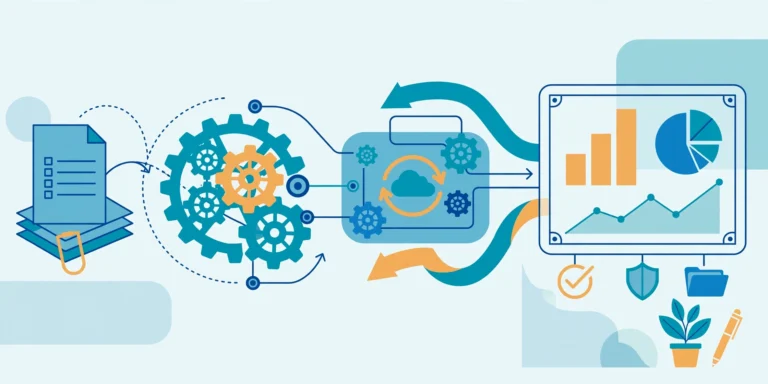
- Awareness data relevant to the activity — the app surfaces the context a person needs, right when they need it, rather than making them hunt through other systems.
- Document capture and management — contracts, records, and case files are captured, stored, and managed inside the workflow, not alongside it.
- Embedded analytical tools — analytics designed for that specific activity, so the numbers arrive with the work instead of in a separate report.
- A collaboration platform — the people involved can share, discuss, and create content together without leaving the process.
- Flexibility for frequent change — because the underlying activities are unpredictable, the app adapts rather than enforcing one rigid path.
Another way to see it: SPAs connect an organization’s systems of record (ERP, CRM, document management) with its systems of engagement (email, calls, messages, mobile) — the link that lets a business respond to customers without reworking its core software (Shaun Dicker).
How smart process applications differ from BPM and RPA
The alphabet soup gets confusing. Here is how the three relate:
| Approach | What it does | Best when |
|---|---|---|
| BPM (business process management) | Models, designs, and coordinates predictable workflows and who does what | The process is structured and repeatable |
| RPA (robotic process automation) | Bots perform repetitive clicks and data moves across screens | The task is rule-based and high-volume |
| Smart process applications | Blend automation, documents, analytics, and collaboration around human judgment | The work is variable, collaborative, and changes often |
For a deeper walkthrough of each family, see our guides on end-to-end process automation and digital process automation solutions.
Real-world examples of smart process applications
SPAs show up as packaged apps for a specific activity, not generic platforms. Common examples include:
- Contract lifecycle management — drafting, redlining, approvals, and renewals, where legal judgment meets deadlines and document versioning.
- Customer support case management — tickets that need knowledge-base answers, chat history, and agent collaboration in one view.
- Procurement and supply-chain workflows — orders and supplier onboarding where every deal brings different documents and exceptions.
- Insurance claims processing — claims that mix photos, reports, and fraud checks with human review. Modern intelligent automation stacks handle a similar mix today (Ness).
Businesses adopting these tools report faster, more consistent responses, greater process flexibility, cost savings from streamlined work, and stricter compliance (Buddha Logic).
Why the idea matters in 2026
Honest context first: the name “smart process application” never became a mainstream category the way “RPA” did — industry observers noted the term struggling to gain acceptance even at its peak (Column 2). But the idea won. Today’s intelligent process automation platforms — RPA bots plus AI document reading, workflow orchestration, and embedded analytics — are SPAs in everything but name (Flobotics; Botpress).
Analysis: If you are evaluating automation software today, don’t shop by acronyms. Ask the SPA questions: does the tool surface the right context at decision time? Does it handle documents natively? Can the process change without a developer? A platform that answers yes to all three carries the smart-process-application DNA, whatever the vendor calls it.
FAQ
What is a smart process application in simple terms?
A smart process application is software that combines workflow automation, document handling, built-in analytics, and team collaboration to support business work that is too unpredictable for rigid, rules-based automation — like contract reviews, support cases, or procurement deals. It puts the right information in front of the person making the decision.
Who coined the term smart process application?
Forrester Research coined the term around 2011. Its analysts defined SPAs as a new category of application software designed for people-intensive, highly variable, loosely structured business activities that change frequently.
What is the difference between a smart process application and BPM?
BPM focuses on modeling and coordinating structured, repeatable processes and who does what. Smart process applications go further: they wrap automation, documents, analytics, and collaboration around work that is collaborative and unpredictable, filling the gaps between rigid transactional systems.
Are smart process applications the same as RPA?
No. RPA bots perform repetitive, rule-based clicks and data moves. Smart process applications support judgment-driven, collaborative work. In practice, many modern automation platforms combine both — RPA for the repetitive steps and SPA-style features for the human decision points.
What are examples of smart process applications?
Packaged examples include contract lifecycle management, customer support case management, procurement workflows, and insurance claims processing. More broadly, any modern platform that blends workflow, documents, analytics, and collaboration around human decisions carries the SPA idea.
Sources
- Forrester — Smart Process Applications Fill A Big Business Gap
- Buddha Logic — What is a Smart Process Application?
- Column 2 — Smart Process Apps with Kofax and Forrester
- i-SCOOP — Smart Process Applications