Generative AI IoT Explained: How GenAI Is Making Connected Devices Smarter
Key takeaway: Generative AI IoT puts generative AI — the technology behind chatbots — inside connected devices and the edge systems around them. Instead of only collecting sensor data, devices can explain what they see, answer questions in plain language, and generate plans or reports. The market is still small, about $2.61 billion in 2026, but growing roughly 28% a year.
What generative AI IoT actually is
Generative AI IoT is the combination of generative AI models with the Internet of Things. An IoT device — a sensor, a camera, a wearable, a factory machine — collects data from the physical world. A generative model then turns that data into something new: a plain-language explanation, a maintenance plan, or a conversation.
That is the difference from the older form of AI in IoT, often called AIoT. Traditional AIoT mostly classifies and predicts: it spots a defect on a production line or forecasts energy demand. Generative AI IoT goes a step further. It can tell a building manager why energy use jumped overnight, in a sentence, instead of leaving them to read five dashboards. It can draft the work order for the faulty machine, not just raise the alarm.
Most deployments use three layers. The device runs a small, efficient model for instant responses. A nearby edge gateway or on-site server runs a bigger model for heavier reasoning. The cloud handles training, updates, and the largest models. Keeping as much as possible on the device and the edge matters, because sending every sensor reading to the cloud adds latency, bandwidth costs, and privacy risk.
Generative AI IoT vs traditional AIoT
| Traditional AIoT | Generative AI IoT | |
|---|---|---|
| Main job | Classify, detect, predict | Explain, generate, converse |
| Typical output | An alert, a score, a forecast | A written explanation, a plan, a dialogue |
| How users interact | Dashboards and thresholds | Natural-language questions and answers |
| Where it runs | Mostly cloud or simple on-device models | Small models on device, larger ones at the edge |
| Main weakness | Hard to interpret without an expert | Can hallucinate — invent plausible but wrong explanations |
Where generative AI IoT is being used
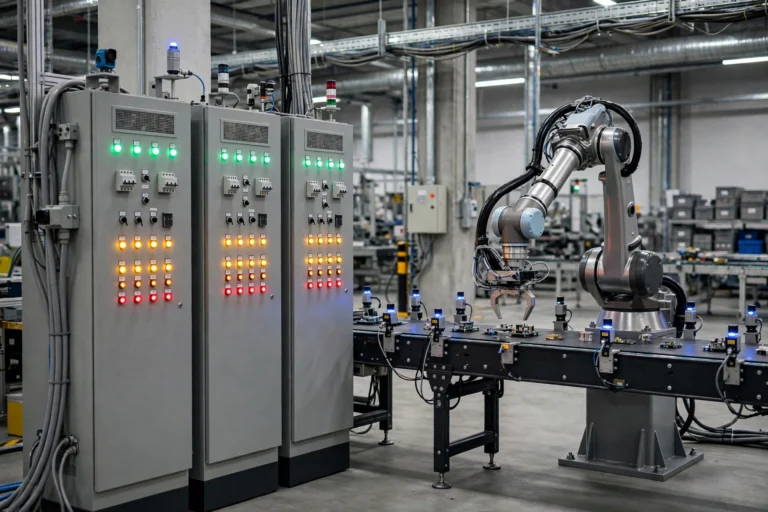
Manufacturing. Cameras and vibration sensors feed generative models that write shift summaries, explain the likely cause of a defect, and draft maintenance schedules. A 2026 peer-reviewed study found the strongest near-term uses in industrial automation, smart cities, healthcare, and autonomous systems.
Healthcare. Wearables already run ECG analysis, blood-oxygen monitoring, and fall detection on the device. Generative models add the explanation layer: a plain-language summary of a patient’s overnight readings for a nurse starting a shift, instead of a raw chart.
Buildings and cities. Ask a building system why energy consumption rose overnight and get a natural-language answer drawn from sensor data. Traffic cameras with on-device AI can identify an anomaly in under a second without sending footage to the cloud.
Home robots and drones. The hardware caught up in 2026. NVIDIA announced the Jetson Orin Nano 2 on August 25, 2026, an entry-level edge computer that runs large language models and vision-language models on-device, with its module and developer kit expected in the first half of 2027. MediaTek’s Genio Pro 5100, launched March 10, 2026, runs on-device generative AI at up to 23 tokens per second for models with up to 7 billion parameters.
For the company landscape behind these devices, see our guide to AI IoT companies.
What generative AI IoT costs
The market is small and the forecasts disagree on size, which is normal for a new category. The Business Research Company puts the generative AI in IoT market at $2.61 billion in 2026, up from $2.03 billion in 2025, growing about 28% a year to $6.99 billion by 2030. The broader AI-in-IoT market, which includes non-generative AI, is far larger: the same firm estimates $24.56 billion in 2026, rising to $63.64 billion by 2030. Treat both as estimates, not exact counts — different firms draw the category boundary differently, and their totals vary widely.
For a buyer, the real cost is the hardware and the data work, not the model. Edge-AI chips such as NVIDIA’s Jetson line and MediaTek’s Genio series sit in the tens to hundreds of dollars per unit, but the bigger spend is cleaning sensor data, connecting systems, and validating the model’s answers before anyone acts on them. There are roughly 17 billion connected IoT devices worldwide as of October 2024, according to IoT Analytics — so even a small share gaining generative features is a large market.
What you need before you start
Four prerequisites decide whether a generative AI IoT project works. First, reliable sensor data: a model that explains bad data will confidently explain it wrong. Second, a connectivity plan — decide what must work offline, because a factory floor or a rural clinic cannot depend on a cloud round-trip. Third, the right model size for the hardware: a 7-billion-parameter model is the current practical ceiling for a high-end edge chip, and most devices need far smaller models. Fourth, a validation loop: a human or a rules-based check must confirm the model’s explanations before they trigger maintenance, medical, or safety actions. (For background on the automation layer these systems sit on, see our guide to what process automation is.)
The risks and limits
The biggest risk is hallucination. A generative model can produce a smooth, confident explanation for a sensor reading that is simply wrong — a dangerous failure when the output drives a maintenance or clinical decision. Keep generative output advisory, not automatic, in safety-critical settings.
Privacy is the technology’s strength: processing data on the device means sensitive readings never leave the building. But that only helps if the device itself is secured — and IoT security has a poor track record. Regulation is tightening too: the EU AI Act became enforceable in 2026, with specific requirements for AI systems in healthcare and critical infrastructure. Power is a hard limit as well: running a language model on a battery-powered sensor is still impractical for most devices, which is why the edge gateway, not the sensor, does the heavy work.
Analysis: useful, but the explanation is the product
Our take: generative AI IoT matters because it changes who can use IoT data, not what the data is. A vibration sensor already knew the motor was failing; what is new is that a technician can ask the machine what is wrong and get a usable answer. But the value collapses if the explanations cannot be trusted, and right now they cannot be — every deployment needs a human or rules-based check between the model’s words and any real-world action. Buy the hardware for the use case, not the demo: a natural-language summary of a factory floor is worth paying for; a chatbot on a toaster is not.
Frequently asked questions
What is generative AI IoT?
Generative AI IoT is the combination of generative AI models with connected IoT devices. Sensors collect data from the physical world, and a generative model turns that data into explanations, plans, reports, or conversations — for example, telling a building manager in plain language why energy use rose overnight. Unlike traditional AIoT, which mainly classifies and predicts, generative AI IoT generates new, human-readable output from sensor data.
How is generative AI different from regular AI in IoT?
Regular AI in IoT, or AIoT, mostly classifies, detects, and predicts: it spots defects, flags unusual vibrations, and forecasts demand. Generative AI IoT adds explanation and generation on top of that — it can describe what it sees, answer questions about it in natural language, and draft plans or reports. The two usually work together, with traditional models doing the detection and generative models doing the explaining.
Can generative AI run on IoT devices without the cloud?
Yes, for small models. Chips such as NVIDIA’s Jetson Orin Nano 2 and MediaTek’s Genio Pro 5100 run language and vision-language models directly on the device or a nearby edge gateway, with the Genio Pro 5100 handling models up to 7 billion parameters. Larger models still need the cloud or an on-site server. Most real deployments split the work: instant, simple tasks on the device, heavier reasoning at the edge, and training and updates in the cloud.
What are the best examples of generative AI IoT in 2026?
The clearest examples are in manufacturing, where generative models write shift summaries and explain defects; healthcare wearables that summarize overnight patient readings for nurses; smart buildings that answer natural-language questions about energy use; and home robots and drones running on-device language models, enabled by new edge chips from NVIDIA and MediaTek announced in 2026.
Is generative AI IoT safe for healthcare and industrial use?
It can be, if the generative output stays advisory rather than automatic. The main risk is hallucination — a confident but wrong explanation — so a human or rules-based check must sit between the model’s words and any safety-critical action. On-device processing helps privacy by keeping sensitive data local, but devices must still be secured, and the EU AI Act, enforceable since 2026, adds specific requirements for AI in healthcare and critical infrastructure.
Sources
- The Business Research Company — Generative AI in IoT Global Market Report 2026 (market size $2.03B in 2025, $2.61B in 2026, $6.99B by 2030)
- The Business Research Company — Artificial Intelligence (AI) in IoT Global Market Report 2026 (broader AI-in-IoT market $24.56B in 2026)
- MediaTek — Genio Pro 5100, March 10, 2026 (on-device generative AI, up to 23 tokens per second, models up to 7B parameters)
- NVIDIA Jetson Orin Nano 2 announcement, August 25, 2026 (on-device LLMs and vision-language models; module and developer kit expected first half of 2027)
- Generative AI for IoT and Edge Computing, IJLTEMAS, June 2026 (applications in smart cities, healthcare, industrial automation, autonomous systems)
- Business Research Insights — AI in IoT Market (about 17 billion connected IoT devices worldwide as of October 2024, per IoT Analytics)