Cloud Terminal Automation Software: What It Is, How It Works, and When to Use It
Key takeaway: Cloud terminal automation software is cloud-hosted software that runs and automates cargo terminal operations — container yards, gates, berths, and vessels — from a single platform. It replaces on-premise terminal operating systems with a scalable, real-time system that coordinates equipment, schedules moves, and exchanges data with shipping lines automatically.
If you work around ports, inland depots, or logistics, you have probably heard vendors pitch “cloud terminal automation.” The phrase is used loosely, so here is the plain-English version: what the software actually is, what it automates, and whether it makes sense for your operation.
What cloud terminal automation software actually means
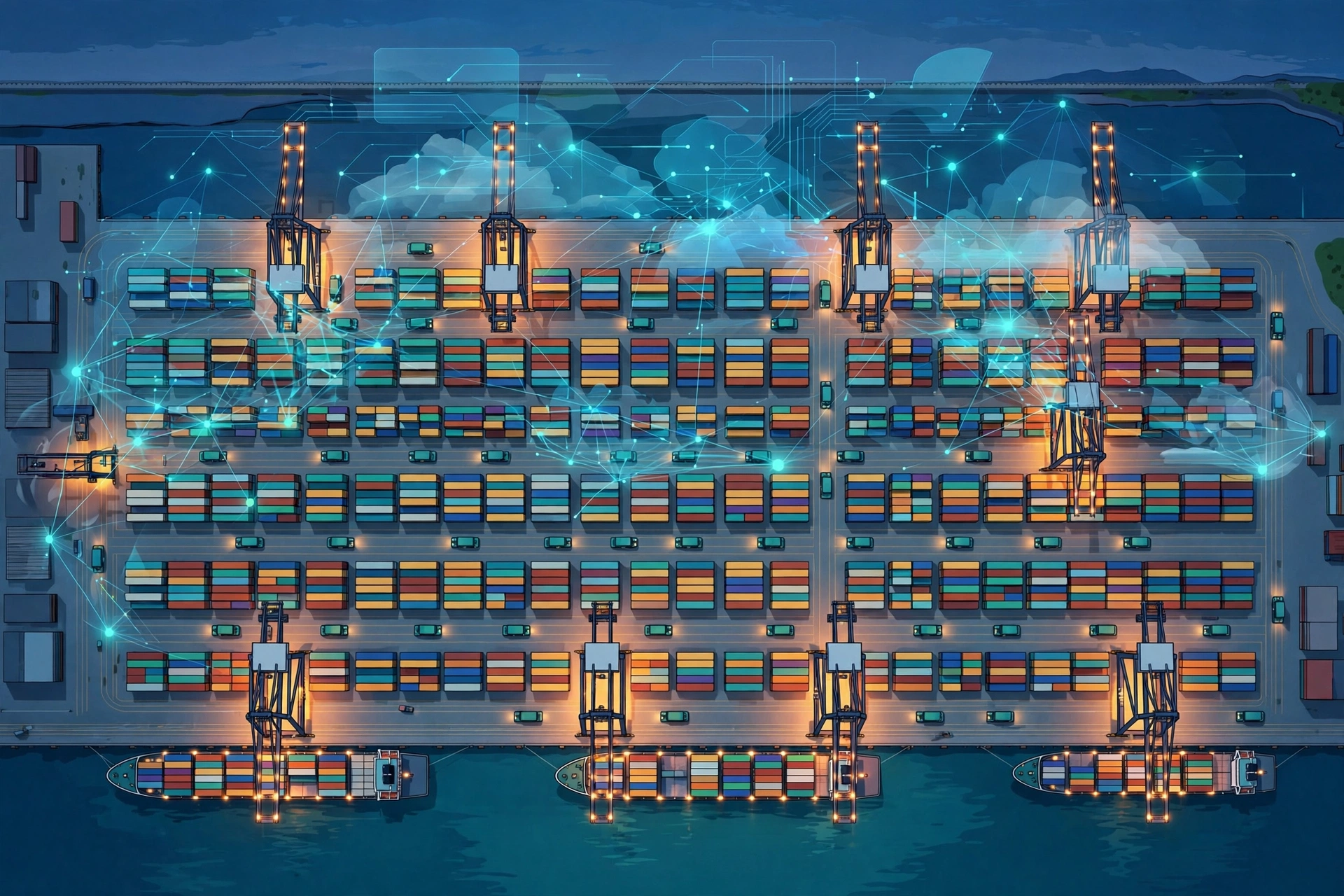
At its core, cloud terminal automation software is a terminal operating system (TOS) delivered from the cloud. A terminal operating system is the software that tells a cargo terminal what to do: where each container goes, which crane moves it, when trucks arrive at the gate, and how everything gets billed.
Traditionally, that software ran on servers inside the terminal building. The cloud version moves it to hosted infrastructure, accessed through a browser on a subscription (SaaS) basis — no server room required. TCS DynaPORT, for example, is a cloud-ready, multi-tenant terminal operating system used at over 70 terminals worldwide, covering order processing, berth planning, and invoicing (TCS).
A quick disambiguation: the phrase is sometimes used for automating green-screen or mainframe terminal applications with RPA tools — Automation Anywhere’s Terminal Emulator command, for instance, connects bots to legacy systems over Telnet or SSH (Automation Anywhere). This article covers the logistics meaning: software that automates physical cargo terminals, running in the cloud.
How it works: the main modules
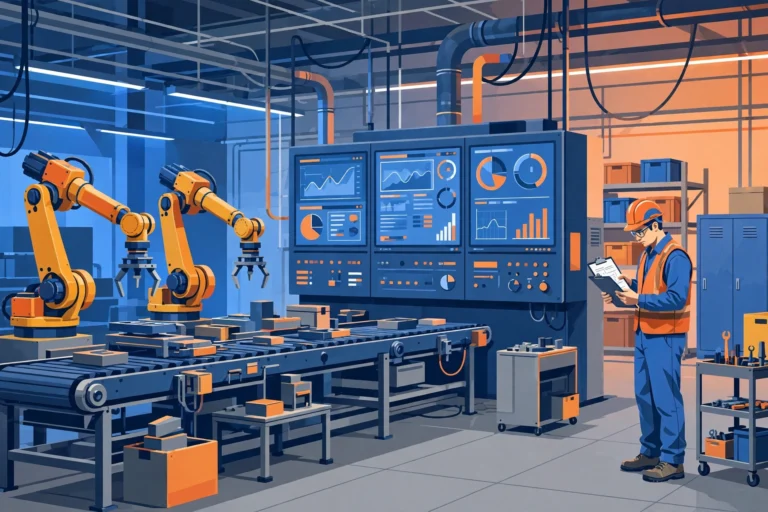
Vessel and berth planning schedules ship arrivals and assigns berths, often with AIS vessel tracking. Yard management tracks every container’s position and plans stacking, increasingly with 2D or 3D yard visualization. Gate automation manages truck appointments and time-slot booking to cut queues. Equipment coordination assigns tasks to cranes, terminal tractors, and — at automated terminals — driverless equipment like AGVs and automated rail-mounted gantry cranes. At Incheon’s new automated container terminal, CyberLogitec’s OPUS Terminal runs berth, vessel, yard, and gate operations on one platform linked to automated equipment control systems (Port Technology International). Data exchange connects to shipping lines and customs via EDI and APIs (formats like CODECO and COARRI), and billing calculates storage and handling charges from operational data (Guideflow).
Why terminals move it to the cloud
Three practical reasons keep coming up. Cost and scale: smaller and mid-size terminals get enterprise-grade software without the upfront server investment — which is how CyberLogitec positions its browser-based OPUS Terminal M for multi-purpose terminals (Seatrade Maritime News). Access: planners and customers see the same real-time data from any location, which matters for operators running several terminals or depots. Updates: the vendor upgrades one cloud platform instead of each terminal patching its own installation.
When it pays off — and when it doesn’t
Cloud terminal automation software pays off fastest for mid-size terminals and growing operators: container terminals, inland depots, dry ports, and intermodal yards where spreadsheets and phone calls no longer cope, or operators managing more than one facility from a central team.
It is less compelling for a very small single-site operation with simple flows, or where the real bottleneck is physical — software cannot fix a yard that is simply too small. And like any cloud migration, it needs reliable connectivity and a clear data-security arrangement, since the terminal’s entire operational picture lives off-site.
Analysis: where terminal automation is heading
The following is analysis, not a vendor claim. The direction of travel is visible in recent launches: AI-assisted planning (suggesting where to stack containers or when to book trucks), real-time 3D yard visualization, and tighter coupling between the software layer and automated equipment. CyberLogitec’s newest system highlights 2D/3D visualization and inter-terminal vehicle pooling (Seatrade Maritime News), and cloud-native TOS products are adding AI features like container recognition and placement planning (Guideflow). The next few years will likely blur the line between the terminal operating system and the digital twin of the terminal itself.
Frequently asked questions
What is cloud terminal automation software?
It is software that automates cargo terminal operations — container yards, gates, berths, and vessels — and runs on cloud infrastructure instead of the terminal’s own servers. It is usually a subscription service accessed through a web browser, replacing or upgrading a traditional on-premise terminal operating system.
Is cloud terminal automation software the same as a terminal operating system?
Mostly, yes. “Terminal operating system” (TOS) is the long-standing industry term. “Cloud terminal automation software” generally describes the newer generation of TOS products that are cloud-hosted, multi-tenant, and browser-based. The core job — planning and controlling terminal operations — is the same.
What does terminal automation software actually automate?
Vessel and berth scheduling, container yard planning and tracking, truck gate appointments, task assignment for cranes and yard equipment, electronic data exchange with shipping lines and customs (EDI/API), and billing based on operational data. At automated terminals, it also coordinates driverless equipment like AGVs.
Do small terminals need cloud terminal automation software?
Not always. It pays off when manual coordination becomes a bottleneck — growing container volumes, truck queues at the gate, or multiple sites to manage from one team. For a small single-site operation with simple flows, the subscription may not be worth it. Many cloud products now target this gap with pricing aimed at smaller terminals.
Is cloud-based terminal software secure?
Reputable cloud TOS vendors use encryption, authentication, and multi-tenant isolation — and cloud platforms are typically patched faster than on-premise servers. Still, the terminal’s operational picture lives off-site, so operators should review the vendor’s security certifications, data-residency terms, and connectivity fallback plans before committing.
Sources
- TCS DynaPORT — cloud-ready terminal operating system
- Seatrade Maritime News — CyberLogitec launches cloud-based TOS for multi-purpose terminals
- Port Technology International — CyberLogitec TOS for Incheon automated terminal
- Guideflow — 10 best terminal operating systems for 2026
- Automation Anywhere — Terminal Emulator command documentation