How Long to Boil Eggs: Exact Chart for Soft, Jammy & Hard
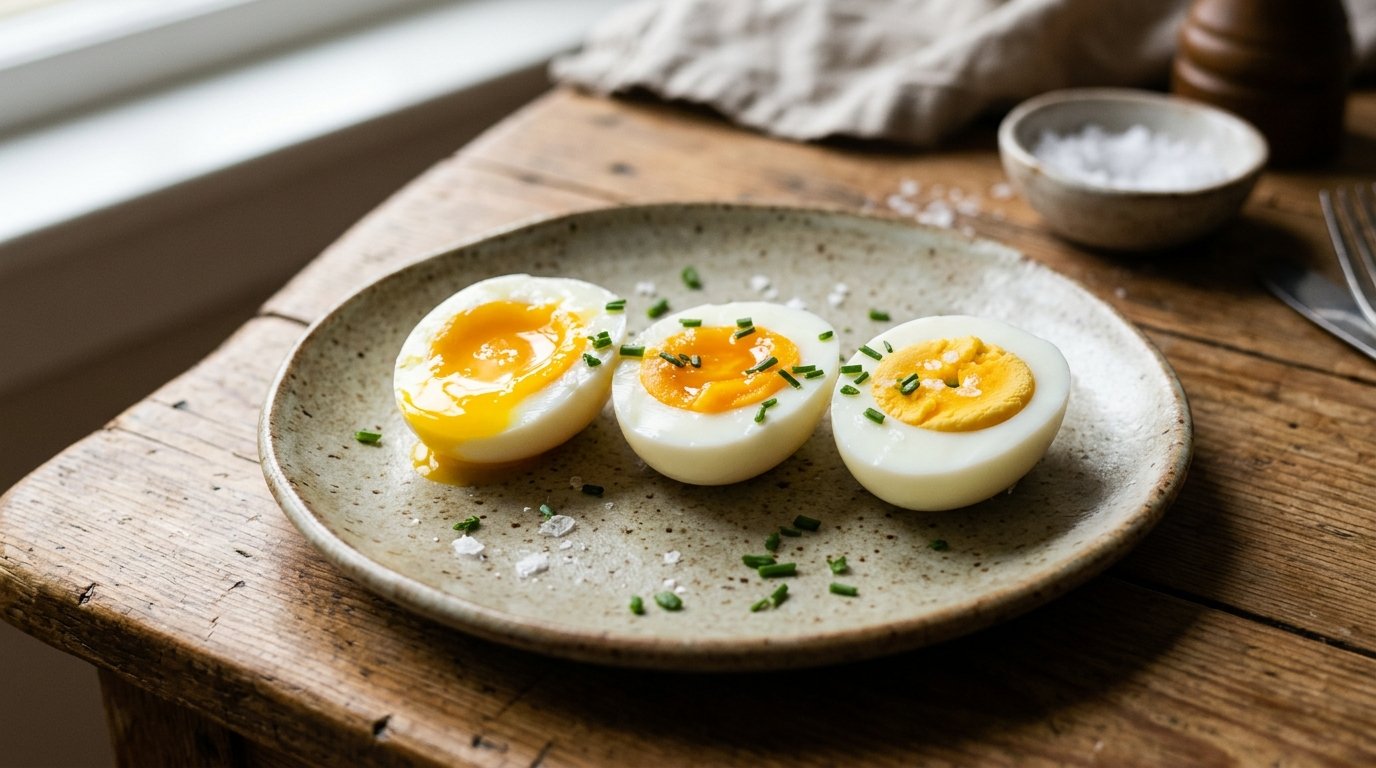
Key takeaway: For large eggs, boil 6 minutes for runny yolks, 7 to 8 minutes for jammy yolks, and 10 to 12 minutes for firm hard-boiled eggs. Start timing once the water is back at a gentle boil, then move the eggs straight into an ice bath — it stops the cooking, prevents the green ring, and makes peeling easy.
Knowing exactly how long to boil eggs turns a simple kitchen staple into a reliable meal any day of the week. Whether you want a golden, spoonable yolk for morning toast, a custard-like ramen egg, or firm slices for a lunch salad, a single minute in hot water changes everything.
Most overcooked, rubbery, or hard-to-peel eggs happen because people guess the time or start timing before the water is ready. Below, you will find a tested minute-by-minute boiling chart, the easiest method for clean peeling, and practical storage tips from USABite.
Quick Answer: Boiled Egg Timing Chart
The times in the chart below apply to large, refrigerator-cold eggs lowered gently into water that is already at a gentle boil (the hot-start method). Starting with hot water removes the guesswork caused by different stove burners and pot sizes.
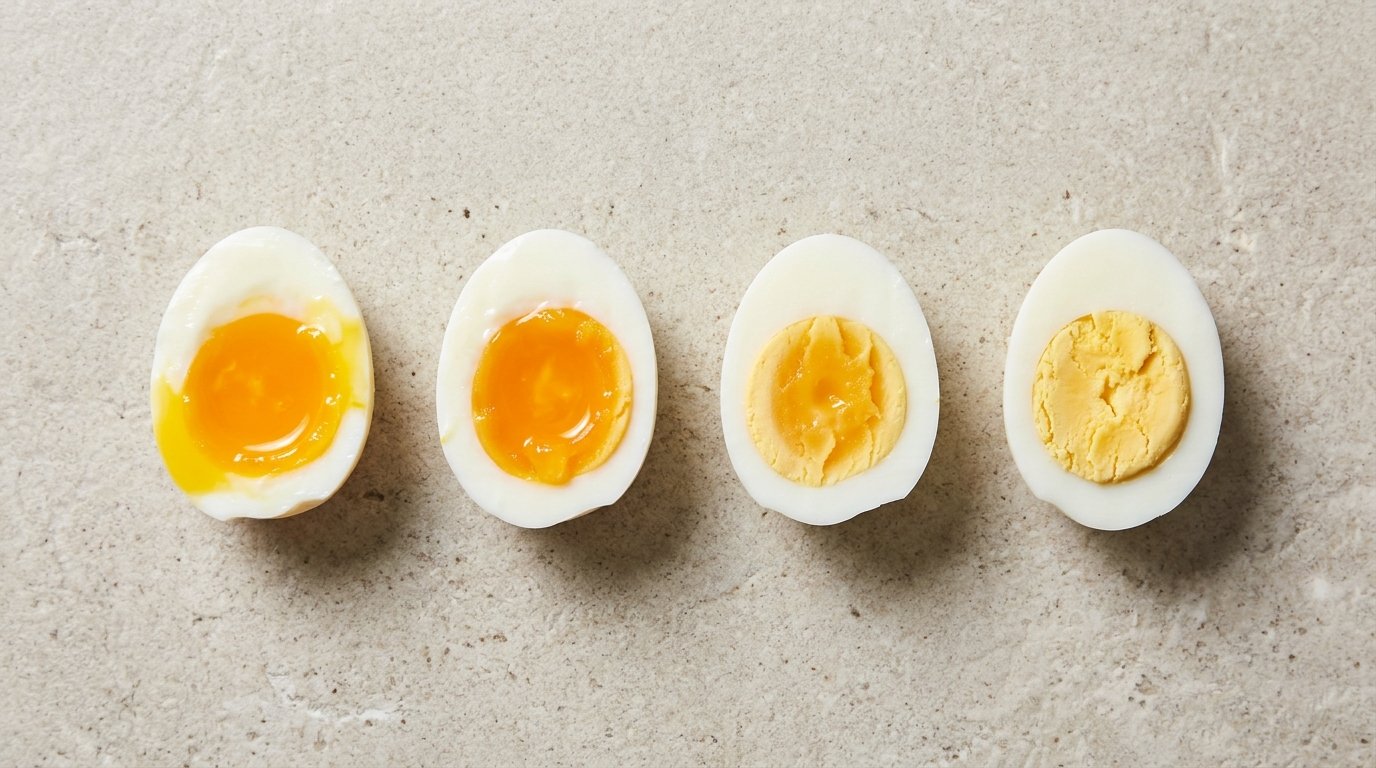
| Boil Time | Yolk Texture | White Texture | Best Everyday Use |
|---|---|---|---|
| 6 Minutes | Liquid, warm, and runny | Softly set and tender | Dipping with toast soldiers or topping grain bowls |
| 7 Minutes | Thick, glossy, and jammy | Fully set | Ramen bowls, avocado toast, and warm salads |
| 8 Minutes | Softly set, custard-like center | Firm and smooth | Snack boxes, noodle soups, and halved breakfast plates |
| 10 Minutes | Mostly firm with a tiny moist center | Firm | Classic sandwiches, salads, and meal prep |
| 12 Minutes | Completely firm, creamy-dry yellow | Fully firm | Deviled eggs, egg salad, and slicing cleanly |
Avoid boiling eggs for 14 to 15 minutes or longer. Overcooking squeezes moisture out of the egg white proteins, leaving them rubbery, and triggers a harmless chemical reaction between sulfur and iron that creates a greenish-gray ring around the yolk, as noted by the Exploratorium Science of Eggs.
Step-by-Step Method: Hot Start vs. Cold Start
Home cooks often debate whether to drop eggs into boiling water or start them in cold water. Food science testing shows that starting in already-boiling water gives you much more consistent timing and noticeably easier peeling because the sudden heat sets the outer egg white proteins before they can bond tightly to the inner shell membrane.
Follow these simple steps for reliable results every time:
- Boil the water first: Fill a saucepan with enough water to cover the eggs by at least one inch. Bring it to a full boil over high heat, then lower the burner slightly to a steady, gentle boil so the eggs do not bounce around and crack.
- Lower the eggs gently: Use a slotted spoon to lower cold eggs from the refrigerator into the water one by one. Keep the eggs in a single layer so they cook evenly.
- Set your timer immediately: Start your kitchen timer as soon as the last egg enters the pot. Maintain a gentle simmer rather than a violent, rolling boil.
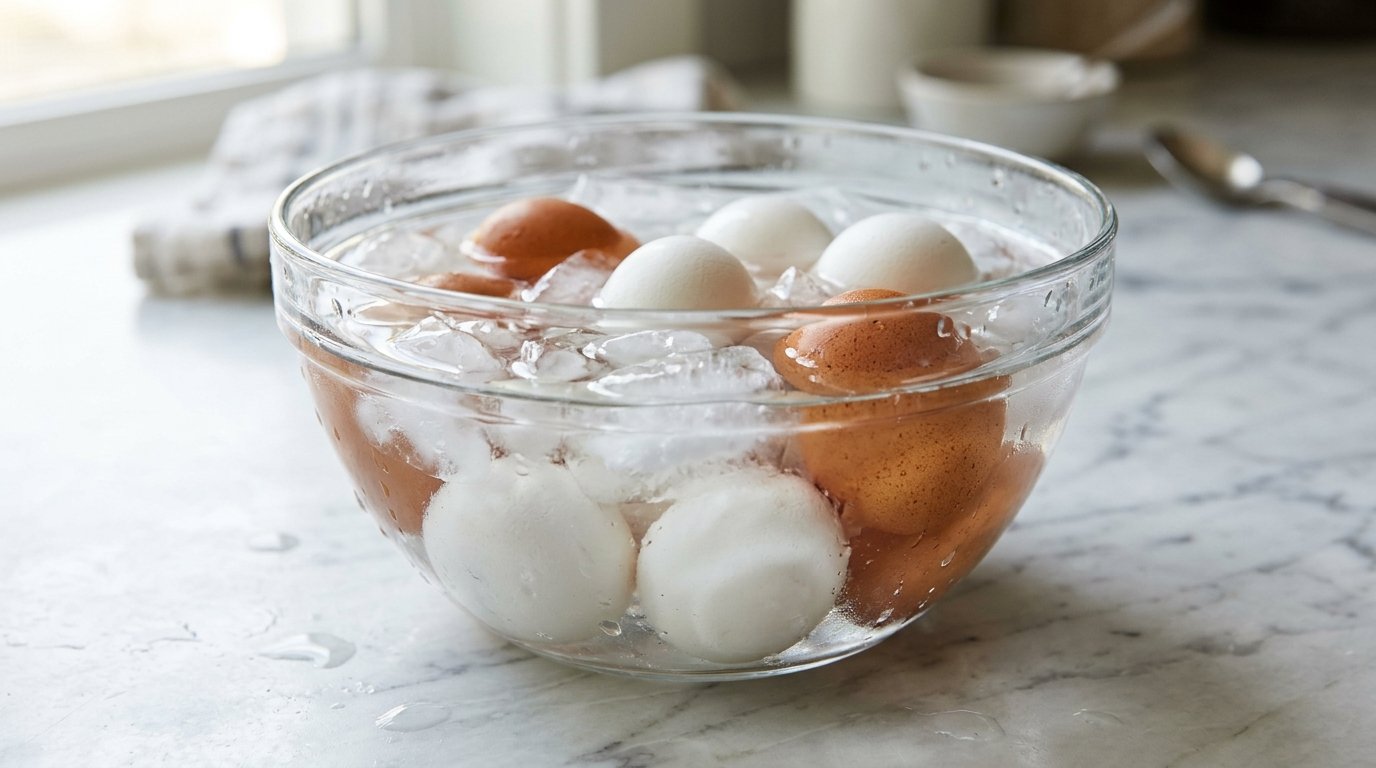
- Shock in an ice bath: When the timer rings, immediately transfer the eggs with a slotted spoon into a bowl filled with cold water and ice cubes. Let them chill for at least 10 to 15 minutes to halt carryover cooking.
If you prefer the traditional cold-water method recommended by the USDA Food Safety and Inspection Service, place eggs in a single layer, cover with one inch of cold tap water, bring just to a boil, cover the pot, turn off the heat, and let large eggs stand for 15 minutes (12 minutes for medium, 18 minutes for extra-large) before cooling in cold water.
How to Peel Boiled Eggs Without Tearing the White
Even a perfectly timed egg can be frustrating if half the white sticks to the shell. Peeling becomes effortless when you combine three small habits:
- Use eggs that are at least a week old: Very fresh eggs have a lower pH, which makes the membrane cling tightly to the egg white. As eggs sit in the fridge for 7 to 10 days, they lose a bit of moisture and carbon dioxide, creating a larger air pocket and higher pH that releases cleanly.
- Chill thoroughly before peeling: Give hard-boiled eggs 10 to 15 minutes in ice water so the white firms up and pulls slightly away from the shell.
- Peel from the wide base under water: Gently tap the egg all over to create fine cracks, start peeling at the wider bottom end where the air pocket sits, and peel inside a bowl of water or under cool running water so water slips under the membrane.
Adjusting Egg Boiling Times for Size and High Altitude
Two factors can shift your ideal cooking time by one to three minutes: egg size and elevation.
- Medium vs. Extra-Large Eggs: The chart above is calibrated for standard large eggs. Subtract about 30 to 45 seconds for medium eggs, and add 1 to 1.5 minutes for extra-large or jumbo eggs.
- High-Altitude Cooking: Above 3,000 feet, lower atmospheric pressure causes water to boil at a lower temperature than 212°F (100°C). According to Healthline’s cooking guide, a practical rule is to add roughly 1 extra minute of boiling time for every 1,000 feet above 3,000 feet, or switch to steaming eggs in a covered basket for 15 to 20 minutes as outlined by Colorado State University Extension.
How Long Do Boiled Eggs Last in the Fridge?
Once your eggs are cooked and cooled, refrigerate them within two hours. According to the USDA, hard-cooked eggs stored in their shells remain safe and fresh in the refrigerator for up to 7 days. If you peel them ahead of time for quick breakfasts, store them in a sealed airtight container lined with a damp paper towel and eat them within 2 to 3 days. Avoid freezing whole boiled eggs, as freezing turns the cooked whites tough and watery.
Frequently Asked Questions
Should I add salt or vinegar to the boiling water?
You do not need baking soda, salt, or vinegar to make eggs peel cleanly when you use the hot-start method and an ice bath. However, adding a small pinch of salt can help coagulate the egg white faster if a shell happens to crack mid-boil.
Why do my eggs crack when I drop them into boiling water?
Cracks usually happen when eggs hit the bottom of the pot too hard or when water is boiling too aggressively. Lower each egg gently with a slotted spoon and keep the water at a steady, gentle bubble rather than a turbulent boil.
Can I steam eggs instead of boiling them?
Yes. Place eggs in a steamer basket over 1 to 2 inches of boiling water, cover the pot, and steam for 6 minutes for soft yolks or 12 minutes for hard-boiled eggs. Steaming uses less water and produces the same easy-to-peel results.
How long do boiled eggs last in the fridge?
Refrigerate hard-cooked eggs within two hours of cooking. In their shells, they stay safe and fresh for up to 7 days. If you peel them ahead of time, store them in a sealed airtight container lined with a damp paper towel and eat them within 2 to 3 days. Do not freeze whole boiled eggs — freezing turns the whites tough and watery.