How to Cook Rice Perfectly Every Time: A Complete Stovetop Guide
Key takeaway: To cook rice perfectly on the stove, rinse it until the water runs clear, use about 1.5 cups of water per cup of long-grain white rice, simmer covered for 15 to 18 minutes without lifting the lid, then rest it covered for 10 minutes and fluff with a fork.
Learning how to cook rice properly is one of the most useful kitchen skills you can build. Even though rice only requires grain and water, small details in rinsing, heat control, and resting time make the difference between separate, tender grains and a sticky, scorched pot. Whether you are serving rice alongside a weeknight stir-fry or a hearty curry, this guide covers reliable ratios, foolproof stovetop steps, and easy fixes. For more practical everyday tutorials, explore our guides on USABite.
Why Water-to-Rice Ratios Matter
Different rice varieties absorb water at different rates because of their grain length, bran layer, and starch balance. Short-grain rice has more surface starch for a cohesive texture, while long-grain varieties like basmati and jasmine cook up lighter and more separate. As BBC Good Food notes, rice also varies slightly by harvest batch, so use the chart below as your baseline and adjust by a tablespoon or two next time if needed.
| Rice Variety | Rice-to-Water Ratio (1 Cup) | Simmer Time | Rest Time | Expected Texture |
|---|---|---|---|---|
| Long-Grain White Rice | 1 : 1.5 to 1.75 cups | 15–18 min | 10 min | Fluffy, separate grains |
| Basmati Rice | 1 : 1.5 cups | 12–15 min | 5–10 min | Long, aromatic, non-sticky |
| Jasmine Rice | 1 : 1.25 to 1.5 cups | 12–15 min | 10 min | Soft, fragrant, tender |
| Short-Grain / Sushi Rice | 1 : 1.1 to 1.25 cups | 12–15 min | 10 min | Plump, cohesive, sticky |
| Brown Rice (Long-Grain) | 1 : 1.75 to 2 cups | 35–45 min | 10 min | Chewy, nutty, whole-grain |
How to Cook White Rice on the Stove (Step-by-Step)
The classic absorption method works in any kitchen with a medium heavy-bottomed saucepan and a tight-fitting lid. Choose a pot where raw rice fills no more than a quarter of the depth, since rice roughly triples in volume as it cooks.
Step 1: Rinse the Rice Until Clear
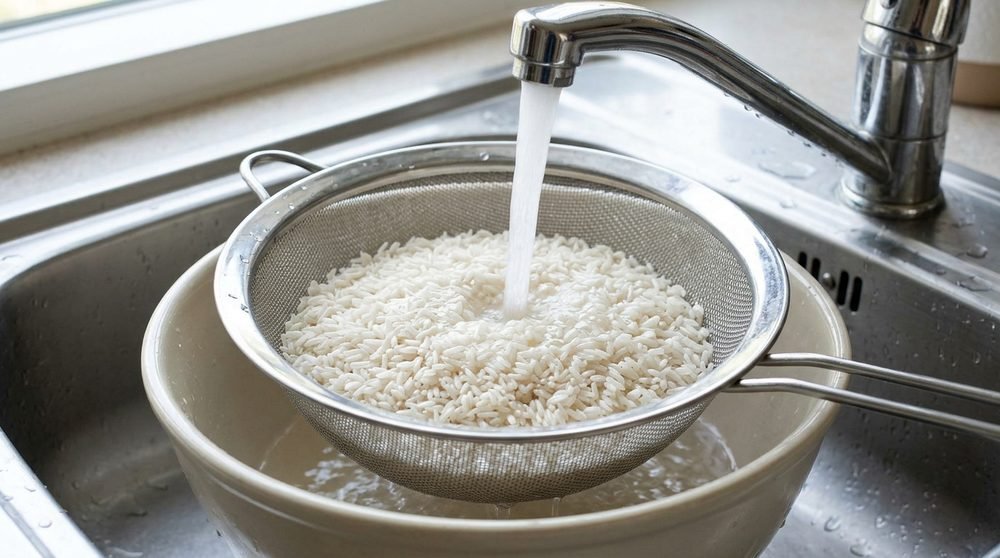
Place your measured dry rice in a fine-mesh strainer under cool running water, gently swishing the grains with your fingers for 30 to 60 seconds until the milky runoff turns mostly clear. According to Food Network Kitchen, rinsing away excess surface starch is the best way to prevent gummy, clumped rice. (Skip rinsing only when making creamy risotto or paella, or if you prefer to retain added surface vitamins on enriched rice.)
Step 2: Measure Water and Season
Transfer the drained rice into your saucepan and add cold or room-temperature water using the ratio chart above (1 cup long-grain white rice to 1.5–1.75 cups water). Stir in ½ teaspoon of kosher salt per cup of dry rice, plus an optional teaspoon of butter or neutral oil for extra sheen.
Step 3: Bring to a Boil, Then Simmer Covered
Set the uncovered pot over medium-high heat and bring the water to a steady boil. Give the rice one gentle stir, immediately lower the heat to its lowest setting, cover tightly, and simmer for 15 to 18 minutes.
Do not peek or stir. Lifting the lid releases essential steam, while stirring breaks softening grains and turns the pot starchy.
Step 4: Rest Off the Heat and Fluff With a Fork
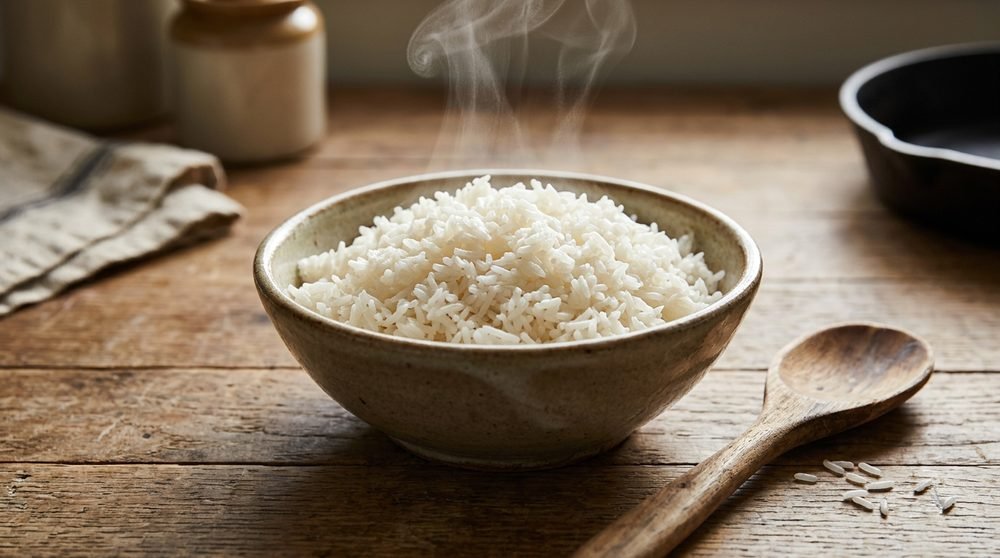
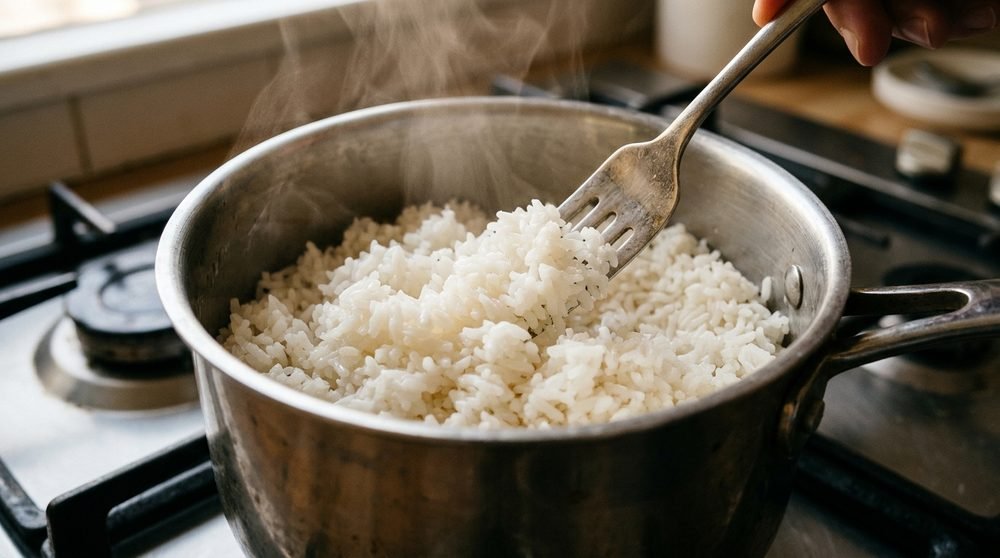
When the timer ends, turn off the burner, slide the pot to a cool spot, and let it rest covered for 10 minutes so moisture redistributes evenly. Remove the lid and gently fluff from the bottom up with a fork rather than a spoon.
Three Helpful Alternatives to Stovetop Cooking
- Rice Cooker Method: Rinse the grains, fill water to your cooker’s marked line (typically 1:1.1 to 1:1.2 for white rice, per Yum Asia’s rice guide), and press start.
- Pasta Method (Best for Brown Rice): Boil brown rice uncovered in a large pot of salted water until tender, drain in a fine-mesh strainer, and steam covered off the heat for 5 minutes.
- Pilaf (Toasting) Method: Sauté dry or well-drained basmati or jasmine rice in a tablespoon of butter or oil for 2 to 3 minutes until nutty before adding boiling water.
Troubleshooting Common Rice Mistakes
- Mushy rice: Caused by excess water or mid-cook stirring. Spread the cooked rice on a wide baking sheet for 5 minutes so extra steam evaporates.
- Undercooked or crunchy rice: Water boiled off too fast or the lid leaked steam. Sprinkle 2 to 3 tablespoons of hot water on top, cover tightly, and steam on low for 5 more minutes.
- Scorched bottom: Use a heavier saucepan, lower the simmer flame, and move the pot off the hot burner immediately when the timer finishes.
How to Store and Reheat Cooked Rice Safely
Cool leftover rice within an hour and store it in an airtight container in the fridge for up to 3 to 4 days. To reheat, add 1 tablespoon of water per cup of rice, cover loosely, and microwave in 60-second bursts until steaming hot.
Frequently Asked Questions
Should you soak basmati rice before cooking?
Soaking basmati rice in cool water for 20 to 30 minutes helps grains elongate evenly with less breakage, as noted by The Chopping Block. Reduce cooking water slightly to about 1.25–1.5 cups per cup of rice when soaking.
Can you measure rice water without a measuring cup?
Yes—level the rinsed rice in your pot, rest your fingertip lightly on top of the rice, and add cold water until it reaches the first knuckle crease of your index finger.
Why is my rice mushy?
Mushy rice is usually caused by too much water or stirring while it cooks. Spread the cooked rice on a wide baking sheet for 5 minutes so the extra steam evaporates, and use less water next time.