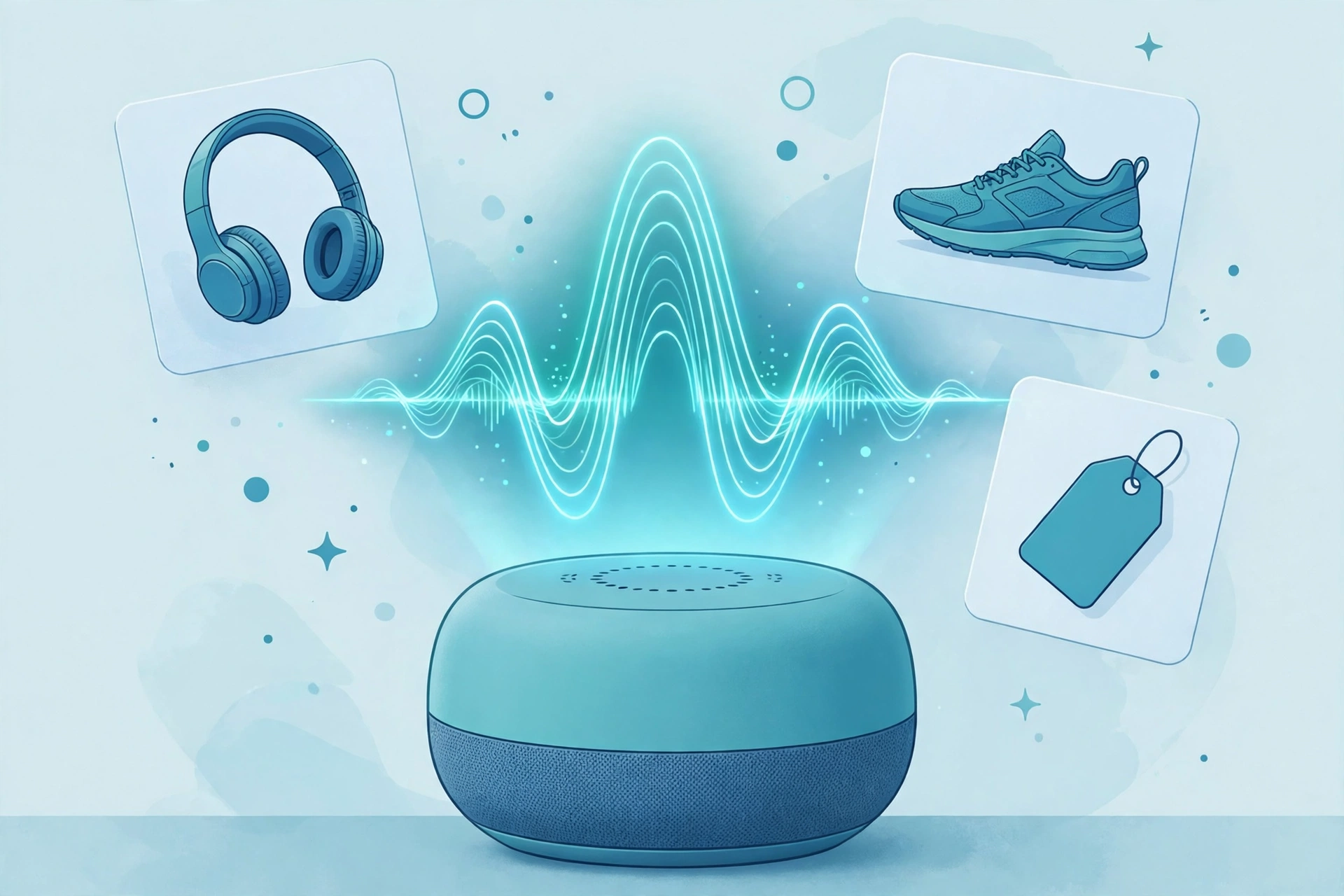
PIM Voice AI: How Voice Assistants Use Product Data to Sell Hands-Free
Key takeaway: PIM voice AI pairs product information management (PIM) systems with voice assistants like Alexa, Google Assistant, and ChatGPT Voice. The PIM supplies clean, structured product data — attributes, pricing, availability — so a shopper can ask aloud for “a cordless drill with a two-year warranty” and get an accurate spoken answer. Gartner estimates that over 50% of digital product searches will happen through voice or conversational AI systems in 2026.
What PIM Voice AI Actually Is
A PIM — a product information management system — is a retailer’s central database for everything about its products: names, descriptions, specs, prices, images, and inventory. Voice AI, meanwhile, is the speech technology behind assistants like Amazon Alexa, Google Assistant, Siri, and ChatGPT Voice.
PIM voice AI is simply the connection between the two: structured product data, delivered through an API, feeding voice and chat assistants so they can answer product questions in natural, spoken language. Instead of scrolling a product page, a customer asks aloud — “Hey Google, what are the best lightweight running shoes for flat feet under $100?” — and the assistant responds with a spoken recommendation.
Industry writers at Quable call this the “zero-click” era: shoppers getting instant, reliable product answers through voice assistants, chatbots on WhatsApp and Messenger, or embedded interfaces, without ever clicking a traditional product page.
Why It Matters in 2026
The shift is driven by numbers. According to Gartner, cited by PIM vendor Pimberly, over 50% of digital product searches will occur through voice or conversational AI systems by 2026. Voice assistants also solve a real revenue problem: commerce agency VML reports that only about 8% of e-commerce site visitors add a product to their basket, and roughly 70% of shopping carts are abandoned — mostly because of unresolved buyer doubts about features, compatibility, prices, or returns.
Voice helps because humans speak about four times faster than they type, per VML, and a voice assistant can act like an in-store salesperson: explaining jargon, comparing products side by side, and summarizing reviews right at the moment of hesitation. A PIM voice AI setup makes that guidance accurate, because the answers come from the retailer’s own structured product records rather than generic guesses.
How a Voice Purchase Works, Step by Step
The chain is short, but every link depends on the data behind it:
- Speech-to-text captures the spoken question.
- A large language model interprets the intent — voice assistants “think in intent, not keywords,” as Pimberly puts it.
- An API call pulls the matching product data from the PIM: attributes, pricing, and live stock.
- Text-to-speech delivers a short, conversational spoken answer.
If that product data is fragmented across spreadsheets, ERPs, and e-commerce platforms, the assistant cannot interpret it — and the product simply doesn’t appear in voice results, while competitors with cleaner data win the sale. That is the core business case for the PIM side of the pairing.
What Makes Product Data Voice-Ready
Based on how vendors and analysts describe the pattern, voice-ready product data has a few consistent traits:
- Structured attributes: every attribute — power source, warranty length, size, price range — clearly defined and standardized, so “Warranty: 2 years” and “Type: Cordless” match a spoken request exactly.
- Conversational copy: natural-language descriptions instead of bare spec tables. Pimberly’s example: “breathable 100% organic cotton, perfect for warm-weather comfort” beats “Material: Cotton” when an assistant reads it aloud.
- Real-time sync: pricing, images, and stock updated across every channel instantly — outdated inventory data turns a voice answer into a broken promise.
- Schema markup: embedded structured data so AI systems understand what each attribute means, not just what it says.
- Localization: regional phrasing (“trainers” vs. “sneakers”), currencies, and sizing so voice queries match in every market.
What This Means for You
As a shopper: expect more hands-free shopping — spoken product comparisons, review summaries, and reorder-by-voice for household items — with accuracy that depends on the store behind the assistant, not the assistant alone.
As a store owner or marketer: voice AI is only as smart as the data it is given. Centralizing product data in a PIM, structuring attributes, and syncing live inventory is the prerequisite; the voice assistant is the easy part. Brands that skip that groundwork will simply be invisible in the voice channel.
Analysis: What’s Still Uncertain
(The following is analysis based on the sources cited, not independently verified fact.)
Voice commerce’s growth depends on a few open questions: how much shoppers will trust spoken purchase recommendations, how measurement and attribution work when there is no page view to track, and how privacy expectations evolve for shopping data flowing through always-on voice interfaces. What is verifiable today is the data foundation: without structured product data, voice AI has nothing reliable to say.
PIM Voice AI: Frequently Asked Questions
What is PIM voice AI?
PIM voice AI is the integration of product information management (PIM) systems with voice assistants. The PIM provides centralized, structured product data — specs, pricing, availability — so assistants like Alexa, Google Assistant, or ChatGPT Voice can answer spoken product questions accurately.
How does voice AI find the right product?
The assistant converts speech to text, uses a language model to interpret the shopper’s intent, then queries structured product data via API for matching attributes, live pricing, and stock. The structured data is the key step: without it, the assistant cannot match the request to a product.
Can my store do voice commerce without a PIM system?
Probably not well. Standard e-commerce platforms typically lack the data modeling, enrichment, and real-time API integration needed for voice search compatibility. A PIM provides the clean, centralized data layer that voice assistants depend on.
Why do brands say zero-click commerce raises the stakes?
In a spoken or chat answer there is no product page to skim — the information must be concise, contextual, and exactly right on the first try. Wrong data in a voice channel destroys trust immediately, which is why brands treat it as a data-governance problem, not just a UX trend.
Sources
- Pimberly — Top 4 Ways to Leverage PIM for AI Voice Search (updated September 23, 2026; cites Gartner on voice search share)
- Quable — Zero-click: PIM and conversational commerce (updated September 15, 2026)
- VML — AI Voice for E-commerce: Unlock Higher Conversions (conversion stats and voice-interaction mechanics)