Retail Banking Automation Explained: What It Is, the Main Uses, and What It Changes for Customers
Key takeaway: Retail banking automation uses software — robotic process automation (RPA), AI, and agentic AI — to handle repetitive, rules-based work in everyday banking, from opening accounts to checking loan applications and flagging fraud. It cuts processing times from weeks to minutes in the best-documented cases, but banks still keep humans in charge of lending decisions and complaints.
What Retail Banking Automation Actually Means
Retail banking automation is the use of technology to carry out the repetitive, rules-based processes behind the accounts, cards, and loans ordinary customers use every day. As IBM puts it, modern banking automation relies on robotic process automation (RPA) and artificial intelligence, including generative AI and agentic AI, to improve speed, accuracy, compliance, and efficiency while reducing manual work. The official IBM overview of banking automation notes that in retail banking it supports credit card issuance, account setup, loan applications, and compliance checks.
A familiar example is mobile check deposit. A decade ago, depositing a check meant a bank employee reading the image, keying in the data, and moving the money. Today, software reads the check, verifies it, and updates the balance, often in seconds.
The Main Uses in Retail Banking
The highest-value work is in the back office, not the chatbot. According to a 2026 analysis of AI in retail banking, the top use cases are loan origination, know-your-customer (KYC) and customer onboarding, dispute resolution, and fraud screening — document-heavy workflows where reading paperwork and routing it correctly matters more than conversational fluency.
| Use case | What automation does | Documented result |
|---|---|---|
| Customer onboarding | Collects identity documents, runs KYC and sanctions checks, updates the CRM | Citizens Bank cut onboarding time by 85% (Bizagi case study) |
| Credit decisions | Pulls income and credit data, applies policy rules, routes exceptions to staff | AEON Credit Service (Asia) went from over two weeks to 30 minutes per credit release decision |
| Compliance reporting | Monitors transactions, prepares reports, keeps an audit trail | Bancolombia cut operational risk in compliance processes by 28% |
| Customer service | Voice bots and AI assistants resolve routine calls and hand off complex ones | BCG reports voice bots handling over 70% of call volume at about one-fifth of the cost |
| Fraud screening | Scans transactions in real time and flags anomalies for human review | BNY says AI now reviews about 70% of restricted-party payment screening, closing cases over 30% faster |
Onboarding is where the payoff is most visible to customers: Capgemini’s 2025 World Retail Banking Report found that 47% of customers abandon a digital onboarding process because of a poor experience, while Accenture’s Global Banking Consumer Study (2025) found banks with high customer advocacy grow revenues 1.7 times faster than their peers.
Retail Banking Automation vs. Plain RPA: What’s the Difference?
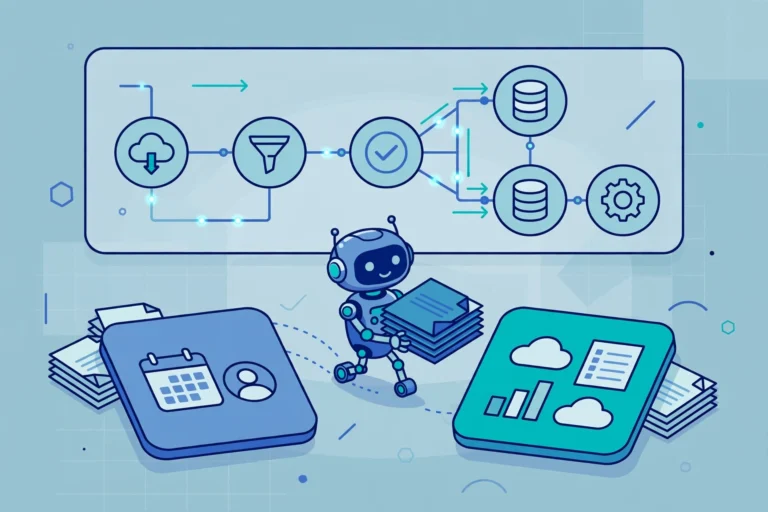
RPA follows fixed rules: copy data from this form into that system, every time, the same way. It suits structured, predictable work such as updating customer records. AI automation handles messier work — reading a pay stub or tax return, judging whether something looks off, and deciding what happens next. The newest layer, agentic AI, chains those steps into whole workflows, taking a mortgage application from document intake through checks to a draft decision, with a human approving the outcome. BNY reported in its first-quarter 2026 update that it had about 220 AI tools in production and about 140 “digital employees” — multi-agent systems working alongside staff.
What Does It Cost a Bank?
Costs vary widely, and most banks do not publish them. What is documented is the return side: BCG reports that retail banks running AI agents in production see about 50% lower collections operating costs and up to 50% lower financial-crime costs. But returns are still rare — only 4 of the 50 largest banks tracked by Evident could show a realized return from AI in 2025, according to Deloitte. And 56% of financial-services finance leaders expect AI costs and complexity to rise substantially through 2027. For a small bank, the practical route is usually a vendor platform; for a large one, the bill includes data cleanup, integration with legacy systems, and compliance documentation.
What Banks Must Get Right Before Automating
Regulation is the hard constraint. The EU AI Act’s Article 11 documentation requirements apply to high-risk AI systems, which include credit decisioning and biometric identity verification. From fiscal years beginning on or after December 15, 2026, PCAOB audit standard AS 2201 brings AI-touched financial controls into the integrated audit. In practice, every automated decision must be explainable and re-performable: the bank has to show which data went in, which rules applied, and why the outcome came out the way it did.
What It Means for Customers
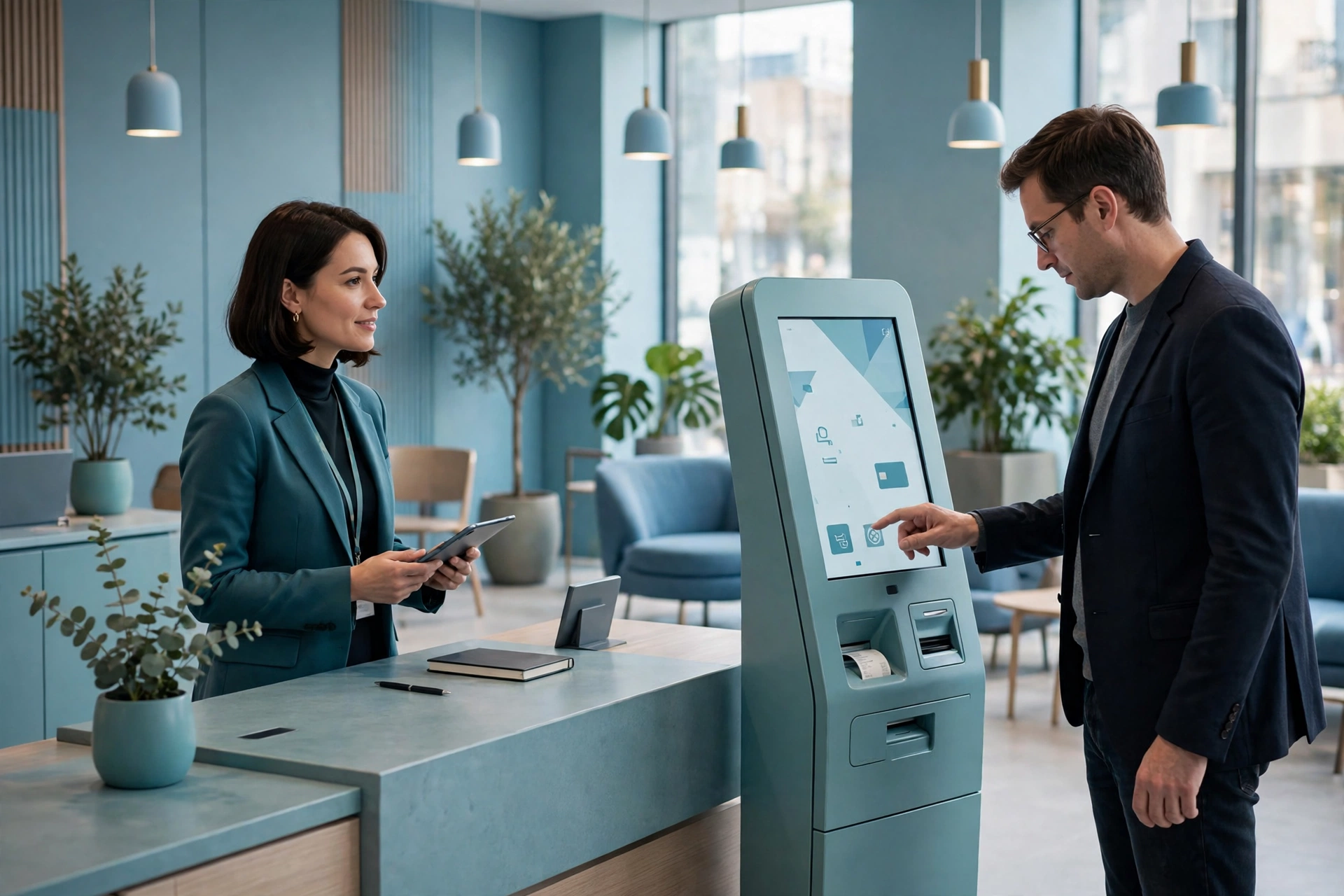
For customers, the visible change is speed and availability: accounts opened in minutes instead of days, loan decisions the same day, and support that answers at 2 a.m. The less visible change is consistency — automated workflows do the same task the same way every time, which means fewer errors in data entry and document handling. The trade-off is that automated systems can also make the same mistake at scale if their rules or training data are wrong, which is why regulators insist a human stays accountable for credit and fraud decisions.
Analysis: Fast, but the Returns Are Still Concentrated
The evidence points in one direction: retail banking automation works best where the work is paper-heavy and repetitive, and the gains are real but unevenly distributed. The banks publishing results are large institutions with the data and budgets to run agents in production, while most banks are still in pilot mode — and the 4-in-50 realized-ROI figure is a useful reality check against vendor hype. The technology is no longer the bottleneck; clean data, an auditable trail, and staff who trust the system are.
Related reading: our explainers on digital automation solutions in banking, AI business solutions, and what automation downtime costs.
Frequently Asked Questions
What is retail banking automation?
Retail banking automation is the use of software such as robotic process automation and AI to handle repetitive, rules-based work in everyday banking, including account opening, loan processing, compliance checks, and fraud screening. It speeds up processes, reduces manual errors, and leaves an audit trail, while humans stay accountable for lending and fraud decisions.
What banking tasks are automated first?
Banks usually automate document-heavy back-office work first: loan origination, KYC and customer onboarding, dispute resolution, and fraud screening. These involve reading documents, checking rules, and routing exceptions, which is where automation saves the most time. Chatbots came earlier, but the biggest returns now come from the back office.
Does retail banking automation replace bank staff?
It replaces repetitive tasks rather than whole jobs. McKinsey estimates that 50% to 60% of a bank’s staff are tied to operations in some way, and automation shifts that work toward handling exceptions, advising customers, and checking automated decisions. Banks describe the model as agent-augmented: software does the routine work and people handle the judgment calls.
Is automated banking safe for customers?
Automated systems follow set rules and leave audit trails, which generally improves consistency and fraud detection, but they can repeat a bad rule at scale if their data or logic is wrong. Regulations such as the EU AI Act require documentation for high-risk systems like credit decisioning, and banks must keep a human accountable for lending and fraud outcomes.
What does retail banking automation cost a bank?
Costs vary too much to quote a single figure, and most banks do not publish them. Documented returns include about 50% lower collections operating costs at banks running AI agents in production, according to BCG. But only 4 of the 50 largest banks could show a realized AI return in 2025, so most banks are still spending ahead of proven payback.
Sources
- IBM — What Is Banking Automation?
- Bizagi — Retail Banking Automation: Why It’s Vital to Your Bank’s Future Success
- Unblu — Current and Future Retail Banking Trends in 2026
- Kognitos — AI in Retail Banking (2026): Back-Office Use Cases
- HumbleTeam — AI Agents in Banking: From Pilots to Real Work in 2027