Hyper-Automated Social Care Analytics Solutions: What They Are and How Councils Use Them
Key takeaway: A hyper-automated social care analytics solution combines robotic process automation, AI analytics, and workflow orchestration to handle the data-heavy parts of social care — triaging referrals, updating case files, and flagging high-risk cases. It does not replace social workers; it gives them prioritised, evidence-backed caseloads so human judgment lands where it matters most.
What “hyper-automated social care analytics” actually means
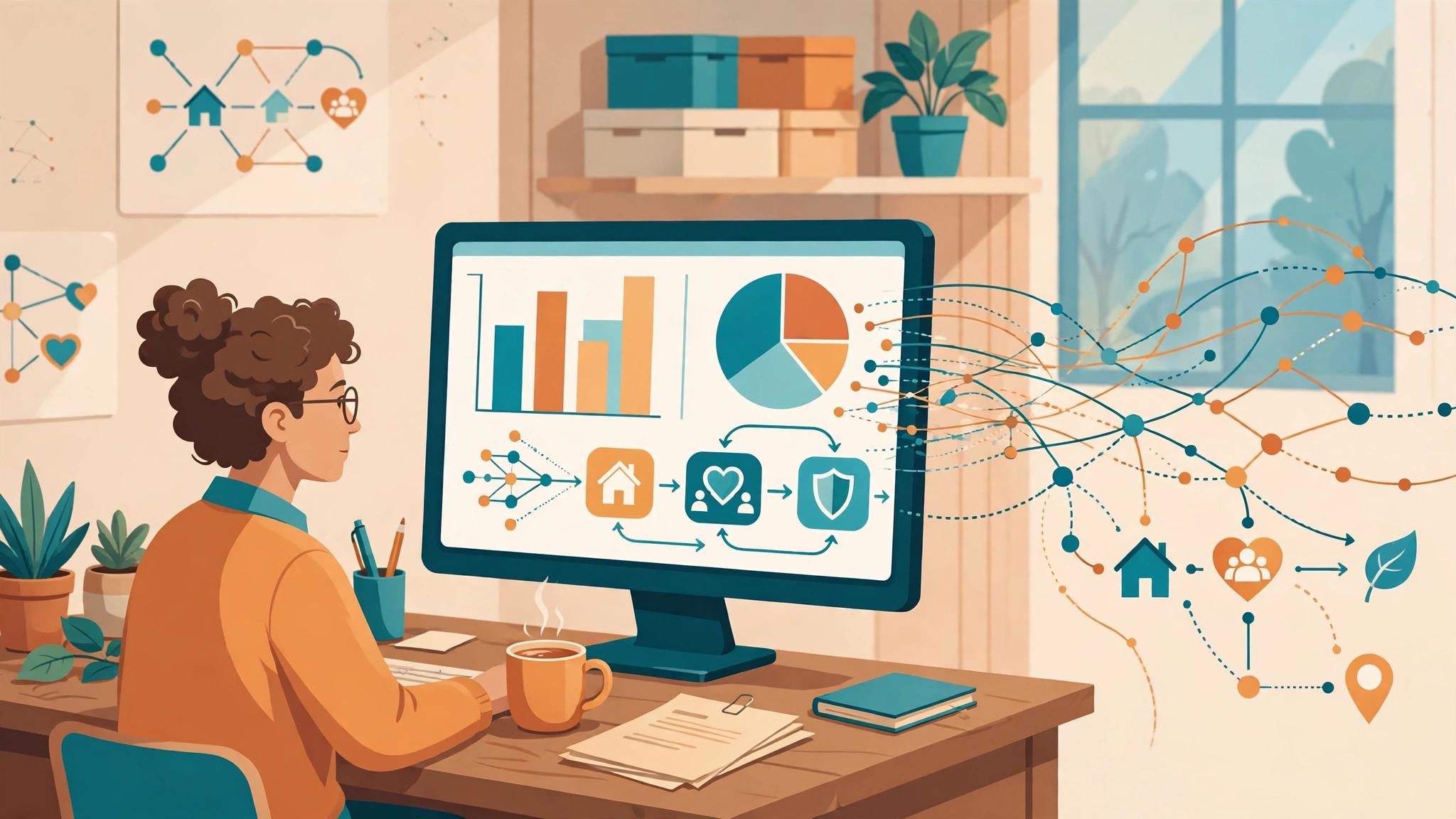
Hyperautomation is the use of automation tools and artificial intelligence to automate entire workflows, or parts of processes — the definition used by automation provider Digital Workforce in its research on the topic. A hyper-automated social care analytics solution applies that idea to social care: an analytics layer (risk scoring, demand forecasting, outcomes measurement) fused with an automation layer (data entry, notifications, report generation) around one shared workflow.
“Social care” covers the services local councils and county agencies typically run: child protection, adult and aged care, disability support, homelessness services, and safeguarding — settings where caseloads are rising while staffing is not, and where the biggest bottleneck is paperwork.
How a hyper-automated social care analytics solution works
Most solutions combine four building blocks:
- Automated data intake. Software robots pull case data from the fragmented systems most councils still run. Manual data processing caused by “fragmented and diverse systems” was named the single biggest data challenge in the Finnish survey discussed below.
- AI analytics and risk scoring. Machine learning and natural-language processing analyse case notes, intake forms, and historical outcomes to rank risk — flagging domestic-violence reports, housing emergencies, or safeguarding concerns for faster review. Leading products include explainability features so caseworkers can see why a case was escalated (Noah Intelligence, July 2026).
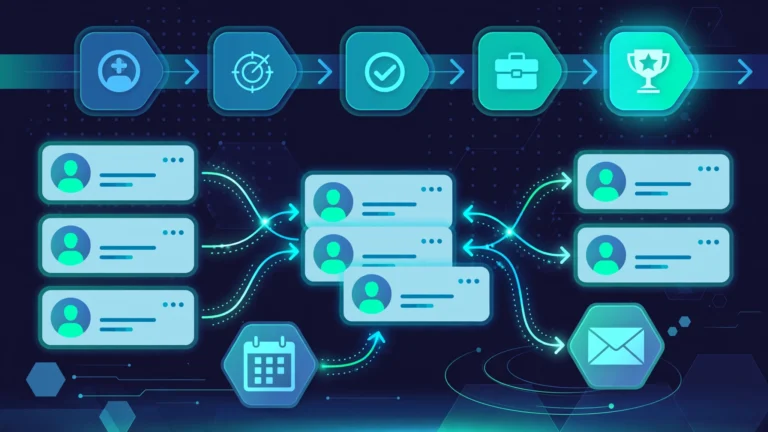
- Workflow orchestration. The system routes cases, assigns workers, and schedules follow-ups — similar in principle to digital process automation, but tuned to statutory care workflows.
- Automated reporting and audit. Statutory reports, compliance documentation, and full audit trails are generated from the workflow itself.
What the evidence shows so far
The clearest quantified study comes from Finland. A productivity survey commissioned by Digital Workforce, conducted from May to December 2024, asked 125 management-team members, middle managers, and experts across four wellbeing services counties (Kanta-Häme, Ostrobothnia, Lapland, and South Karelia) to estimate hyperautomation’s productivity impact across primary healthcare, specialised medical care, social services, and support services.
The figures, published in a press release on 6 February 2025: over 20% productivity improvement was estimated in every service area — including social services — by all four counties’ management teams. Their combined productivity potential was calculated at €417 million (using the lowest reported estimate), extrapolating nationally to up to €3 billion a year.
Two caveats, stated plainly: the survey was commissioned by an automation vendor, and the €3 billion figure is an extrapolation from four counties, not a measured result. Treat it as directional.
What respondents identified concretely were practical targets: streamlining information-processing work, automating chronic-illness monitoring data, improving service guidance, and automating HR, payroll, and financial administration. “Some productivity improvement measures could be implemented in wellbeing services counties in just a few months,” said Digital Workforce CEO Jussi Vasama, adding that automation “can enhance access to care or service guidance and ensure that long-term illness monitoring is implemented in a timely and risk-based manner.”
How councils and agencies use these tools today
The most adopted use case is case prioritisation: AI tools that sort growing volumes of urgent cases so workers see the highest-risk households first (Noah Intelligence). The market splits into enterprise platforms (Microsoft Dynamics 365, Salesforce Government Cloud, ServiceNow Public Sector, IBM Watsonx Orchestrate) and specialist tools built for frontline care — CaseManagement.ai, Casie, Complio Social, ICS.AI’s SMART platform, CareAssist, and LuxCaritas.
The best platforms deliberately avoid presenting AI as a final decision-maker, positioning it instead as a decision-support layer.
What this means for social care teams
Understand it: this is not a robot social worker — it is triage automation plus back-office automation around judgement-led workflows.
Use it: start with administrative automation (referral intake, documentation, scheduling) before predictive risk scoring, which carries heavier fairness and accountability questions. Demand explainability, insist on human-in-the-loop sign-off, and pilot on one service area first.
A research review of AI in community social services found the technology is used most in decision support and administrative automation, and stressed that professionals must retain responsibility for judgment, supervision, and direct engagement with service users (Devdiscourse). Good rule of thumb: automate the routine, keep the relationship human.
Frequently asked questions
What is a hyper-automated social care analytics solution?
It is a software platform that combines robotic process automation, AI analytics, and workflow orchestration for social care organisations. It automatically collects case data, analyses it for risk and trends, routes work to the right staff, and generates compliance reports — so social workers spend less time on paperwork and more on direct care.
How is hyperautomation different from regular automation in social care?
Regular automation handles single repetitive tasks, like copying data between systems. Hyperautomation links many tools together — RPA, machine learning, natural-language processing, and process orchestration — to automate an entire workflow end to end, from referral intake through risk scoring to reporting.
Do hyper-automated analytics solutions replace social workers?
No. Every serious deployment positions the AI as a decision-support layer, not a decision-maker. The systems prioritise cases and reduce administrative burden, but professional judgment and direct engagement with service users remain human responsibilities — in many jurisdictions, that is also a legal requirement.
What results have councils and agencies seen so far?
In a 2024 survey of four Finnish wellbeing services counties, management teams estimated over 20% productivity improvement in social services through hyperautomation, with a combined potential of €417 million. The biggest gains came from automating manual data processing, service guidance, and administrative workflows. These are survey estimates, not measured post-implementation results.
What are the main risks of using AI analytics in social care?
The main risks are fairness (biased training data can skew risk scores against vulnerable groups), privacy (case data is highly sensitive), and over-reliance (treating a risk score as a decision). Mitigations include explainability features, privacy controls, audit trails, and mandatory human review of every AI-flagged case.
Sources
- Digital Workforce — “Up to 3bn € Annual Productivity Benefit Through Automation” (press release, 6 February 2025)
- Noah Intelligence — “AI-driven prioritisation transforms social services case management amid rising demand” (3 July 2026)
- Devdiscourse — “Community social services turn to AI for faster decisions and reduced bureaucracy”