What Is the Main Goal of Generative AI? Creating New Content, Explained
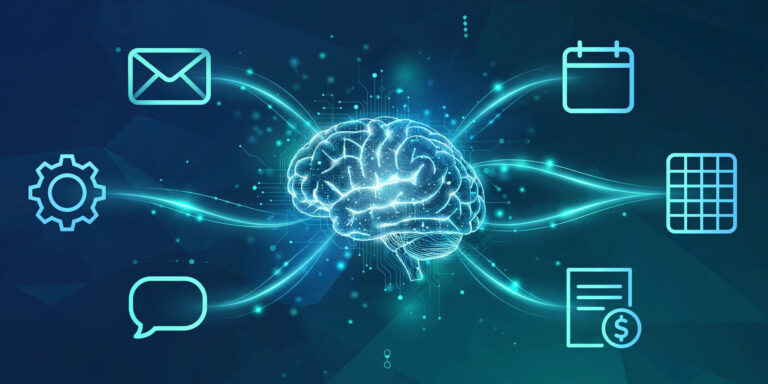
Key takeaway: The main goal of generative AI is to create new, original content — text, images, audio, video, or software code — in response to a user’s prompt. It does this by learning statistical patterns from vast training datasets during deep-learning training, then using those encoded patterns to produce outputs that are similar to, but not identical to, the original data.
Generative AI is everywhere — writing emails, drafting code, creating images from a sentence. But behind the tools is a single, simple purpose. This article explains what generative AI is trying to achieve, how it gets there, and how it differs from other kinds of AI.
The Main Goal of Generative AI, in Plain English
The main goal of generative AI is creation: producing original content that did not exist before. IBM defines generative AI as “artificial intelligence (AI) that can create original content such as text, images, video, audio or software code in response to a user’s prompt or request” (IBM, What is generative AI?).
That is the whole job description. You describe what you want in natural language, and the system generates something new that matches — a paragraph, a picture, a melody, a block of code.
How It Achieves That Goal: Learning Patterns, Not Memorizing
Generative AI does not work like a database that stores and retrieves answers. During training, models are fed huge collections of text, images, code, and audio. They learn the statistical patterns and relationships in that data rather than storing it — then use those learned patterns to generate new outputs.
IBM Research puts it this way: generative models “encode a simplified representation of their training data and draw from it to create a new work that’s similar, but not identical, to the original data” (IBM Research). The model is essentially learning what realistic language, images, or code should look like — then producing its best statistical guess at a good answer when prompted.
This is why prompt quality matters so much: the output is shaped by the patterns the model learned plus the context you provide in your request.
Generative AI vs. Other AI: Creation, Not Prediction
The creation goal is what separates generative AI from other AI approaches. Predictive (or traditional) AI analyzes data to detect patterns, forecast outcomes, or automate decisions — for example, predicting which customers might cancel a service.
Generative AI goes a step further: it produces. IBM notes that “generative AI is not predictive AI” — where predictive AI might forecast churn, generative AI can draft the retention email, generate a product image, write chatbot replies, or suggest code (IBM, Generative AI vs. Predictive AI).
In short: traditional AI answers “what will happen?”; generative AI answers “make me something.”
Why This Goal Matters in Practice
The creation capability is why adoption is accelerating: McKinsey research cited by IBM found one-third of organizations already use generative AI regularly in at least one business function, and Gartner projects more than 80% will have deployed generative AI applications or APIs by 2026 (IBM). Common uses include natural-language interfaces, augmenting routine writing and coding work, and fine-tuning models for specific domains.
Analysis: The Limits Behind the “Creation” Goal
Analysis — what this means beyond the definitions: The creation goal has a built-in trade-off. Because the model’s only real objective is producing statistically plausible output, it can generate confident-sounding content that is wrong — the phenomenon known as hallucination. IBM itself notes that “generative AI can sometimes produce inaccurate information,” so outputs should still be reviewed when accuracy is important (IBM, Agentic AI vs. Generative AI).
Practically, this means generative AI is best treated as a capable first-draft machine, not an authority. The goal is creation — verification remains the human’s job.
Frequently Asked Questions
What is the main goal of generative AI in simple words?
The main goal of generative AI is to create new content — like text, images, music, or code — based on what it learned from large amounts of training data. Instead of just analyzing information, it produces original outputs in response to a user’s prompt or instructions.
How is generative AI different from predictive AI?
Predictive AI analyzes existing data to forecast outcomes, detect patterns, or automate decisions. Generative AI uses learned patterns to create brand-new content. For example, predictive AI can forecast sales, while generative AI can write the sales pitch.
What kinds of content can generative AI create?
Modern generative AI can create text (articles, emails, stories), images and video (tools like DALL-E and Midjourney), audio and music, software code (tools like GitHub Copilot), and structured data. Many systems are now multimodal, combining text, images, audio, and video in one interaction.
Does generative AI just copy its training data?
No. Generative AI models encode a simplified representation of their training data — statistical patterns, not the data itself — and generate new outputs that are similar but not identical to the originals. That is why two prompts rarely produce exactly the same result.
Sources
- IBM — What is generative AI?
- IBM Research — What is generative AI?
- IBM — Generative AI vs. predictive AI: What’s the difference?
- IBM — Generative AI use cases, examples & applications
- IBM — Agentic AI vs. Generative AI