How to Make Buttermilk at Home in 5 Minutes (Easy Ratios & Substitutes)
You are halfway through measuring flour for weekend pancakes or a batch of biscuits when you open the fridge and realize you have no buttermilk. Before you grab your keys for a quick grocery run, there is an easier fix sitting in your kitchen right now. Learning how to make buttermilk at home takes less than five minutes and requires only two everyday ingredients: regular milk and a splash of acid.
Homemade buttermilk is technically an acidified milk rather than a fermented dairy product, yet it performs almost identically in baking. Below, you will find the exact 2-ingredient method, a quick scaling chart for smaller recipes, dairy-free and pantry alternatives, and practical advice on when homemade works best versus when to buy a carton.
What Is Buttermilk and Why Do Recipes Call for It?
Traditionally, buttermilk was the thin, slightly tangy liquid left behind after churning cream into butter. Today, the cultured buttermilk sold in grocery stores is made by adding beneficial lactic acid bacteria to pasteurized milk, which ferments the lactose into lactic acid and gives the drink its signature tang and thick, creamy texture (Cakes by MK).
In baking, that acidity does two important jobs. First, it reacts with baking soda to produce carbon dioxide bubbles, giving pancakes, muffins, and quick breads a lighter rise. Second, the gentle acid helps tenderize gluten strands in flour, resulting in a softer crumb and richer flavor than plain milk alone can deliver.
The Fastest Method: 2-Ingredient Homemade Buttermilk
The most reliable way to make buttermilk at home combines milk with either white distilled vinegar or fresh lemon juice (Tastes Better From Scratch).
Ingredients for 1 Cup of Homemade Buttermilk
- 1 tablespoon (15 ml) white distilled vinegar, apple cider vinegar, or freshly squeezed lemon juice
- Just under 1 cup (about 225 ml) whole milk, ideally at room temperature
Step-by-Step Instructions
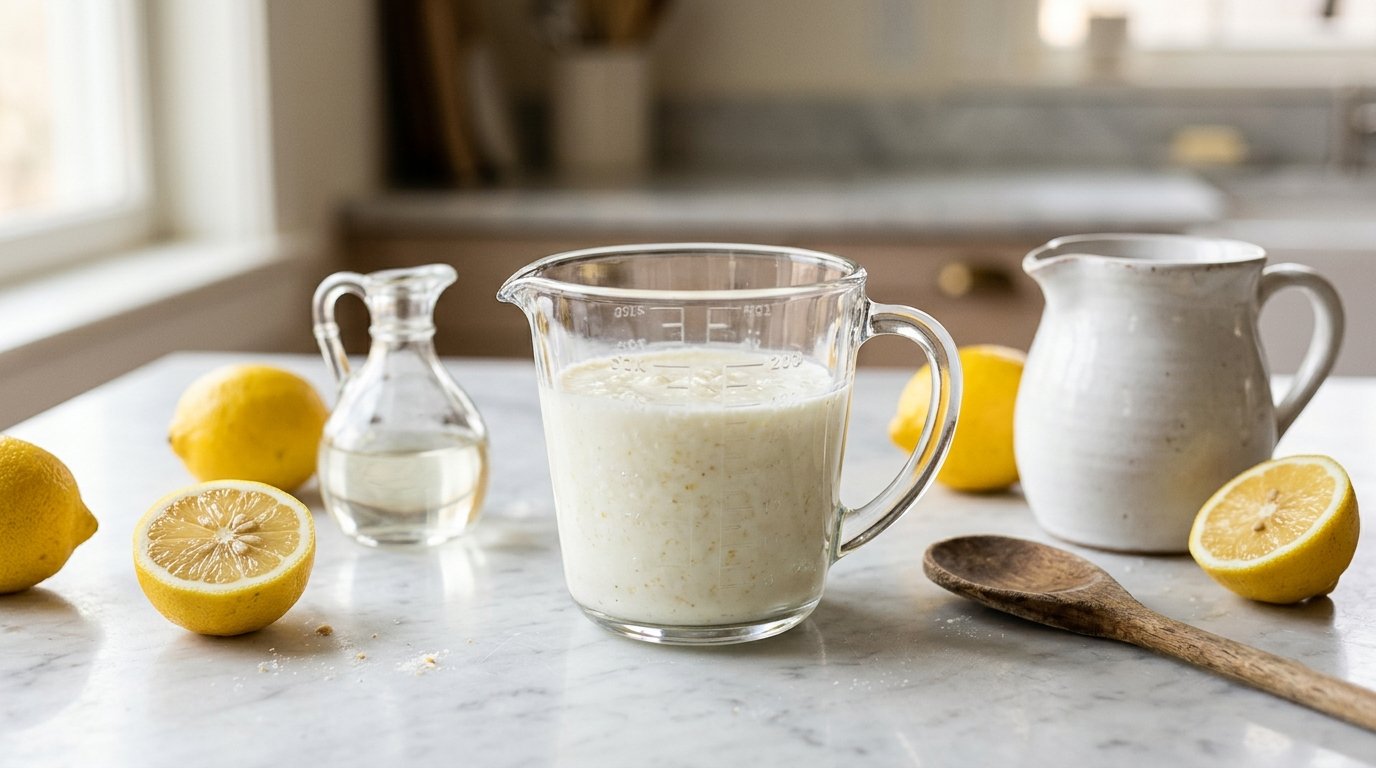
- Measure the acid first: Pour 1 tablespoon of vinegar or lemon juice into a 1-cup liquid measuring cup (Sugar Spun Run).
- Top up with milk: Add enough milk to bring the total liquid volume right up to the 1-cup line. Measuring this way keeps your recipe’s liquid ratio accurate instead of adding extra liquid.
- Stir gently: Give the mixture a quick stir with a spoon so the acid disperses evenly throughout the milk.
- Let it rest for 5 to 10 minutes: Leave the cup on the counter at room temperature. Within a few minutes, the milk will thicken slightly and develop small, soft curds (Haniela’s).
- Stir once more and use: Give it one final stir and pour the entire mixture—including the small curds—straight into your batter or marinade.

Quick Scaling Cheat Sheet
Many baking recipes call for less than a full cup. Use this simple reference table to scale the standard 1 tablespoon per cup ratio cleanly:
| Buttermilk Needed | Vinegar or Lemon Juice | Milk to Add |
|---|---|---|
| 1/4 cup | 3/4 teaspoon | Fill to the 1/4-cup line |
| 1/2 cup | 1 1/2 teaspoons | Fill to the 1/2-cup line |
| 3/4 cup | 2 1/4 teaspoons | Fill to the 3/4-cup line |
| 1 cup | 1 tablespoon | Fill to the 1-cup line |
Which Milk Works Best?
Whole milk is the best choice for DIY buttermilk because its natural fat content keeps cakes, biscuits, and cornbread moist and rich (Sally’s Baking Addiction). Reduced-fat (2%) milk also works in a pinch, though skim or nonfat milk tends to produce a thinner liquid and slightly drier baked goods. Letting cold milk sit out for 15 minutes before mixing helps it curdle more evenly and blend smoothly into batter.
4 Other Easy Buttermilk Substitutes
If you are out of both vinegar and lemons, or if you need a dairy-free version, several other pantry staples work well for each 1 cup of buttermilk a recipe requires:
- Plain yogurt or sour cream: Use 1 cup of plain yogurt or sour cream as a 1:1 swap (Little House Living). If you are using thick Greek yogurt or heavy sour cream, whisk in 2 to 4 tablespoons of milk or water until it reaches a pourable consistency.
- Cream of tartar and milk: Whisk 1 3/4 teaspoons of cream of tartar into 1 cup of milk and let it rest for 5 to 10 minutes (Tastes Better From Scratch). Whisking the powder into a couple of tablespoons of milk first prevents clumping.
- Plain kefir: Unflavored kefir is already fermented, tangy, and pourable, making it an effortless 1:1 substitute with zero prep time (Sally’s Baking Addiction).
- Dairy-free / vegan buttermilk: Pour 1 tablespoon of lemon juice or vinegar into a measuring cup and top up to 1 cup with unsweetened soy milk or coconut milk (Tastes Better From Scratch). Soy milk curdles especially well because of its higher protein content; let it rest for 5 minutes before using.
Homemade vs. Store-Bought Cultured Buttermilk: When to Use Which
While a 2-ingredient buttermilk substitute is a lifesaver for baking, it is not identical to true cultured buttermilk in every dish. Homemade acidified milk works brilliantly in pancakes, waffles, biscuits, cornbread, muffins, quick breads, cakes, and fried chicken marinades, where the light curds completely vanish during mixing and cooking (Savory Simple).
However, if a recipe uses buttermilk raw—such as homemade ranch dressing, creamy coleslaw, or cold soups—or if you want to drink buttermilk plain, store-bought cultured buttermilk delivers a noticeably smoother, thicker finish and deeper fermented flavor (Traditional Cooking School). If you use cultured buttermilk often, you can also culture your own at home by mixing a live powdered buttermilk starter or a few tablespoons of store-bought cultured buttermilk into fresh milk and letting it ferment at warm room temperature.
Storage and Freezing Tips
Homemade vinegar-or-lemon buttermilk is best used right after it rests, or within about three hours at room temperature (Haniela’s). If you have leftover homemade or store-bought buttermilk, transfer it to a sealed jar in the refrigerator and use it within a few days, shaking well before pouring.
Hate wasting half a carton after making one batch of pancakes? Freeze extra buttermilk in standard ice cube trays for up to 3 months (Tastes Better From Scratch). Once frozen solid, move the cubes to a labeled freezer bag and thaw only what you need for your next recipe.
Frequently Asked Questions
Can I use apple cider vinegar instead of white vinegar?
Yes. Apple cider vinegar has a similar acidity level and works at the exact same 1 tablespoon per cup ratio (Sally’s Baking Addiction). Its mild fruity note is practically undetectable in baked goods.
Why did my homemade buttermilk curdle?
Curdling is completely normal and actually shows the substitution worked. Acid lowers the milk’s pH, causing milk proteins to clump gently and thicken the liquid. Those tiny curds melt right into batters once mixed and baked.
Can you drink 2-ingredient homemade buttermilk?
It is safe to taste, but most people find milk mixed with vinegar or lemon juice too sharp and slightly grainy to enjoy as a beverage. Stick to true cultured buttermilk—or spiced yogurt drinks like traditional chaas—when you want a glass to drink.
Looking for more straightforward, practical how-to guides? Explore our latest explainers and everyday tutorials on USABite.