How to Get Rid of Fruit Flies: Proven Ways to Clear Your Kitchen for Good
Spotting a few tiny flies hovering over a bowl of bananas is annoying enough, but within a couple of days, a handful can turn into a full kitchen swarm. Learning how to get rid of fruit flies permanently requires more than swatting adults out of the air — you have to cut off their food supply, trap the remaining flyers, and wipe out the hidden places where they lay eggs.
The good news is that you rarely need harsh chemical sprays. With a few household staples and a methodical cleanup, you can break a fruit fly infestation in days and keep your kitchen clear long-term.
Why Fruit Flies Show Up and Multiply So Fast
Common household fruit flies belong to the genus Drosophila — tiny, light-to-dark-brown insects measuring roughly 1/16 to 1/8 inch long, often recognizable by their bright red eyes, according to the University of Wisconsin Extension. They are drawn indoors by volatile compounds like acetic acid and ethanol released by fermenting produce, open wine or beer bottles, and sticky spills, as explained by the McGill Office for Science and Society.
Many infestations start quietly when eggs hitch a ride home on grocery-store produce. Because a single female can lay upwards of 400 eggs and the entire life cycle from egg to adult takes just 8 to 10 days (University of Wisconsin Extension), a minor oversight — like a forgotten potato in a pantry or a damp kitchen sponge — can quickly fuel a persistent problem.
Step 1: Locate and Remove Every Breeding Source
Traps alone will not solve a fruit fly infestation if eggs keep hatching nearby. As the University of Kentucky Department of Entomology emphasizes, locating and eliminating breeding sites is the essential first step. Do a thorough five-minute sweep of your kitchen:
- Inspect all countertop and pantry produce: Eat, refrigerate, or discard overripe bananas, tomatoes, peaches, and berries. Check dark corners for a single rotting onion or potato, which can breed hundreds of flies out of sight.
- Scrub trash and recycling bins: Empty your kitchen trash daily during an outbreak, wipe down the inside of the lid, and check underneath the plastic liner for trapped liquid. Rinse soda cans, juice cartons, and wine bottles before tossing them in recycling.
- Dry out damp cleaning tools: Fruit flies breed happily in wet mop heads, dishcloths, and sponges that hold food residue. Wring them out thoroughly and let them dry completely between uses.
- Wipe hidden spills: Pull out the toaster, coffee maker, or countertop appliances to clean dried fruit juice, syrup, or alcohol drips.
Step 2: Set Up Effective Homemade Fruit Fly Traps
Once you have removed their primary food sources, set out DIY traps to capture the surviving adults before they lay a new batch of eggs. Keep traps running for at least 7 to 10 days so you catch any late-hatching flies.
The Apple Cider Vinegar and Dish Soap Trap
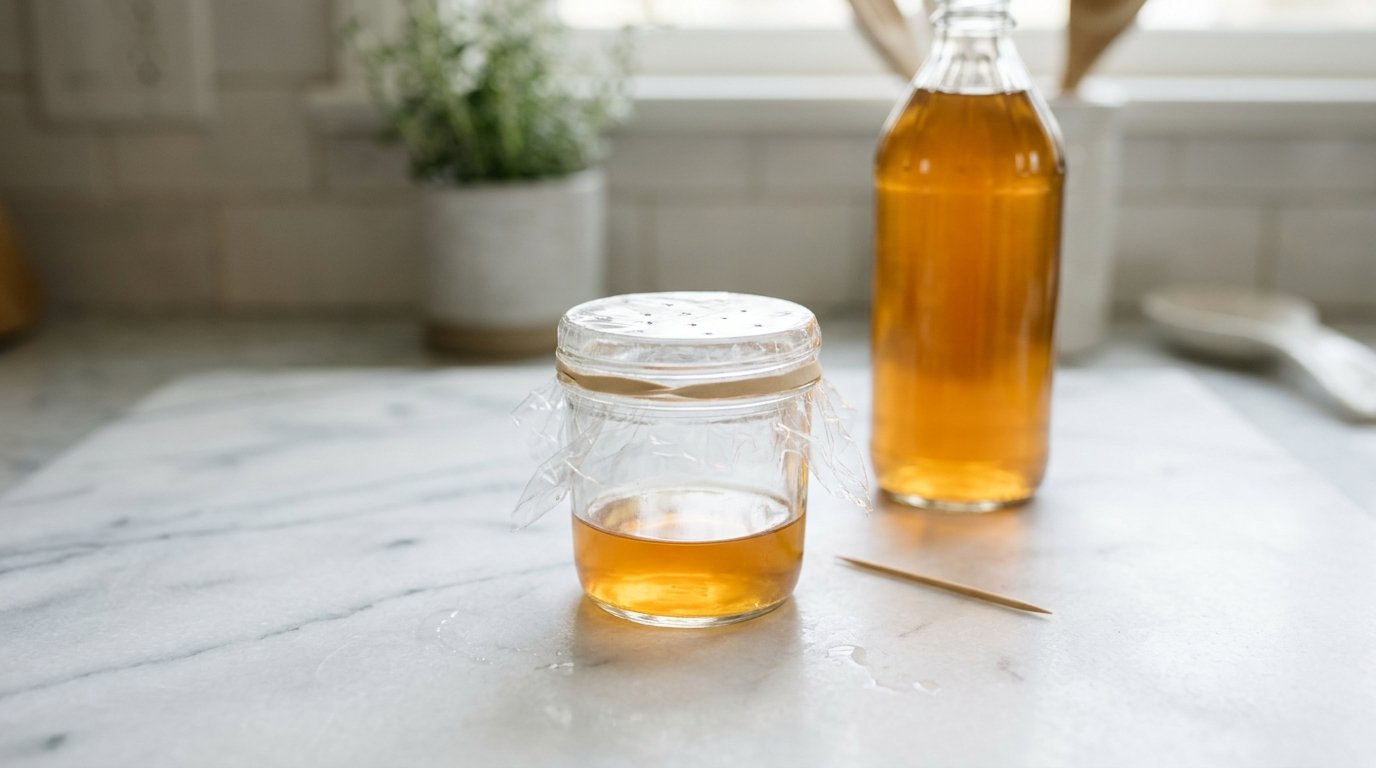
This classic homemade fruit fly trap works because apple cider vinegar mimics the exact fermentation scent fruit flies seek out, while a couple of drops of dish soap lower the liquid’s surface tension so flies sink instead of walking on top (McGill Office for Science and Society).
- Pour about an inch of apple cider vinegar into a small glass jar or bowl.
- Add two to three drops of liquid dish soap and gently swirl without creating thick foam.
- Cover the top tightly with plastic wrap secured by a rubber band, then poke several tiny holes with a toothpick (keep holes under 1/8 inch wide so flies can crawl in but cannot escape, per WebMD).
- Place the jar near your fruit bowl, sink, or trash can, and refresh the solution every few days.
The Paper Funnel Jar Trap
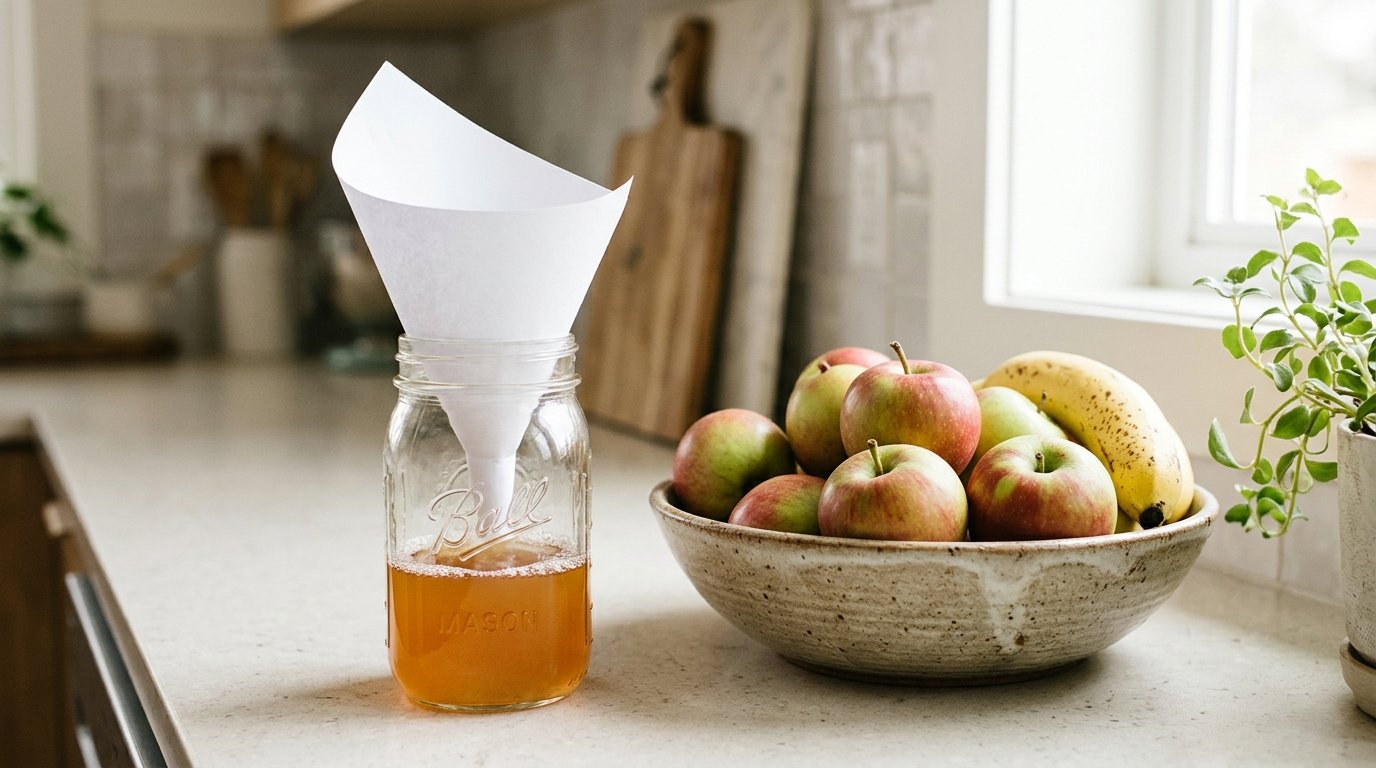
If you prefer a trap without plastic wrap, roll a piece of notebook paper into a cone with a small opening at the narrow tip and place it funnel-side down into a tall jar baited with cider vinegar or a slice of ripe banana, a method recommended by University of Kentucky Entomology. Flies follow the scent down the funnel and rarely find their way back up through the tiny opening.
Step 3: Clear Fruit Flies Out of Kitchen Drains
If adult flies keep appearing around your sink even after your counters are spotless, they may be breeding in the organic film lining your drain or garbage disposal. You can confirm this overnight by taping a clear plastic food-storage bag loosely over the drain opening — if flies are emerging from the pipe, you will see them inside the bag by morning (University of Kentucky Entomology).
To flush out drain breeding sites safely:
- Pour boiling water down the sink: Slowly pour a full kettle of boiling water down the drain once or twice a day for several days to loosen residue and kill larvae.
- Use a baking soda and vinegar flush: According to Roto-Rooter, pouring 1/2 cup of salt, 1/2 cup of baking soda, and 1 cup of white vinegar down the drain overnight — followed by boiling water the next morning — helps break down organic buildup.
- Scrub the garbage disposal gasket: Wipe the underside of the rubber splash guard with a stiff brush and hot soapy water, where food debris often collects.
Make Sure You Are Actually Fighting Fruit Flies
When vinegar traps catch nothing at all, you may be dealing with a lookalike pest that needs a different strategy:
- Fungus gnats: Darker, slender, mosquito-like flies hovering near potted houseplants rather than fruit bowls. They breed in overly damp potting soil; letting the top layer of soil dry out between waterings breaks their cycle (McGill Office for Science and Society).
- Drain flies (moth flies): Slightly fuzzier, dark gray flies with moth-like wings that rest motionless on bathroom or kitchen walls near sluggish pipes. Scrubbing pipe interiors with a stiff drain brush or enzyme drain cleaner targets their gelatinous sludge buildup (Terminix).
How to Prevent Fruit Flies From Coming Back
Keeping fruit flies away is much easier than clearing an established swarm. Build a few low-effort habits into your weekly kitchen routine:
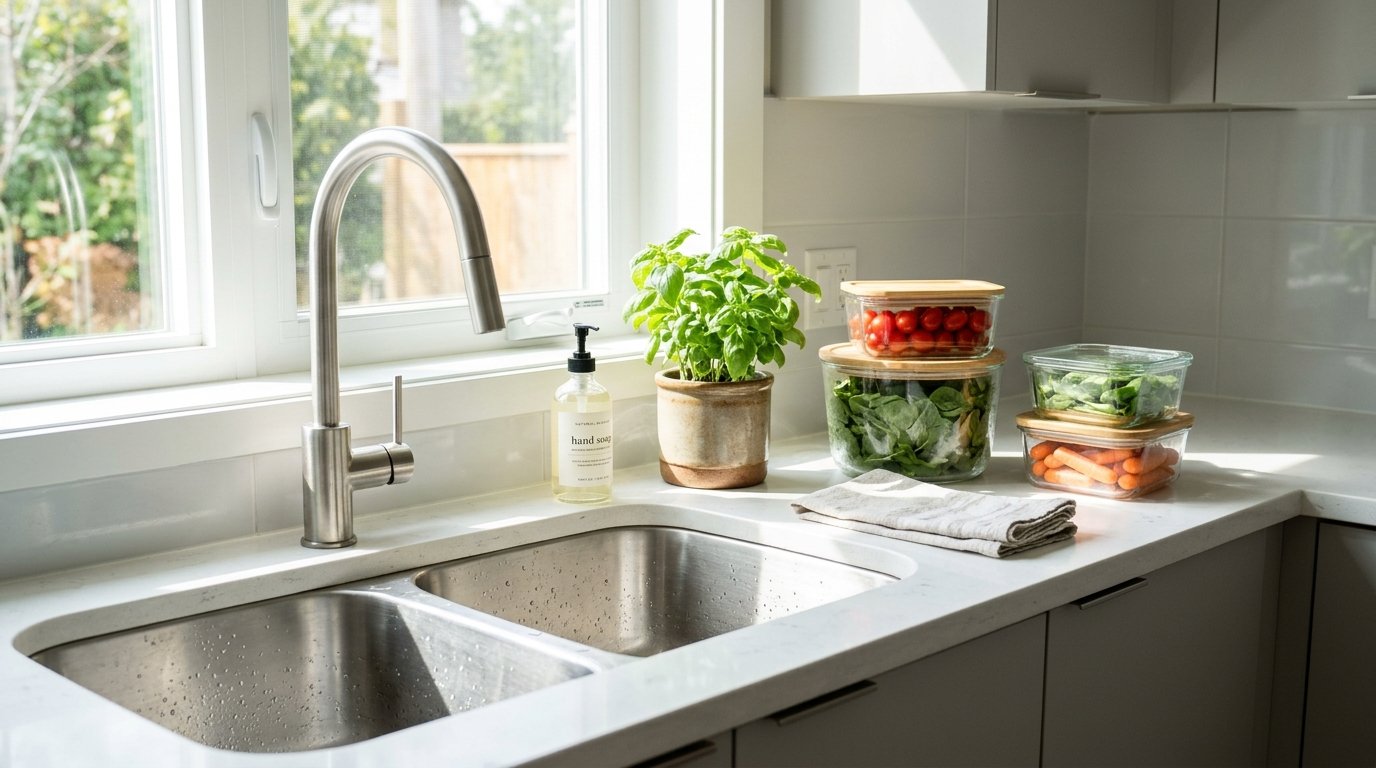
- Wash produce right after shopping: Rinsing fruits and vegetables under running water as soon as you bring them home removes surface eggs and larvae before they hatch (WebMD).
- Refrigerate ripe produce promptly: Store cut fruit, berries, and ripening bananas or tomatoes in the fridge or in sealed airtight containers rather than open bowls.
- Keep screens tight and moisture low: Install or repair tight-fitting 16-mesh window and door screens to block adult flies from drifting inside (Utah State University Extension), and avoid leaving wet sponges or standing water in the sink.
- Seal fermented items: Keep home-canned goods, compost caddies, and open wine or cider bottles tightly capped so odors never draw flies indoors.
By combining thorough sanitation with a simple apple cider vinegar trap and clean drains, you cut off every stage of the fruit fly life cycle — leaving your kitchen fresh, sanitary, and fly-free.
Frequently Asked Questions
How fast do fruit flies multiply?
Very fast. A single female can lay upwards of 400 eggs, and the entire life cycle from egg to adult takes just 8 to 10 days — so a forgotten potato or damp sponge can turn a few flies into a full kitchen swarm within a couple of weeks.
Do apple cider vinegar traps really work?
Yes. Apple cider vinegar mimics the fermentation scent fruit flies seek out, and a few drops of dish soap lower the liquid’s surface tension so flies sink instead of walking on top. Keep traps running for at least 7 to 10 days so you also catch flies that hatch late.
How long does it take to get rid of fruit flies?
With breeding sources removed and traps set, you can break an infestation in days. Keep the traps out for 7 to 10 days, flush the drains, and keep up the prevention habits — washing produce, refrigerating ripe fruit, and drying out sponges — to stop them coming back.