Strengthening Global Alliances: Biden Designates Kenya as First Sub-Saharan Major Non-NATO Ally
A Strategic Shift in American Diplomacy
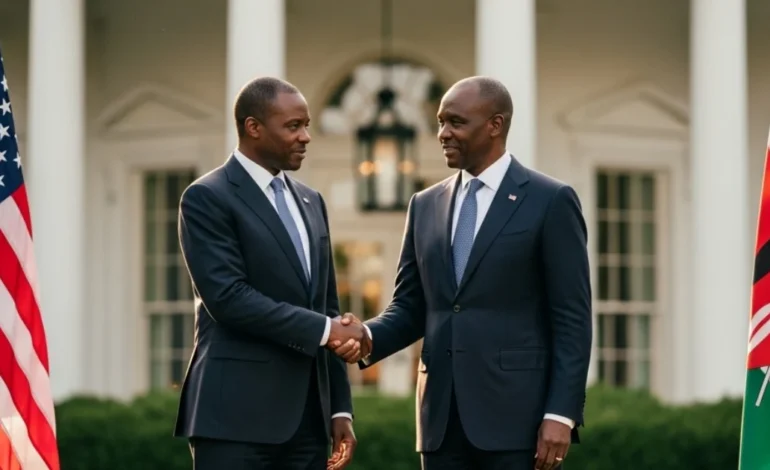
WASHINGTON, D.C. — In a major development that could reshape the American landscape and its strategic footprint in Africa, President Joe Biden and Kenyan President William Ruto have finalized a series of landmark security accords, most notably the formal designation of Kenya as a major non-NATO ally. This historic move, concluded during a high-profile state visit on May 24, 2026, marks the first time a sub-Saharan African nation has received this status, signaling a profound shift in how the United States views its partnerships on the continent.
The three-day summit at the White House served as a platform for both leaders to underscore a commitment to democratic values, regional stability, and economic cooperation. While the visit was rich in ceremony, the underlying policy shifts carry significant weight for U.S. national security and its broader geopolitical strategy. Administration officials noted that the elevation of Kenya to this elite status provides Nairobi with privileged access to U.S. military equipment, training, and research, fostering a deeper defense integration between the two nations.
The Significance of Major Non-NATO Ally Status
The designation of Kenya as a major non-NATO ally (MNNA) is far more than a symbolic gesture. For the United States, it solidifies a reliable anchor in East Africa, a region often fraught with volatility. For Kenya, it brings tangible benefits that were previously reserved for a select group of global partners like Israel, Japan, and South Korea.
- Military Procurement: Kenya will now have priority access to U.S. defense supplies and the ability to host U.S.-owned war reserves.
- Technical Cooperation: The accord facilitates joint research and development for defense capabilities, allowing for more sophisticated counter-terrorism operations.
- Strategic Signaling: By elevating Kenya, the U.S. is signaling to both allies and adversaries that it is doubling down on its presence in Africa through a democratic, stable partner.
Expert analysts suggest that this move is a direct response to the growing influence of rival powers in the region. As other global actors seek to expand their infrastructure and military footprints across Africa, the U.S. is leveraging its long-standing relationship with Kenya to maintain a competitive edge and ensure that democratic governance remains a viable model for the continent.
Coordinating the Haiti Security Mission
A central pillar of the discussions involved the upcoming multinational security mission to Haiti. With the Caribbean nation facing unprecedented levels of gang violence and political instability, Kenya has stepped forward to lead a UN-backed police force intended to restore order. President Biden expressed deep gratitude for Kenya’s leadership in this endeavor, highlighting it as a prime example of a “global partnership” where regional leaders take the initiative to solve international crises.
The mission has not been without controversy, both in Nairobi and Washington. However, reports suggest that the U.S. has pledged substantial logistical and financial support to ensure the Kenyan-led forces are well-equipped for the complex urban warfare environment they will encounter in Port-au-Prince. This coordination is a cornerstone of the new security accords, demonstrating that the U.S.-Kenya relationship is no longer just about regional African issues, but about global security contributions.
Countering Global Rivals: The Geopolitical Context
The timing of this state visit is critical. As the U.S. navigates a complex multi-polar world, Africa has become a primary theater for geopolitical competition. Reports indicate that the Biden administration is keen to offer an alternative to the investment models provided by other global powers, which often come with significant debt burdens or less emphasis on human rights.
By focusing on transparency, democratic integrity, and mutual security, the U.S. aims to position itself as the “partner of choice.” Diplomatic observers have noted that President Ruto’s visit was designed to showcase Kenya as a beacon of stability and a hub for technology and innovation in Africa. This aligns with U.S. interests in securing supply chains and fostering new markets for American businesses in one of the world’s fastest-growing economic regions.
Economic and Democratic Reinforcement
Beyond security, the leaders discussed the Kenya-U.S. Strategic Trade and Investment Partnership. This framework aims to increase bilateral trade while ensuring labor protections and environmental standards. For the average American, this could mean more stable prices for imported goods and new opportunities for U.S. tech and green energy firms to expand into African markets.
President Biden emphasized that the strength of the partnership is rooted in shared democratic values. At a time when several African nations have experienced military coups or democratic backsliding, Kenya’s commitment to constitutional processes and peaceful transitions of power serves as a vital counter-narrative. The accords include provisions for supporting civil society, anti-corruption initiatives, and judicial independence in Kenya, reinforcing the idea that security and democracy are inextricably linked.
What This Means for the United States
For typical Americans, the implications of this visit are twofold. First, it represents a strategic effort to prevent regional conflicts from escalating into global crises that require direct U.S. military intervention. By empowering a local partner like Kenya to lead missions in Haiti or counter-terrorism efforts in East Africa, the U.S. can achieve its security goals with a smaller direct footprint.
Second, the economic ties being forged today are intended to create long-term stability in global markets. Kenya is often referred to as the “Silicon Savannah,” and U.S. investment in its tech sector could lead to innovations that benefit both nations. Furthermore, a stable and prosperous Kenya acts as a buffer against the migration crises and humanitarian disasters that often result from regional instability.
As the state visit concludes, the message from Washington is clear: the U.S. is no longer looking at Africa through the lens of aid and crisis management alone. Instead, it is looking at the continent through the lens of strategic partnership and shared future. The designation of Kenya as a major non-NATO ally is the first major step in this new era of American foreign policy.
Frequently Asked Questions
What does ‘Major Non-NATO Ally’ status actually mean?
It is a legal designation that provides a foreign partner with certain benefits in the areas of defense trade and security cooperation. While it does not include a mutual defense commitment (like Article 5 of NATO), it does allow for priority access to U.S. military equipment, participation in cooperative defense research, and eligibility for certain training programs.
Why is Kenya leading the mission to Haiti?
Kenya offered to lead the mission as part of its growing role as a global peacekeeper. The mission is intended to help the Haitian National Police combat gang violence. The U.S. is providing financial and logistical support, but Kenya is providing the boots on the ground to foster a solution led by a diverse coalition of nations.
How does this agreement affect U.S. taxpayers?
The U.S. provides financial support for security missions and military aid to allies. Proponents argue that investing in the stability of partners like Kenya is more cost-effective than dealing with the fallout of regional collapses, which can lead to higher humanitarian costs, disrupted trade, and increased refugee flows.
Does this move signal a shift away from other regions?
Not necessarily. Rather than shifting away, the U.S. is expanding its focus. By strengthening ties with Kenya, the administration is attempting to ensure that it has reliable partners in every major global theater, particularly as competition with other world powers intensifies in the Global South.