National Travel Surge: Memorial Day Records Expected to Fall as 44 Million Americans Hit the Road
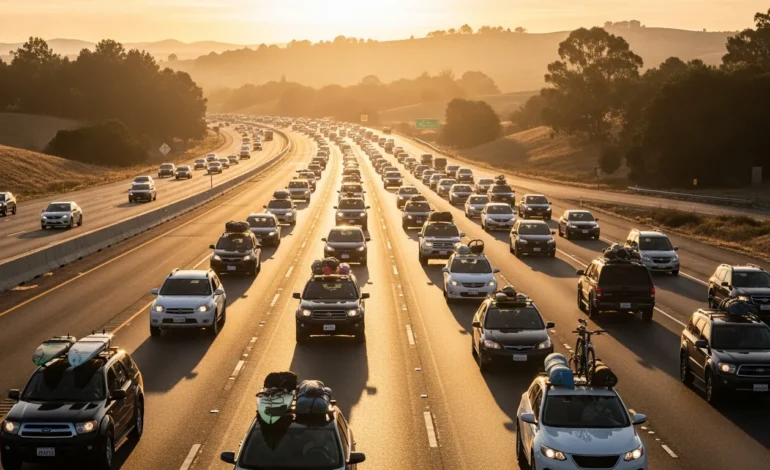
The Great American Exodus: A Historic Kickoff to Summer
WASHINGTON, D.C. — In a major development that could reshape the American landscape this holiday weekend, nearly 44 million citizens are preparing to embark on journeys of 50 miles or more, signaling what experts describe as a historic surge in domestic mobility. Despite the persistent pressure of high gas prices and inflationary headwinds, the 2026 Memorial Day weekend is poised to shatter previous travel records, marking a definitive start to the summer season.
According to the latest forecast from AAA, approximately 43.8 million people will travel between Thursday and Monday. This represents a 4% increase over last year’s figures and edges past the previous all-time high set nearly two decades ago. The data suggests that the American appetite for travel remains resilient, even as the cost of living continues to be a primary concern for households across the nation.
For typical Americans, this news translates to a weekend defined by crowded terminals and congested interstate corridors. Expert analysts note that the sheer volume of travelers will put unprecedented stress on the nation’s infrastructure, requiring a level of patience and planning not seen in recent years. “The desire to reconnect with family and explore new destinations is outweighing the financial caution we might typically expect in this economic climate,” reports suggest.
The Economic Paradox: High Costs vs. High Demand
The most striking aspect of this year’s forecast is the disconnect between travel volume and the price at the pump. While fuel costs remain significantly higher than the five-year average, the data indicates that travelers are simply adjusting their budgets elsewhere rather than canceling their plans. This phenomenon, often referred to by economists as “inelastic demand for leisure,” highlights a shift in consumer priorities.
Reports suggest several factors are driving this trend:
- Stabilized Labor Market: With unemployment remaining low, consumers feel a baseline of job security that encourages discretionary spending on experiences.
- Pre-Planned Budgets: Many families now treat the Memorial Day holiday as a non-negotiable annual expense, booking accommodations months in advance.
- Psychological Momentum: As the official start of summer, the holiday carries a cultural weight that frequently overrides short-term economic fluctuations.
Furthermore, while gas prices are high, they have not reached the “breaking point” levels that historically cause a mass retreat from the highways. Instead, travelers are opting for shorter trips or choosing more fuel-efficient vehicles, but they are still choosing to go.
Airports Brace for Record-Breaking Crowds
While the vast majority of travelers—roughly 38.4 million—will be driving to their destinations, the aviation sector is bracing for its own set of milestones. Airports across the United States are preparing for what is expected to be the busiest Memorial Day weekend on record for air travel. AAA projects that 3.51 million people will fly this weekend, a nearly 5% increase over last year.
The Transportation Security Administration (TSA) has already signaled that it is scaling up staffing at major hubs to mitigate the impact of the expected crowds. However, travelers are being warned to arrive at airports at least three hours before domestic flights. The surge in air travel is particularly notable given that airfares have also seen a modest increase compared to the previous shoulder season.
Industry analysts point out that the growth in air travel is partly fueled by a robust schedule of international flights and the expansion of budget carrier routes into secondary markets. This has made flying a more viable option for a broader segment of the population, even as legacy carriers maintain premium pricing for holiday slots.
Road Warriors: Navigating the Most Congested Times
For those joining the 38 million Americans on the road, timing will be the difference between a smooth journey and hours of gridlock. Transportation data providers suggest that the worst traffic will occur during the afternoon hours of Thursday and Friday, as holiday travelers mix with commuters. Major metropolitan areas including New York, Los Angeles, and Chicago are expected to see travel times increase by as much as 90% compared to normal conditions.
Key Travel Windows to Consider:
- Best Time to Leave: Thursday and Friday mornings before 11:00 AM, or Saturday after 6:00 PM.
- Worst Time to Leave: Thursday afternoon between 3:00 PM and 7:00 PM.
- Return Travel: Monday afternoon is expected to be the peak for return congestion, with traffic building as early as 10:00 AM in vacation corridors.
State departments of transportation have announced that most non-essential road construction projects will be suspended over the weekend to maximize lane capacity, yet the sheer volume of vehicles is expected to cause significant delays on major arteries like I-95 on the East Coast and I-5 on the West Coast.
A Broader Look at the 2026 Summer Season
The Memorial Day surge is widely viewed as a bellwether for the rest of the summer. If these record-breaking numbers hold true, the 2026 summer travel season could be the most lucrative—and the most crowded—in the history of the American tourism industry. This has significant implications for the hospitality sector, which has been struggling with labor shortages and rising operational costs.
Expert analysts suggest that the high demand will likely keep hotel rates and rental car prices elevated through August. For the average American, this means that the era of the “cheap summer getaway” may be fading, replaced by a landscape where early booking and flexible scheduling are the only ways to secure value. Despite these hurdles, the message from the American public is clear: the road is calling, and they are ready to answer.
Frequently Asked Questions
What is the total number of people expected to travel this Memorial Day?
AAA predicts that nearly 44 million Americans (specifically 43.8 million) will travel 50 miles or more from home during the holiday weekend, a 4% increase over the previous year.
How will gas prices affect travel plans?
While gas prices remain high, they are not expected to deter the record number of travelers. Most Americans are choosing to adjust their spending in other areas rather than canceling their holiday trips.
What are the busiest days to be on the road?
The heaviest traffic is expected on Thursday and Friday afternoons as holiday travelers share the road with daily commuters. Monday afternoon will also see significant congestion as people return home.
Is air travel also expected to break records?
Yes, air travel is projected to reach 3.51 million passengers this weekend, which would be a record for the Memorial Day period, surpassing even pre-pandemic highs.
What should travelers do to prepare for the crowds?
Experts recommend arriving at airports at least three hours early, checking vehicle maintenance before long road trips, and utilizing navigation apps to monitor real-time traffic updates and find alternative routes.





1 Comment
[…] “For people with money, these prices are peanuts,” Trump stated, downplaying the impact of the pump on the average citizen. The rhetoric arrives just as millions of Americans prepare for unprecedented travel demands expected during the record-breaking Memorial Day weekend. […]