Associated Press Strikes High-Stakes Deal to Stream Election Data Directly to Kalshi Prediction Markets
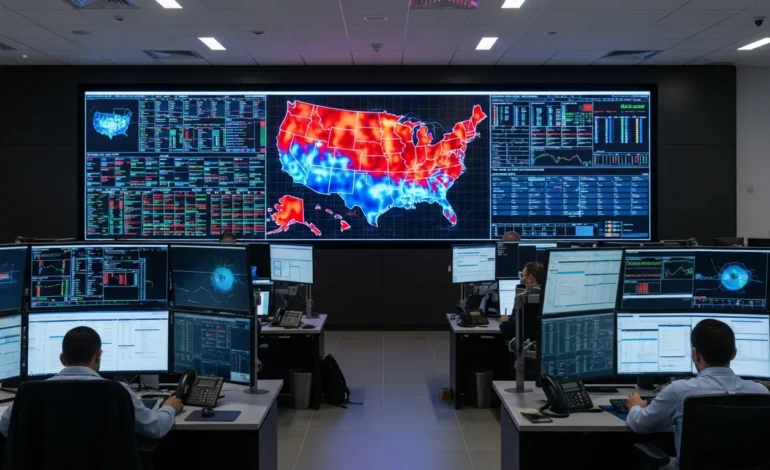
WASHINGTON, D.C. — In a major development that could reshape the American landscape, the Associated Press has finalized a high-stakes agreement to provide its verified election results to Kalshi, the world’s largest regulated prediction market. The partnership, announced May 24, 2026, ensures that AP’s gold-standard race calls will serve as the definitive data source for traders speculating on upcoming primary elections.
This move marks a historic convergence between 178 years of journalistic integrity and the rapidly expanding sector of event-based financial trading. By integrating AP’s real-time vote counts, Kalshi aims to provide its users with the most accurate and timely information available in the heat of election night.
A New Era for Election Trading
The deal comes as prediction markets gain unprecedented traction as alternative barometers of public opinion. Unlike traditional polling, which has faced significant criticism for inaccuracy in recent cycles, prediction markets require participants to put financial capital behind their forecasts.
As the world watches the geopolitical shifts within global markets, the demand for verified, low-latency data has reached an all-time high. Kalshi, which is regulated by the Commodity Futures Trading Commission (CFTC), provides a platform where individuals can hedge against political outcomes or profit from accurate forecasting.
The Associated Press has long been the industry leader in declaring winners in U.S. elections. Their team of analysts and vote counters operates in every county across the nation, providing a level of granular detail that few organizations can match.
Ensuring Data Integrity in Volatile Markets
The integration of AP data into Kalshi’s platform is expected to reduce volatility caused by misinformation. In previous election cycles, social media rumors and unverified reports have often led to wild swings in unregulated betting markets.
This partnership comes at a time when political volatility remains high, following historic legal proceedings that have captivated the American electorate and influenced market sentiment. By using AP as the single source of truth, Kalshi ensures that contracts are settled based on verified facts rather than speculation.
Industry experts suggest this deal could signal a broader trend of traditional news organizations monetizing their data for the financial services sector. For the AP, it represents a new revenue stream that leverages its most valuable asset: its reputation for accuracy.
The Growth of Regulated Exchanges
Kalshi’s rise as a regulated exchange has been bolstered by a growing appetite for “event contracts.” These financial instruments allow users to trade on the outcome of everything from Federal Reserve interest rate hikes to the passage of specific legislation.
The inclusion of AP’s election data is seen as the final piece of the puzzle for Kalshi’s political offerings. Traders will now have access to the same data used by major television networks and newspapers to inform their positions in real-time.
Critics of prediction markets argue that they could incentivize bad actors to influence outcomes. However, proponents maintain that the financial stakes actually encourage a more sober and realistic assessment of political realities than traditional punditry.
Frequently Asked Questions
What is Kalshi and how does it work?
Kalshi is a federally regulated exchange that allows users to trade on the outcome of real-world events. Users buy “Yes” or “No” contracts on specific questions, with the price of the contract reflecting the market’s perceived probability of that event occurring.
Why did the Associated Press choose to partner with a trading platform?
The AP seeks to ensure that its verified, accurate election data reaches the widest possible audience. By partnering with Kalshi, the AP ensures that financial markets are operating on facts rather than rumors, while also diversifying its commercial revenue.
How does the AP decide when to call a race?
The AP only calls a race when it is certain that the trailing candidate has no mathematical path to victory. This involves a rigorous analysis of remaining uncounted votes, historical voting patterns, and demographic data.
Is trading on elections legal in the United States?
Kalshi operates as a regulated Contract Market under the oversight of the CFTC. While political betting has historically faced legal hurdles, Kalshi’s specific model of event contracts has been cleared for operation within the U.S. financial regulatory framework.