National Security Alert: U.S. Weapons Stockpiles Reach Critical Lows, Recovery Years Away
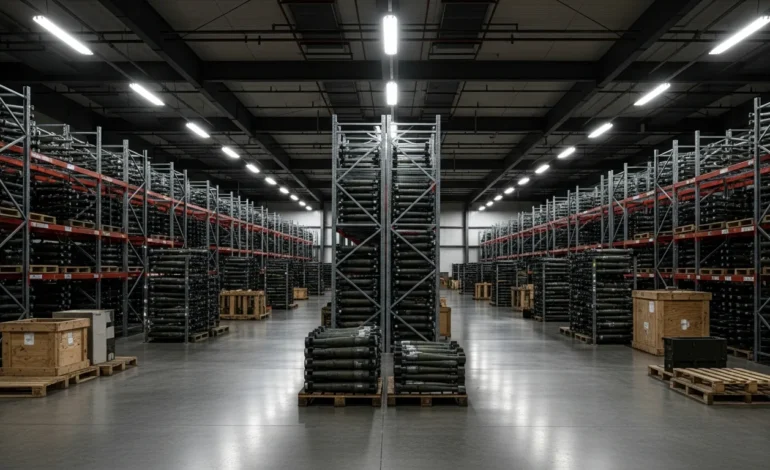
WASHINGTON, D.C. — In a major development that could reshape the American landscape, U.S. weapons stockpiles have reached critically low levels following a series of global conflicts, with a new defense analysis warning that a full recovery of the nation’s munitions reserves could take several years of sustained, high-intensity production.
The report, released late Tuesday, underscores a growing crisis within the American defense industrial base that has reached a breaking point. Sustained military aid to regional allies and the consumption of advanced munitions in active theaters have significantly outpaced the Pentagon’s current procurement capabilities.
Defense officials now face a stark reality where the “arsenal of democracy” is struggling to keep pace with the high-velocity demands of modern, 21st-century warfare.
The Production Bottleneck
The analysis highlights that the replenishment of key systems—including precision-guided missiles and long-range artillery shells—is hindered by deep-seated supply chain vulnerabilities and a chronic shortage of specialized labor.
Unlike the rapid industrial mobilization seen in previous eras, the extreme complexity of modern weaponry requires high-end components that cannot be mass-produced overnight. This industrial lag comes at a time of heightened global tension, where the shifting landscape of Western security alliances suggests that the demand for American hardware will only continue to accelerate.
The report notes that some manufacturing lines for critical components are already operating at maximum capacity, leaving zero room for the surge requirements necessitated by emerging threats.
Strategic Vulnerabilities in Focus
Military strategists are increasingly concerned that current depletion levels could severely limit the United States’ ability to respond to a new, large-scale kinetic conflict in a different theater. While the Pentagon maintains that immediate defensive readiness remains intact, the “strategic depth” of the inventory is what currently keeps planners awake at night.
The strain is exacerbated as the U.S. continues expanding military commitments to strategic partners across the globe, requiring a delicate and increasingly difficult balancing act of resource allocation.
Without a significant shift in industrial policy, the report warns that the U.S. may be forced to prioritize which allies receive support, potentially leaving some regions vulnerable to aggression.
Industrial Base Under Pressure
Lawmakers on Capitol Hill are expected to use the findings to advocate for a massive infusion of capital into the domestic manufacturing sector. The goal is to transition from a “just-in-time” supply chain to a “just-in-case” model that prioritizes massive surge capacity and long-term stockpile storage.
However, experts warn that even with immediate and historic funding, the lead times for advanced electronics and propulsion systems remain measured in years, not months. The defense industry must now navigate a path toward modernization that ensures the U.S. remains the preeminent global military power without exhausting its internal reserves.
Frequently Asked Questions
Why are U.S. weapons stockpiles currently depleted?
The depletion is the result of multiple factors, including high consumption rates in recent regional conflicts and the continuous transfer of munitions to international allies. The current industrial base was not designed for the sustained, high-volume output required by these ongoing commitments.
How long will it take for the U.S. to fully recover its inventory?
According to the latest defense report, it may take several years of increased production to reach pre-conflict levels. This timeline depends heavily on the availability of raw materials, specialized components, and the expansion of manufacturing facilities.
Does this depletion affect U.S. national security today?
While the military remains capable of immediate defense, the lack of depth in the stockpile creates a strategic risk if a second or third major conflict were to erupt simultaneously. Planners are currently prioritizing readiness for the most critical theaters.
What steps is the government taking to fix the production lag?
The federal government is looking to increase multi-year procurement contracts to provide stability for defense contractors. There is also a push to reshore critical supply chains for semiconductors and explosives to reduce reliance on foreign entities.