Georgia Braces for High-Stakes June 16 Runoffs as Congressional Control Hangs in the Balance
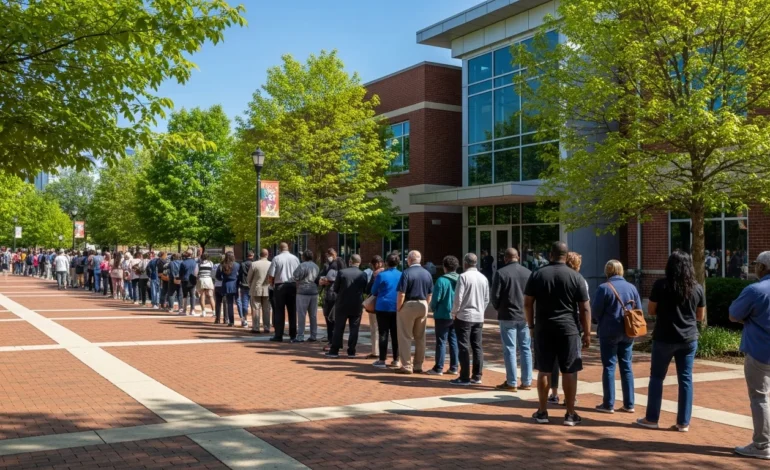
ATLANTA — In a major development that could reshape the American political landscape, Georgia election officials have officially set June 16 for the state’s primary runoffs.
The upcoming contests are poised to finalize a volatile ballot for the November general elections, with several high-profile congressional seats remaining undecided after the initial primary rounds.
Both Republican and Democratic strategists are descending on the Peach State, viewing these runoffs as a critical litmus test for party momentum heading into a high-stakes fall season.
The Battle for Congressional Dominance
With the narrowest of margins currently defining the U.S. House of Representatives, every seat in Georgia carries significant national weight.
Candidates who failed to secure a clear majority in the initial primary rounds now face a three-week sprint to mobilize their base and court undecided voters.
Political analysts suggest that these runoffs will reveal much about the current appetite of the electorate, especially as ongoing legal battles involving prominent political figures continue to dominate the national conversation and influence voter sentiment.
The intensity of the Georgia race mirrors global electoral shifts seen in other Western democracies, where voters are increasingly polarized over economic stability and social policies.
Strategic Mobilization and Voter Turnout
Turnout is traditionally lower in runoff elections, making the ground game of each campaign the deciding factor in securing victory.
Election officials are preparing for a surge in mail-in ballot requests and early voting activity as the June 16 deadline approaches.
Secretary of State officials have indicated that polling locations are being finalized to ensure maximum accessibility while maintaining strict security protocols across all 159 counties.
“The integrity of the vote remains our highest priority as we move into this final phase of the primary season,” stated one senior election official who requested anonymity to discuss security preparations.
A National Proving Ground
Georgia has solidified its status as a premier battleground state, often serving as the “canary in the coal mine” for broader national political trends.
National party committees are expected to pour millions into television advertising and digital outreach over the next twenty days to influence these pivotal outcomes.
For many candidates, the June 16 runoff represents the final hurdle before a grueling five-month campaign toward the general election in November.
The outcome of these races could significantly impact legislative priorities in Washington, particularly regarding fiscal policy, healthcare reform, and judicial appointments.
The Logistics of a High-Stakes Election
Georgia’s election infrastructure has faced intense scrutiny over the last several cycles, and the June 16 runoffs will be no exception to this trend.
Local election boards are currently navigating the logistical hurdles of staffing hundreds of precincts during a mid-summer contest when many poll workers are unavailable.
The cost of holding a statewide runoff is substantial, often running into the millions of dollars, a fact that has sparked ongoing debate among state lawmakers regarding future election reforms.
Voters are being urged to check their registration status and polling locations well in advance of the June 16 date to avoid confusion at the ballot box.
Fundraising and the “Money Race”
The three-week window between the primary and the runoff has become a frantic fundraising sprint for candidates on both sides of the aisle.
Outside groups and Political Action Committees (PACs) are already reserving airtime, saturating the Atlanta and Savannah media markets with targeted messaging.
Candidates are leaning heavily on small-dollar donors to fuel their final push, highlighting the grassroots nature of modern Georgia politics in 2026.
As the temperature rises in Georgia, both literally and figuratively, the nation watches to see which way the political winds will blow in this crucial southern stronghold.
Frequently Asked Questions
When is the Georgia primary runoff election?
The runoff election is scheduled for June 16, 2026, following the initial primary contests held earlier in May where no candidate reached the 50% threshold.
Why does Georgia require runoff elections?
Under Georgia law, if no candidate receives more than 50% of the vote in a primary election, the top two finishers must compete in a runoff to determine the party’s official nominee.
Who is eligible to vote in the June 16 runoffs?
Any registered voter in Georgia who was eligible to vote in the initial primary can participate in the runoff, regardless of whether they actually cast a ballot in the first round.
What is at stake in these specific runoffs?
Several key U.S. House seats and local administrative positions are on the line, which will ultimately dictate the balance of power in the November general election and the composition of the next Congress.