Supreme Court Ends Independent Agency Shields in Landmark 6-3 Ruling
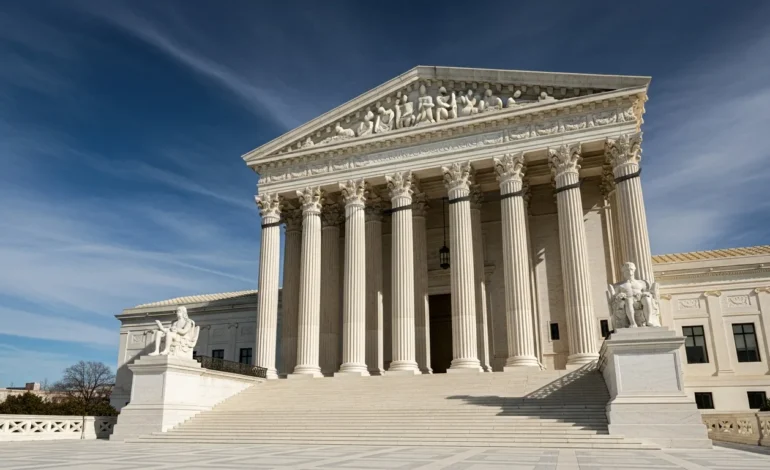
The 10-year Treasury yield fluctuated by four basis points immediately following the 10:00 a.m. ET release of a decision that fundamentally alters the American regulatory environment. In a 6-3 ruling on Monday, the U.S. Supreme Court overturned the 1935 landmark precedent Humphrey’s Executor, effectively granting the President the authority to remove heads of independent agencies at will.
Chief Justice John Roberts, writing for the conservative majority, asserted that for-cause removal protections unconstitutionally infringe upon executive power. This decision in Trump v. Slaughter concludes a legal battle sparked by the March 2025 firing of FTC Commissioner Rebecca Kelly Slaughter, which lower courts had previously deemed unlawful.
The End of Regulatory Insulation
The ruling strips away the legal shield that has protected leaders of the Federal Trade Commission (FTC) and potentially the Federal Reserve from political dismissal for nearly a century. Justice Department attorneys argued successfully that the previous restrictions on presidential authority created a “fourth branch” of government that lacked democratic accountability.
Dissenting justices warned that the decision converts non-partisan watchdogs into political subordinates. They argued the move threatens the stability of financial markets by subjecting technical and economic oversight to the shifts of the four-year election cycle.
Market Implications and Corporate Strategy
Wall Street analysts are now recalibrating risk models for sectors heavily reliant on consistent regulation, such as banking and telecommunications. The prospect of “regulatory whiplash”—where entire agency agendas are purged with each new administration—could significantly increase the cost of long-term capital projects.
- The Federal Reserve’s Board of Governors may now face direct political pressure regarding interest rate trajectories.
- Antitrust enforcement at the FTC and DOJ could see immediate reversals in pending merger challenges.
- Independent financial auditors may lose their autonomy to investigate politically connected entities.
This ruling creates a new “Regulatory Volatility Index” for global investors. Companies must now weigh the risk that a compliance framework established today could be dismantled by executive order tomorrow.
The Shadow Cabinet Effect
A secondary consequence of the ruling is the likely emergence of a “shadow cabinet” structure within independent commissions. By removing the “for cause” requirement, the executive branch can ensure that every commissioner aligns strictly with the White House’s specific economic and social agenda.
This alignment effectively ends the era of the multi-member, bipartisan board as a deliberative body. Instead, these agencies will likely function as direct extensions of the West Wing, prioritizing political objectives over established administrative expertise.
Related Coverage
- Central bank independence and global stagflation risks
- Federal antitrust actions and monopolistic oversight
Frequently Asked Questions
Can the President fire the Federal Reserve Chair immediately?
While the ruling provides the constitutional framework for at-will removal, specific statutory language in the Federal Reserve Act may require additional litigation to determine if the Chair is immediately vulnerable to the same standards as the FTC.
What happens to ongoing FTC investigations?
Cases initiated under the previous “for cause” protection remain active, but the President can now replace commissioners with appointees who may choose to settle or drop existing litigation without delay.
Does this ruling affect the Securities and Exchange Commission (SEC)?
Legal experts suggest the SEC is highly susceptible to this precedent, as its structure closely mirrors the FTC model that the Supreme Court has now dismantled.
What was the specific legal argument used to overturn the 1935 precedent?
The majority argued that Article II of the Constitution grants the President “the executive power” in its entirety, meaning any official exercising significant executive authority must be answerable to the Chief Executive.