Power Projection on Pennsylvania Avenue: The Geopolitical Weight of the Army’s 250th Anniversary
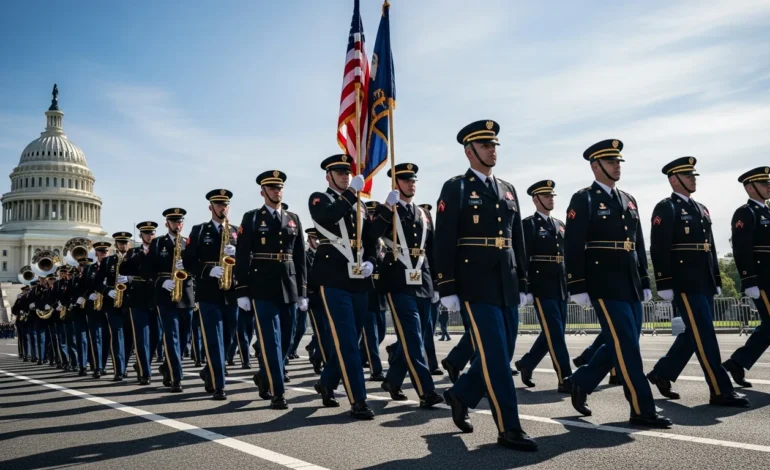
As the United States navigates an increasingly fragmented international security environment, the visual projection of military continuity remains a cornerstone of its diplomatic leverage. On Saturday, June 27, the District of Columbia hosted a massive military parade to commemorate the U.S. Army’s 250th anniversary, a centerpiece of the broader ‘America 250’ semiquincentennial celebrations.
Thousands of spectators lined a route featuring major national landmarks to witness a procession that spanned the history of American land warfare. Soldiers operated a diverse array of hardware, ranging from Revolutionary War-era displays to the most advanced modern tanks and aircraft currently in the federal inventory.
Strategic Signaling and Institutional Continuity
The presence of high-ranking officials, including Defense Secretary Pete Hegseth, underscored the event’s importance as a statement of institutional stability. The parade served as a formal recognition of the Army’s establishment on June 14, 1775, framing the service as an enduring pillar of the American state.
Spectators engaged in rhythmic cheers and chants as the columns moved through the capital, reflecting a high level of domestic support for the military during the 2026 milestone year. This public display of unity occurs as the Department of Defense manages several national milestones planned for the current calendar year.
- The parade featured equipment from every major American conflict, including the Revolutionary War, World Wars, and the modern era.
- The event concluded with a specialized fireworks display and community festivals designed to integrate military heritage with civilian celebration.
- The ‘America 250’ initiative serves as the overarching framework for these national commemorations throughout 2026.
Historical Juxtaposition and Industrial Realities
The integration of historic and modern equipment provided a rare public look at the evolution of American tactical doctrine and mechanical engineering. While the parade celebrated past triumphs, it also served as a silent testament to the current requirements of the modern industrial base.
A unique geopolitical implication of this anniversary is the contrast between ceremonial strength and the practical challenges of contemporary procurement. While the parade showcased a robust and ready force, the Pentagon continues to balance these public displays with the logistical demands of maintaining readiness in an era of rapid technological transition.
Related Coverage
- National Security Alert: Assessing the Recovery Timeline for U.S. Military Stockpiles
- Diplomatic Maneuvers: Analyzing the Shift Toward a Potential Nuclear Accord with Tehran
Frequently Asked Questions
What is the ‘America 250’ initiative mentioned in the celebrations?
America 250 is the official nonpartisan initiative to commemorate the 250th anniversary of the signing of the Declaration of Independence. It encompasses thousands of events nationwide, with the U.S. Army’s 250th anniversary serving as one of the primary military milestones of the 2026 calendar.
Why was the parade held on June 27 if the Army’s birthday is June 14?
While the official anniversary of the Army’s founding is June 14, 1775, major celebratory events were scheduled for the final weekend of June to maximize public attendance and coordinate with the broader ‘America 250’ summer festival circuit in Washington, D.C.
Did the parade include active-duty combat units?
Yes, the procession included a mix of active-duty soldiers, National Guard units, and ceremonial guards, alongside specialized crews trained to operate the historic equipment showcased during the event.
What landmarks were included in the parade route?
The route passed through the core of the National Mall and Pennsylvania Avenue, ensuring that the display of military force was framed by the symbols of American executive and legislative power.