Smart Costing Solution: What It Is, How It Works, and When It Pays Off
A smart costing solution is software that uses artificial intelligence to estimate project or product costs automatically — pulling in historical data, current material prices, and labor rates to produce faster, more accurate budgets than manual spreadsheets. It combines machine learning on past projects, automated quantity takeoffs from plans or designs, and real-time price data to cut both estimating time and costly errors.
What a Smart Costing Solution Actually Does
Traditional cost estimation runs on spreadsheets, experience, and guesswork. An estimator looks at drawings, counts quantities by hand, checks price lists, and builds a budget — a process that takes days and still misses things. A smart costing solution automates the repetitive parts: it reads project plans or product designs, pulls quantities automatically, compares them against a database of past projects, and flags where an estimate looks off.
The “smart” part comes from several AI technologies working together:
- Machine learning on historical costs: The system studies completed projects — what was estimated vs. what was actually spent — and learns which factors drove overruns. Over time, its estimates get closer to reality.
- Automated quantity takeoffs: Instead of an estimator manually measuring plans, the software extracts quantities and dimensions directly from CAD files, BIM models, or even documents.
- Real-time data updates: Material prices and labor rates change constantly. Smart systems refresh cost databases automatically, so estimates reflect today’s prices rather than last quarter’s.
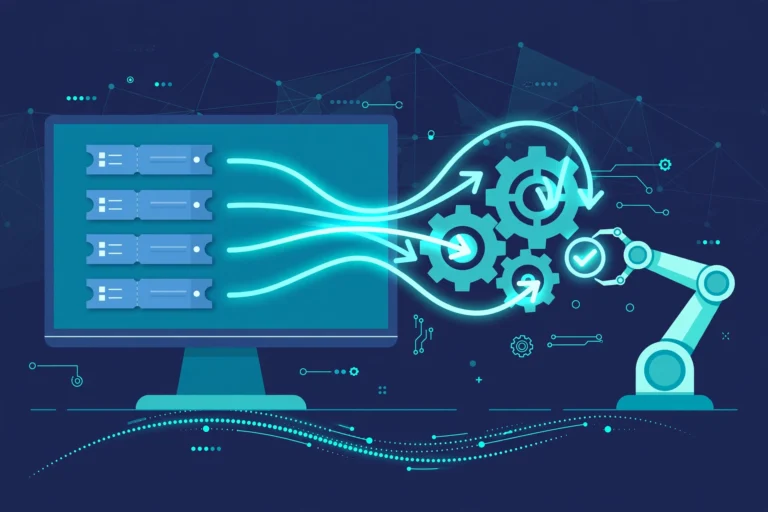
- Robotic process automation (RPA): Repetitive steps like data entry, pulling supplier quotes, and generating reports run automatically, cutting errors and hours.
- Generative AI forecasting: Large language models analyze historical data to build scenarios and forecasts, helping teams anticipate cost risks before they hit. This is how AI in project cost estimation moves from simple automation to genuinely predictive insight (The Digital Project Manager).
Construction is the most visible use case: AI-powered estimating software analyzes project plans, past cost data, and market trends to produce bids in a fraction of the time, with fewer mistakes than manual takeoffs (A3logics).
Where Smart Costing Solutions Pay Off
These tools earn their keep in environments where estimates are frequent, complex, or high-stakes:
- Construction bidding: Contractors that estimate faster and more accurately win more work. AI estimating software’s automated takeoffs and pattern detection give smaller firms an edge they couldn’t afford before (The Digital Project Manager).
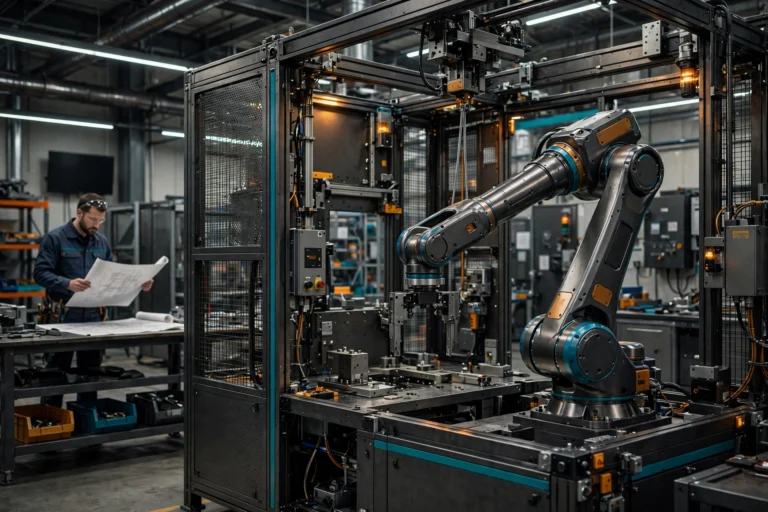
- Manufacturing quotes: AI-driven predictive costing analyzes material price fluctuations, labor rates, and machine cycle times in seconds — enabling design-to-cost decisions while a product is still digital, and precise quotes in minutes (Medium / Nidhi Pachouri).
- IT and software projects: Vendors use AI estimators to give startups transparent time-and-budget estimates from a short description — replacing slow, inconsistent manual quotes (BeeWeb).
The same machine-learning logic behind smart costing also powers cost visibility in other workflows — see our pieces on AI case studies in manufacturing energy optimization and custom robotics automation for related applications.
What It Won’t Do
Analysis: a smart costing solution is only as good as its data. Teams that skip data cleanup — collecting and organizing past cost data — usually pay for it later; in AI projects, data preparation alone can consume a large share of total expense (Medium / jannatun_nayeem). And no software eliminates judgment: estimators still need to sanity-check assumptions, especially on unusual projects with little precedent.
How to Pick One
If you’re evaluating a smart costing solution, check four things: data sources (does it connect to your accounting and project tools?), historical database (can it learn from your past projects, not just generic averages?), explainability (can it show why it priced something the way it did?), and total cost of ownership (including onboarding and support, not just the license). Related reading: how automating IT operations changes cost structures.
Frequently Asked Questions
What is a smart costing solution?
A smart costing solution is software that applies AI — machine learning, automated takeoffs, real-time price data, and sometimes generative AI — to estimate project or product costs. It replaces slow manual estimating with faster, data-driven budgets that improve as the system learns from completed projects.
How is a smart costing solution different from a spreadsheet?
A spreadsheet is a calculator; a smart costing solution is a learning system. It automatically extracts quantities from plans, updates prices in real time, compares estimates against thousands of past projects, and flags anomalies. Spreadsheets do none of that automatically and leave every assumption to the estimator.
Which industries use smart costing solutions?
Construction and manufacturing are the biggest adopters — for bidding, quoting, and design-to-cost decisions. IT services use them for project time-and-cost estimates, and logistics and healthcare operations apply similar tools for budgeting. Any industry that estimates complex, repeatable work can benefit.
Do smart costing solutions replace human estimators?
No. They replace the tedious parts — data entry, takeoffs, price lookups — so estimators can focus on judgment calls, unusual scope, and client conversations. Estimates still need a human to sanity-check assumptions, especially on one-off projects with no historical precedent.
What does a smart costing solution cost to implement?
Pricing varies widely, from modest per-user subscriptions for niche tools to enterprise licenses with integration fees. The bigger cost is often data preparation and onboarding. Evaluate total cost of ownership — license, implementation, integrations, and training — rather than the headline price alone.
Sources
- The Digital Project Manager — 10 Best AI Estimating Software Reviewed in 2026
- The Digital Project Manager — AI in Project Cost Estimation
- A3logics — AI in Construction Estimating
- Medium / jannatun_nayeem — Reducing Hidden Expenses with Smarter AI Cost Estimation