Robotic Process Automation White Paper: What the Research Says and How to Read One
A robotic process automation white paper is one of the most-searched starting points for anyone evaluating RPA software — and for good reason. These documents summarize what the technology does, where companies get returns, and what trips them up, all in one place. This guide explains what these white papers are, what the research actually finds, and how to read one without getting sold to.
What a robotic process automation white paper actually is
A white paper is an in-depth report, usually 10 to 30 pages, published by a software vendor, consultancy, or analyst firm. On RPA, a good one covers three things: a plain explanation of the technology, evidence from real deployments, and a practical framework for deciding whether RPA fits your situation.
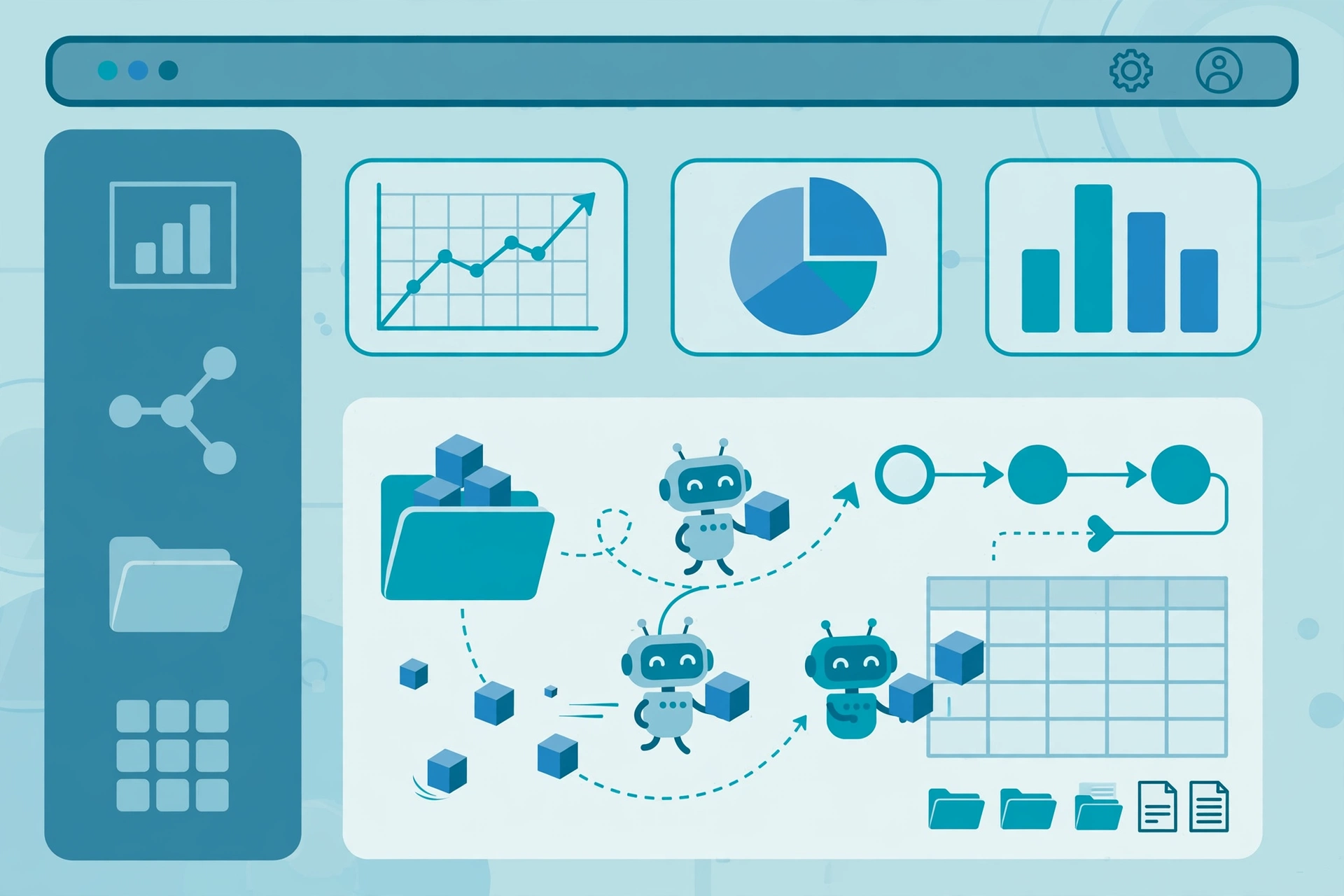
Robotic process automation itself is software that mimics human actions on a computer — clicking, typing, copying and pasting, logging into systems, and moving data between applications. The “bots” are not physical robots: they are digital workers that follow explicit rules to repeat the same steps exactly, every time, without getting tired or making typos. That distinction matters, because many white papers lean on the word “robot” to sound more advanced than the technology is. As automation specialist Bob De Caux put it in an industry interview, RPA “is not intelligent — you tell it what to do, and it performs those rules-based, repetitive tasks” (TechTarget).
What the research keeps finding
Strip away the vendor marketing, and independent research on RPA converges on a few consistent findings:
- Payback is fast when the task fits. A Deloitte survey of RPA adopters found companies reported ROI payback in less than 12 months (Appian). The fast returns come from high-volume, repetitive work where labor costs are easy to measure.
- The market keeps growing. Precedence Research estimated the global RPA market at $28.31 billion in 2025, growing to $35.27 billion in 2026, with continued double-digit growth projected through the mid-2030s (GlobeNewswire). Banking and finance remain the largest adopters.
- Good candidates share a pattern. RPA works best on structured, repetitive processes with stable decision rules, clear inputs, and few exceptions — invoice processing, data entry, payroll reconciliation, employee onboarding (Simfoni; Xenoss).
What a good white paper covers — and what a bad one hides
A white paper worth your time explains attended versus unattended bots (bots that assist a person live versus bots that run on their own) and is honest about maintenance: because bots follow explicit rules, frequent screen changes or inconsistent input formats cause them to fail (Simfoni).
A white paper that exists mainly to sell will skip all of that — leading with cost-savings numbers, never mentioning exception handling. If the document does not discuss failure modes, treat its ROI claims with skepticism.
How to read a robotic process automation white paper critically
Four questions cut through most RPA white papers:
- Whose data is this? Vendor surveys skew positive. Independent analyst and academic studies give more realistic expectations.
- What counts as “the task”? Fast payback figures usually describe the best-case processes.
- What about exceptions? High exception rates break automation. If a white paper ignores them, it is incomplete.
- What happens after deployment? Bots need monitoring and maintenance — an ongoing cost, not a one-time project.
Analysis: what this means for you
Analysis, not a verified fact: White papers are most useful as a comparison tool, not a decision tool. Read two or three — ideally one from a vendor, one from an analyst firm, and one from a consultancy — and look for where they agree. The points of agreement (fast payback on the right tasks, the rule-based-task pattern, the maintenance burden) are the trustworthy parts. The points where only one document brags are the parts to ignore.
If you want to go deeper on the technology side rather than the research side, see our guide to robotic process automation webinars for live learning options, our explainer on automating IT operations for the broader picture, or our piece on AI agents for business automation to understand where rule-based bots end and AI begins.
Frequently asked questions
What is a robotic process automation white paper?
A robotic process automation white paper is a research document, usually published by a vendor, consultancy, or analyst firm, that explains RPA technology, summarizes deployment evidence, and gives a framework for deciding whether RPA fits a particular process. The best ones include realistic discussion of exception handling and maintenance, not just cost-savings claims.
What is robotic process automation in simple terms?
Robotic process automation is software that performs repetitive, rule-based computer tasks the way a person would — clicking, typing, copying data, and logging into systems. The “robots” are digital, not physical. They follow explicit instructions and do not think or learn, which makes them fast and accurate on predictable work.
What do white papers say about RPA return on investment?
Industry research consistently reports fast paybacks: a Deloitte survey found RPA adopters saw ROI payback in under 12 months. Reported cost reductions of 30–50% on high-volume workflows are common. These figures assume rule-based, high-volume tasks — results vary with process fit, so the averages describe the best-case processes.
Is RPA the same as artificial intelligence?
No. RPA follows predefined rules and works with structured data, while AI handles complex decisions, learns from experience, and processes unstructured data. The two increasingly combine — AI-powered document processing feeding RPA bots, for example — but they are different technologies solving different problems.
When is RPA not worth it?
RPA is a poor fit for unstable processes, tasks with unclear rules, work with high exception rates, and low-volume tasks where the setup cost exceeds the savings. Frequent changes to the target application’s interface also cause bots to fail and require constant maintenance.
Sources
- Appian — Robotic Process Automation (RPA) Benefits
- GlobeNewswire / Precedence Research — Robotic Process Automation (RPA) Market Size
- Simfoni — Robotic Process Automation (RPA): Definition & How It Works
- Xenoss — What is RPA? Definition, Benefits & Real-World Examples
- TechTarget — RPA basics: What it is, benefits, downsides, use cases
- Coinlaw — Automation in Finance Statistics 2026