AI Automation in Beverage Manufacturing Explained: Smarter Plants, Less Waste
Key takeaway
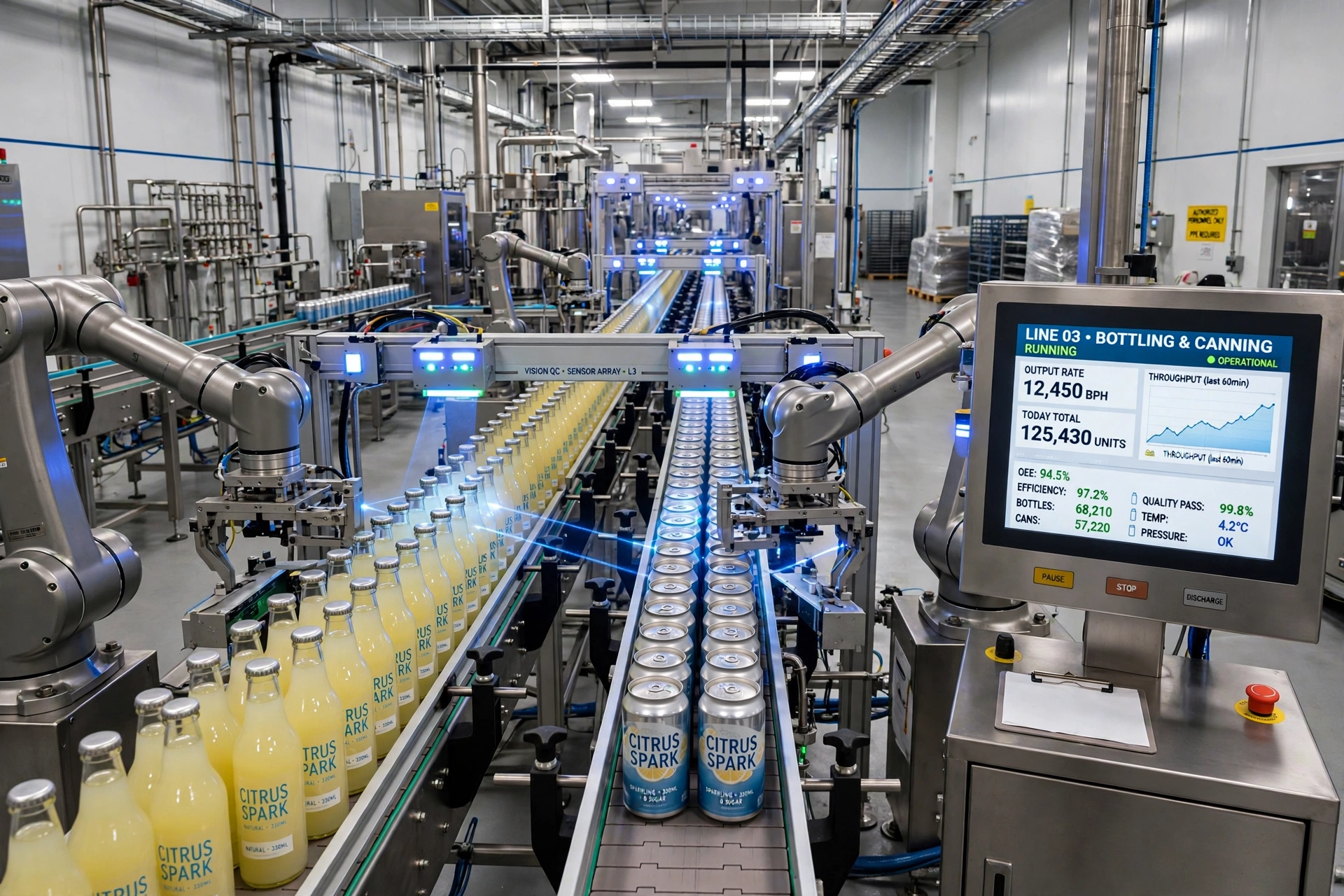
AI automation in beverage manufacturing uses machine learning, computer vision and robotics to run bottling plants more efficiently — predicting equipment failures hours ahead, inspecting every bottle or can, and adjusting recipes and production schedules in real time. Major producers including Coca-Cola and PepsiCo already use it, and the technology is now within reach of mid-size plants too.
What AI automation actually means on a bottling line
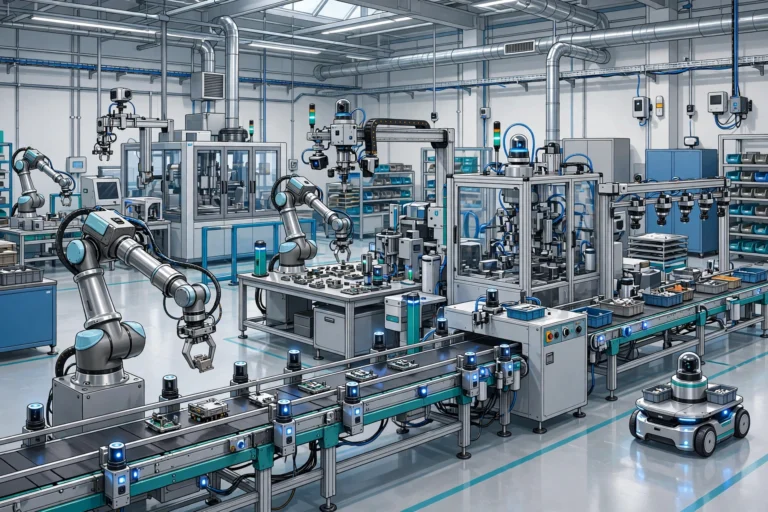
Traditional factory automation follows fixed rules: a sensor trips, a valve opens, a conveyor stops. AI automation adds learning. Instead of only reacting, the system studies years of production data — temperatures, vibration, fill levels, defect rates — and spots patterns humans miss. It can warn that a filler is likely to fail in the next few hours, flag a subtle flavour drift during fermentation, or re-sequence warehouse orders for faster shipping.
That matters because beverage plants run at enormous speed and thin margins. One unplanned stoppage can idle a whole shift, and a small defect rate across millions of units becomes a large pile of wasted product. AI targets exactly those two costs: downtime and waste.
Where AI is already working in beverage plants
Predictive maintenance: fixing machines before they break
Predictive maintenance is the most proven use case. At one multinational beverage company’s brewery, C3 AI Reliability was deployed across four production lines, ingesting more than two years of process and maintenance data. Its models predicted filler downtime up to eight hours in advance, caught 100% of filler underfilling failure events, and cut weekly predictive alerts from 25 to fewer than five. The company is considering scaling the system across 27 breweries and 84 production lines.
Quality control: inspecting every unit, not a sample
Machine vision now inspects bottles and cans at line speed, catching fill-level errors, label defects and contamination that spot checks miss. In brewing, AI systems analyse fermentation sensor data to predict optimal timing and flag yeast-health problems before a batch is compromised.
Warehousing: robots that handle the hard cases
Swire Coca-Cola’s Zhengzhou plant in China shows how far physical AI has come. Its SAI picking system, deployed in September 2026, uses AI-guided robots to pick heavy, shrink-wrapped beverage packs — a task conventional automation struggled with because the plastic film reflects light and shifts shape. Each robot handles up to 600 cases an hour with picking accuracy approaching 100%, and the system is set to roll out to plants in Nanjing, Hefei and Guangzhou.
Product development: AI-designed flavours
AI is also reaching the recipe lab. Coca-Cola created Coca-Cola Y3000 in 2023 with AI analysing consumer and market data to suggest flavour combinations and packaging, with human formulators refining the result. PepsiCo has used AI to speed recipe ideation, including Pepsi Molecular Cola, released in April 2025, and a Propel fitness water variant developed from AI-driven consumer insights.
Digital twins: rehearsing the whole plant virtually
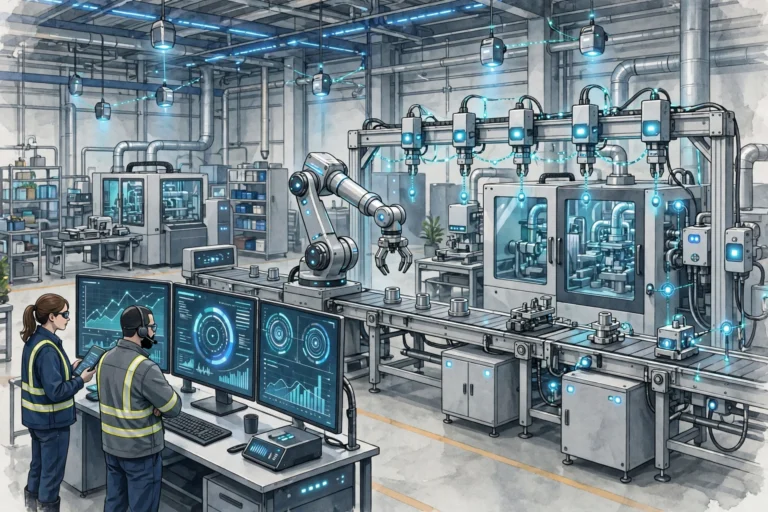
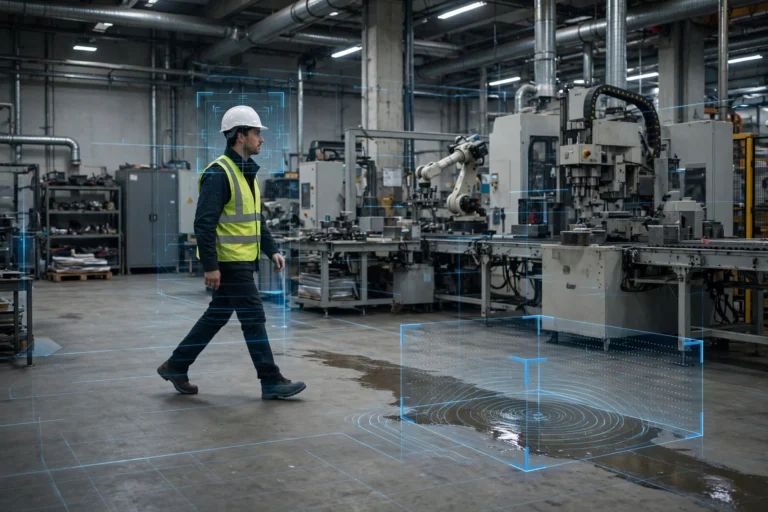
PepsiCo has converted manufacturing and warehouse facilities into digital twins — virtual replicas that simulate plants and supply chains in real time. Siemens, its technology partner, reports a 20% productivity gain from the deployment, though independent validation has not been published. Engineers can also program machinery using natural language through Siemens’ Industrial Copilot, co-developed with Microsoft, rather than specialist PLC code.
Traditional automation vs AI automation
| Task | Traditional automation | AI automation |
|---|---|---|
| Maintenance | Fixed schedules or repair after failure | Failure predicted hours ahead from sensor patterns |
| Quality checks | Sample-based inspection | Every unit inspected by machine vision |
| Production planning | Static schedules set by planners | Demand forecasts and live re-sequencing |
| Recipe changes | Manual trial batches | AI models suggest parameters from past batches |
| Warehousing | Standard cartons only | Mixed, irregular packs handled by AI-guided robots |
How much does AI automation cost?
AI automation costs vary widely: a single machine-vision inspection station can be a modest capital purchase, while a plant-wide digital twin is a multi-year investment in sensors, data infrastructure and integration. The economics usually rest on avoided downtime and waste rather than headcount cuts — catching one filler failure before it happens can save an entire shift’s output. Smaller producers typically start with one high-pain line, prove the saving, and then expand.
What a plant needs before it starts
A plant needs three prerequisites before AI automation pays off: reliable sensor data from its existing equipment, a unified view of that data (production, maintenance and quality records in one place), and staff who can act on AI alerts. The C3 AI brewery deployment took six months and ingested over two years of historical data before its models went live — data preparation, not the algorithm, is usually the longest phase.
Risks and limits to watch
AI automation carries real risks: models trained on one plant’s data may not transfer to another, sensor failures can feed bad predictions, and over-automation can leave teams unable to run lines manually when systems go down. Vendor-reported gains — such as the 20% PepsiCo productivity figure — should be treated as vendor claims until independently verified. The safest pattern is human-supervised automation: AI recommends, experienced operators approve, and the system executes.
Analysis: why beverages are a sweet spot for AI
Analysis — the following is interpretation, not a reported fact. Beverages suit AI automation unusually well: production is high-volume and repetitive, which generates the large datasets machine learning needs, and the product is perishable and brand-sensitive, so consistency directly protects revenue. Dataintelo estimates the brewery analytics AI market alone at USD 1.37 billion in 2024, growing to USD 6.25 billion by 2033 — a forecast, not a measured result, but it signals where investment is flowing. Expect the next wave to be smaller producers adopting cloud-based versions of tools that only giants could afford until now.
Related reading on USABite: Machine Automation Solutions Explained, Low Cost Intelligent Automation Explained, and AI Powered Digital Products Explained.
Frequently asked questions
What is AI automation in beverage manufacturing?
AI automation in beverage manufacturing is the use of machine learning, computer vision and robotics to run drink production more efficiently. It predicts equipment failures, inspects every bottle or can, adjusts recipes and schedules, and automates warehousing — going beyond fixed-rule automation by learning from production data.
How does AI reduce downtime in beverage plants?
AI models study sensor data such as vibration, temperature and fill levels to predict failures hours before they happen. In one brewery deployment, filler downtime was predicted up to eight hours in advance and every underfilling failure event was caught, letting maintenance teams act during planned stops instead of after breakdowns.
Can small beverage producers afford AI automation?
Yes, if they start narrow. A single machine-vision inspection station or a predictive-maintenance pilot on one painful line costs far less than a plant-wide digital twin. The proven pattern is to prove savings on one line, then expand using those savings to fund the next step.
Does AI replace workers in beverage factories?
AI automation mainly changes jobs rather than eliminating them. Robots take over heavy, repetitive picking and inspection, while workers move into supervision, maintenance and robotics upkeep — Swire Coca-Cola notes its frontline pickers are being equipped with robotics-maintenance skills as the new system rolls out.
What data does a beverage plant need before adopting AI?
A plant needs consistent sensor and production records — ideally years of batch, maintenance and quality data in one unified system. Without reliable historical data, AI models cannot learn normal patterns or predict failures accurately, so fixing data collection is the essential first step.
Sources
- Prepared Foods — AI Accelerates Beverage Innovation
- Swire Coca-Cola — How AI-Powered Robots Are Transforming Beverage Warehousing
- Autonai News — Manufacturing AI Boosts PepsiCo Output 20%
- C3 AI — Beverage Downtime Reduction with C3 AI Reliability
- Dataintelo — Brewery Analytics AI Market Report 2033
- drinktec — How AI Is Already Being Used in the Beverage Industry