
Digital Automation as a Service Explained: What It Is, How It Works, and What It Costs in 2026
Key takeaway: Digital automation as a service (AaaS) delivers automation as a cloud subscription: instead of buying servers, licences and an in-house team, a business rents automation tools — or hires a provider to run them — and pays monthly or per use. It covers robotic process automation, workflow automation and AI agents.
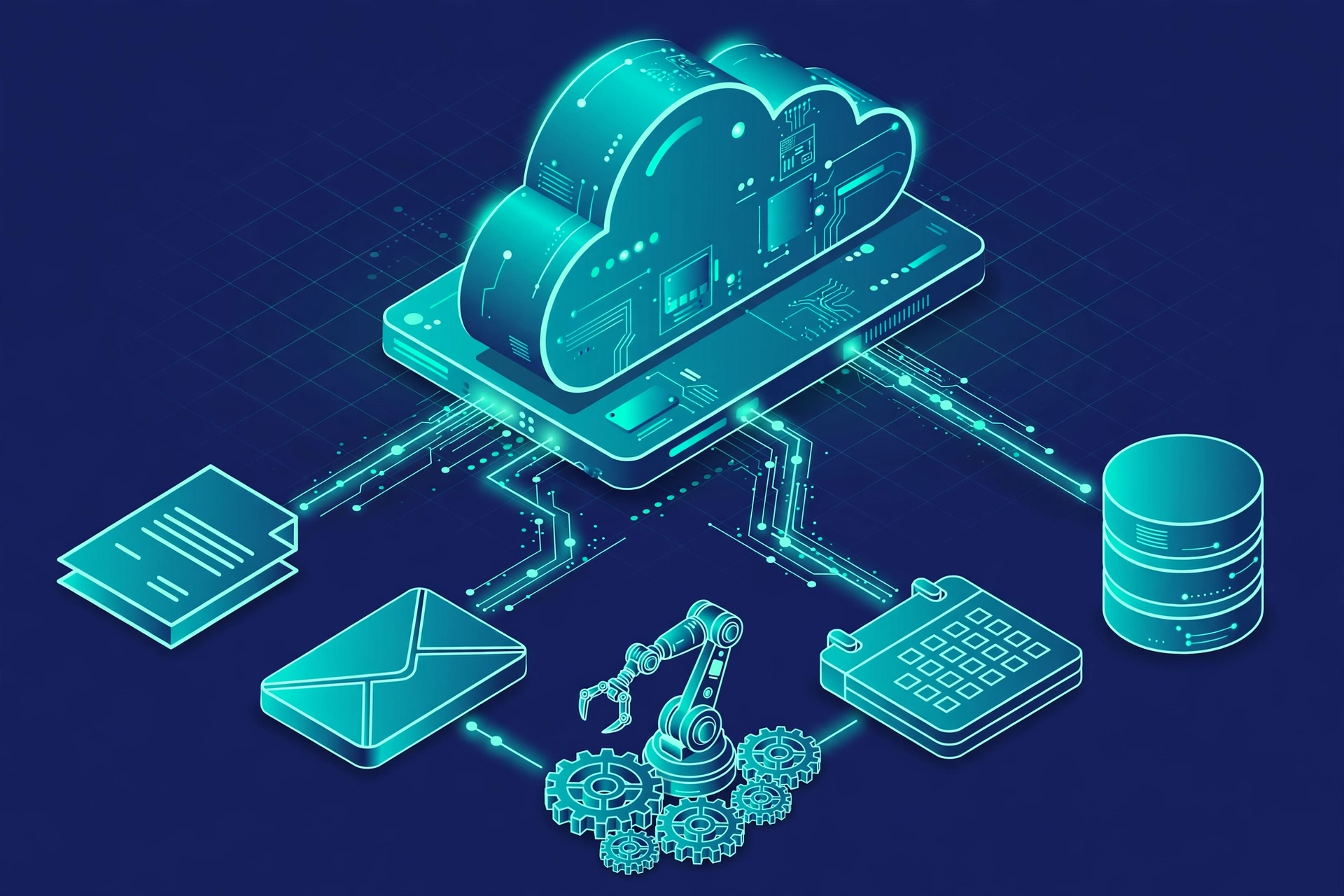
Traditional automation meant buying software, installing it on your own servers, and hiring specialists to keep it running. Digital automation as a service flips that: the platform lives in the vendor’s cloud, and you subscribe to it like email or accounting software. GetZowie describes it as automation technology provided through on-demand, web-based solutions, so companies can streamline operations without building an in-house platform.
One warning: the term is used in two different ways, and vendors rarely say which one they mean. Sometimes it means a cloud-hosted platform you use yourself, such as UiPath Automation Cloud or Microsoft Power Automate. Sometimes it means a managed service, where an outside provider builds the automations and keeps them running for you. Hexaware’s definition leans toward the second: outsourcing repeatable processes to a third-party provider as a managed service, without large upfront spending on infrastructure, licences and staff. When you evaluate an offer, ask which one it is.
How digital automation as a service works
You pick a process that is repetitive, rule-based and high-volume — invoice processing, employee onboarding, or data moving between systems. The automation is built on a platform such as UiPath, Automation Anywhere, Microsoft Power Automate, Make or n8n, using software robots, API connections and, increasingly, AI agents that can read unstructured documents. The workflows run in the vendor’s cloud rather than on your machines: nothing to install, updates arrive automatically, and you can scale from one process to fifty without buying hardware. Stonebranch notes that IT offers automation as an on-demand capability to the whole business, with guardrails, instead of treating each automation as an isolated project.
Digital automation as a service vs traditional automation
| Automation as a service | Traditional on-premise automation | DIY tools (Zapier, Make) | |
|---|---|---|---|
| Upfront cost | Low — subscription | High — licences, servers, hiring | Very low — self-serve plans |
| Who builds it | Vendor or managed provider | Your in-house team | You |
| Speed to first workflow | Days to weeks | Months | Hours to days |
| Best for | Automation without building a team | Strict data-control needs | Individuals and small teams |
What digital automation as a service costs
Entry is cheap; enterprise scale is not. UiPath’s Automation Cloud Basic plan starts at $25 a month, according to Guideflow’s 2026 pricing check, and Microsoft Power Automate paid plans start at $15 per user a month. VendorBenchmark’s enterprise benchmarks put unattended bots at $5,000 to $15,000 per bot per year at list price, with typical discounts of 35 to 50 percent, and mid-market managed services usually charge $99 to $500 a month. Watch the meter: some platforms charge per bot, some per user, some per completed task, so price the rollout you actually plan, not the demo.
What you need before you start, and the risks
Three prerequisites decide whether the service pays off. First, a process worth automating: high volume, clear rules, digital inputs. Second, clean access to your systems — the platform needs permission to read and write in your CRM, email or accounting software, which means IT sign-off. Third, someone on your side who owns the outcome, because nobody else will notice when a workflow quietly starts processing the wrong invoices.
The main risks are dependence, pricing and data. Your workflows live on someone else’s platform, built in their tools, and moving them elsewhere is rarely a simple export. Usage-based pricing can grow faster than expected, and automations touch customer records and financial data, so check hosting location, compliance certifications and exit terms before signing.
Market forecasts deserve a sceptical eye, too. Emergen Research sizes the market at $9.24 billion in 2025, growing to $47.59 billion by 2035, while 360iResearch puts it at $6.95 billion in 2025 and $10.27 billion by 2032. Those forecasts disagree by a wide margin — treat any single growth number as a guess, not a fact.
Analysis: when it pays off, and when it does not
Our take: digital automation as a service is the right default for most small and mid-size businesses, and for large companies that want to prove value before building an internal team. It removes the two classic blockers — upfront cost and scarce expertise — and a failed pilot stops costing money the day you switch it off. It is the wrong choice when your processes face strict data-residency rules, or when automation is so central that renting it forever costs more than owning it. The practical test is simple: name three processes that eat staff hours every week, start with the cheapest on a monthly plan, and measure the hours saved.
For related reading, see our explainers on unattended automation, digital process automation solutions, and AI for industrial process control.
Frequently asked questions
What is digital automation as a service?
Digital automation as a service (AaaS) is a cloud-based model where automation tools are delivered on subscription instead of installed on your own servers. It covers robotic process automation, workflow automation and AI agents, and comes in two forms: a cloud platform you use yourself, or a managed service where a provider builds and runs the automations for you.
How much does automation as a service cost?
Entry-level cloud plans start around $25 a month for UiPath’s Automation Cloud Basic plan, and Microsoft Power Automate paid plans start at $15 per user a month. Enterprise deployments cost far more: unattended bots typically run $5,000 to $15,000 per bot per year at list price, and mid-market managed services usually charge $99 to $500 a month.
Is digital automation as a service good for small businesses?
Yes, it is often the best fit for small businesses because there is no upfront infrastructure cost and no need to hire automation specialists. Start with one repetitive process, such as invoice handling or appointment reminders, on a monthly plan, and expand only after you can measure the time saved.
What are the risks of automation as a service?
The main risks are vendor lock-in, because workflows are built in the provider’s tools; usage-based pricing that can grow faster than expected; and data security, since automations touch customer and financial records. Check hosting location, compliance certifications and exit terms before signing a contract.
Sources: GetZowie, Hexaware, Stonebranch, Emergen Research, 360iResearch, VendorBenchmark, Guideflow.




One Comment
Comments are closed.