
What Is a Modern Technology? Definition, Types, and Everyday Examples Explained
Key takeaway: Modern technology means the tools, systems, and services built with today’s scientific knowledge and engineering — from smartphones and cloud apps to solar panels and medical scanners. It works by combining hardware, software, and networks to solve practical problems faster and more accurately than older methods, and it now touches almost every part of daily life.
Ask ten people “what is a modern technology?” and you will get ten answers: a phone, an AI chatbot, a robot, a solar panel. They are all right. The phrase is broad by design — it covers anything built using current scientific knowledge and engineering, especially products released or greatly improved in recent decades.
What is a modern technology, exactly?
Encyclopaedia Britannica defines technology as “the application of scientific knowledge to the practical aims of human life.” Modern technology is simply the current chapter of that story: tools and systems that could not exist without recent science, computing, and engineering. A stone hammer is technology; a smartphone is modern technology. The difference is not just age — it is the science packed inside.
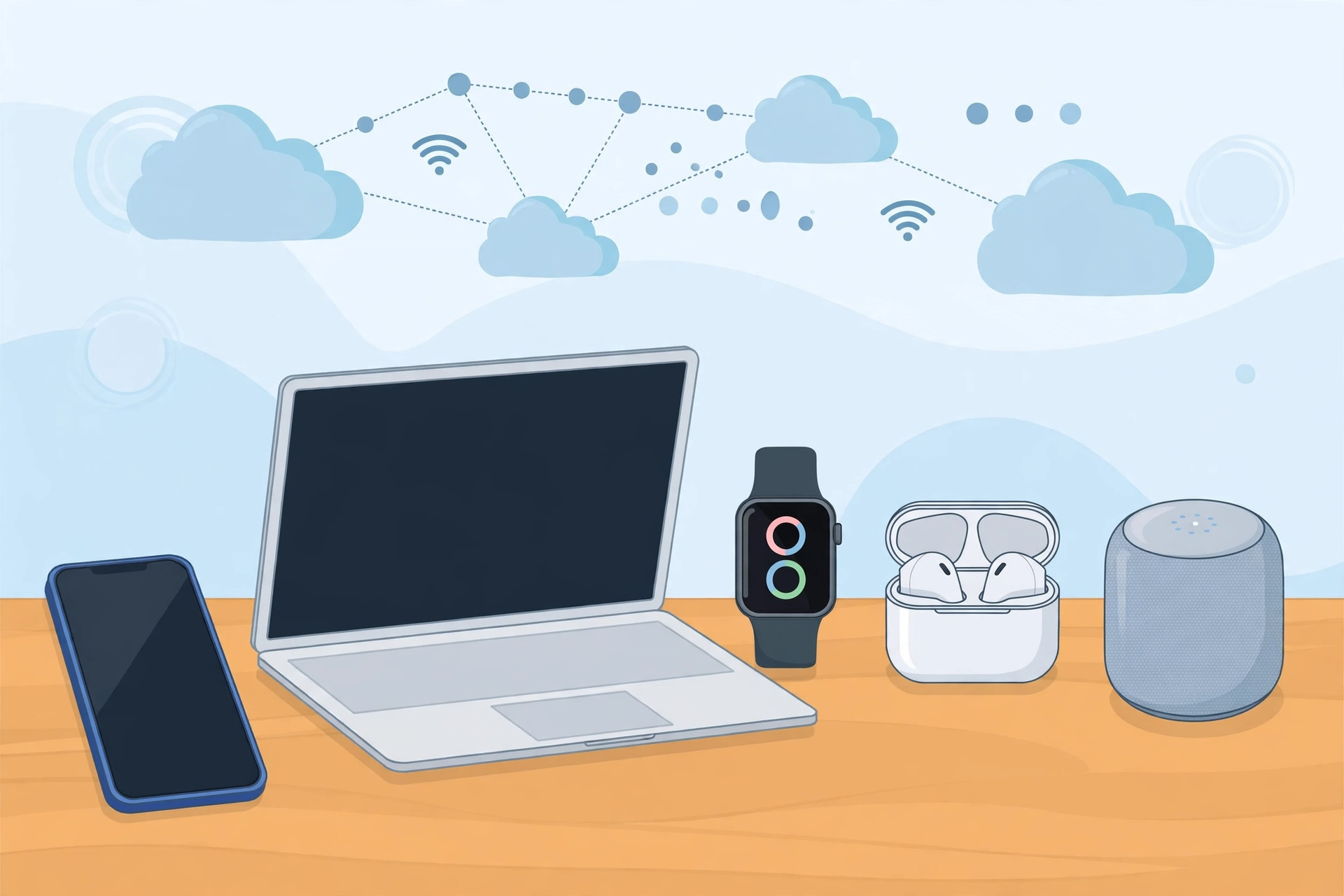
Most modern systems share the same pattern: they collect information through sensors or inputs, process it with software, store it on the device or in the cloud, and send results back over a network. That hardware-plus-software-plus-network recipe is why a fitness watch, a video call, and a factory robot feel like part of the same world.
What are the main types of modern technology?
Modern technology is usually grouped by what it is for, not by how flashy it looks. The main branches are information technology (computers, software, and networks), communication technology (phones, messaging, and the internet), medical technology (scanners and health monitors), energy technology (solar panels and batteries), transportation technology (electric vehicles and navigation), manufacturing technology (automated production and 3D printing), and artificial intelligence, which now runs through almost all of the others.
| Type | What it covers | Everyday example |
|---|---|---|
| Information technology | Computers, software, data, networks | Cloud storage, office apps |
| Communication technology | Sharing information across distances | Smartphones, video calls, 5G |
| Medical technology | Diagnosing and treating illness | MRI scanners, heart monitors |
| Energy technology | Producing and storing energy | Solar panels, home batteries |
| Transportation technology | Moving people and goods | Electric vehicles, GPS |
| Manufacturing technology | Making goods efficiently | Industrial robots, 3D printers |
| Artificial intelligence | Systems that learn patterns from data | Voice assistants, recommendations |
Modern technology vs traditional technology: what actually changed?
Traditional technology was mostly mechanical: levers, gears, engines, and hand tools that did one job well. Modern technology adds three things older tools could not do: it processes information, it connects to other systems, and it improves through software updates. A traditional thermostat turned heating on and off; a modern smart thermostat learns your routine, checks the forecast, and adjusts itself from your phone.
That comparison matters when choosing tools: a mechanical solution is often simpler and cheaper, while a modern one is more capable but depends on power, connectivity, and software support. The right choice depends on the job, not on how new the product is.
How widespread is modern technology today?
The scale is hard to overstate. The International Telecommunication Union’s Facts and Figures 2025 estimates that about 6 billion people — roughly three-quarters of the world’s population — used the internet in 2025, up from 5.8 billion in 2024, while 2.2 billion people remained offline. The same report estimates 5G networks covered about 55% of the world’s population in 2025. Yet access is still deeply uneven: the ITU reports 94% of people in high-income countries use the internet, compared with only 23% in low-income countries.
What does modern technology cost, and what do you need to use it?
Cost varies enormously. Many modern services are free at the point of use — search, messaging, basic cloud storage — paid for by advertising or subscriptions. Devices are the bigger cost: a basic smartphone can cost under $200, while flagship phones, laptops, and home automation setups run into four figures. Price the whole setup, not just the headline device: connectivity, subscriptions, and eventual replacement all count.
The prerequisites are simpler than the marketing suggests: a device, a connection, and basic digital skills — setting up accounts, updating software, and spotting scams. You do not need to understand how AI models or 5G radios work internally; you do need the habit of keeping software updated and checking sources before trusting what a screen tells you.
What are the risks and limits of modern technology?
Modern technology brings real downsides. Privacy comes first: connected devices collect data that can be leaked or misused. Security is second: anything connected can, in principle, be attacked. Then there are physical costs — electronic waste and energy use — plus human ones: distraction and jobs changed by automation. None of these is a reason to reject modern technology wholesale, but all are reasons to choose it deliberately.
See also our guides to disruptive technologies impacting business, the types of process automation, and sustainable automation solutions.
Analysis: what this means for you
Analysis — not a verified fact, but our read of the evidence above. The useful question is no longer “should I use modern technology?” but “which pieces earn their place?” A tool earns its place when it saves real time or solves a real problem, and when its costs — money, data, attention, and upkeep — are ones you can see and accept.
If you find USABite useful, you can add it as a preferred source in Google Search so our coverage shows up more often for you.
Frequently asked questions
What is a modern technology in simple words?
A modern technology is a tool, system, or service built with today’s science and engineering, such as a smartphone, a cloud app, or a solar panel. It usually combines hardware, software, and a network connection to do a practical job faster or more accurately than older methods.
What are the main types of modern technology?
The main types are information technology, communication technology, medical technology, energy technology, transportation technology, manufacturing technology, and artificial intelligence. Many real products mix several types at once: a smartphone, for example, combines communication, information, energy, and materials technology.
What are examples of modern technology at home?
Common home examples include smartphones, Wi-Fi routers, smart TVs, voice assistants, robot vacuums, smart thermostats, and home security cameras. Even ordinary appliances count when they use modern engineering, such as an energy-efficient washing machine or an induction stove.
How is modern technology different from traditional technology?
Traditional technology was mostly mechanical and did one fixed job, while modern technology processes information, connects to other systems, and can improve through software updates. A traditional lock opens with a key; a modern smart lock can also be opened by phone, code, or fingerprint, and its software can be updated over time.
What are the risks or downsides of modern technology?
The main downsides are privacy and security risks from connected devices, electronic waste and energy use, and dependence on power and internet access. Costs can also add up through subscriptions and replacements, so it is worth weighing the full price and upkeep of a tool before adopting it.
Sources
- Encyclopaedia Britannica, “Technology: Definition, Examples, Types, & Facts” — britannica.com/technology/technology
- International Telecommunication Union, “Facts and Figures 2025,” as reported by Tech Xplore — techxplore.com
- Simplicable, “64 Examples of Modern Technology” — simplicable.com/history/modern-technology

One Comment
Comments are closed.