U.S. Justice Department Indicts Raúl Castro for 1996 Murder of American Pilots
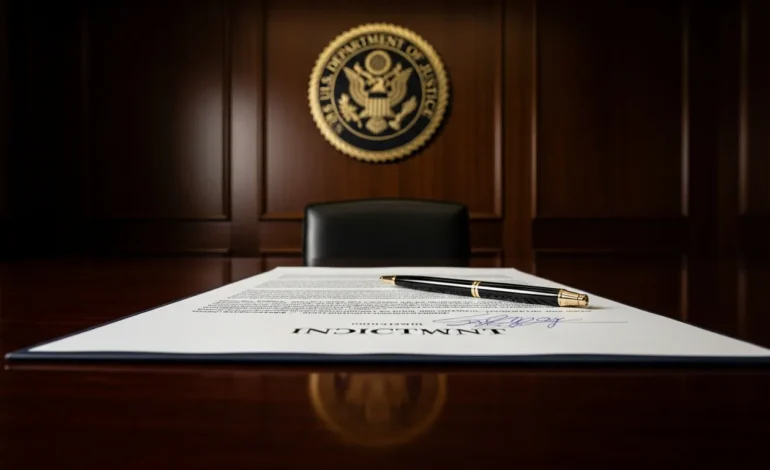
WASHINGTON, D.C. — In a major development that could reshape the American landscape and its relations with Havana, the U.S. Department of Justice has unsealed a historic indictment against former Cuban leader Raúl Castro for his alleged role in the 1996 shootdown of two humanitarian aircraft.
The charges, which include multiple counts of murder and conspiracy, stem from the Feb. 24, 1996, incident where Cuban MiG fighter jets destroyed two unarmed Cessna Skymasters operated by the Miami-based group Brothers to the Rescue.
Four men—three U.S. citizens and one U.S. resident—were killed in international airspace during the encounter, an event that has remained a flashpoint in U.S.-Cuba relations for three decades.
A Decades-Old Cold Case Reopened
The indictment of the 94-year-old Castro marks the first time a former Cuban head of state has been charged in a U.S. court for the deaths of the pilots. Federal prosecutors allege that Castro, who served as Cuba’s Minister of the Revolutionary Armed Forces at the time, personally authorized the use of lethal force against the civilian planes.
The move is being hailed by the Trump administration as a long-overdue pursuit of justice for the families of Armando Alejandre Jr., Carlos Costa, Mario de la Peña, and Pablo Morales. For years, the families have lobbied successive administrations to hold the highest levels of the Cuban government accountable for what they term an act of international terrorism.
This legal action coincides with a period of intense domestic legal scrutiny within the United States, as legal teams for Donald Trump face off for closing arguments in other historic criminal proceedings involving high-profile figures.
Geopolitical Fallout and the Pressure Campaign
The indictment is seen as the pinnacle of the administration’s “maximum pressure” strategy against the Cuban regime. Diplomatic analysts suggest this move effectively closes the door on any near-term rapprochement between Washington and Havana, signaling a return to Cold War-era tensions.
“This is a clear signal that the era of engagement is over,” said one senior State Department official, speaking on condition of anonymity. The official noted that the indictment is intended to isolate the Cuban leadership from the international financial system.
The decision to pursue a former head of state also mirrors broader shifts in international diplomacy, similar to how the UK’s upcoming summer election signals a geopolitical pivot for the West toward more assertive foreign policy stances. Experts believe this indictment will force other nations to choose between their ties with Havana and their cooperation with U.S. justice initiatives.
Celebrations in Miami
News of the indictment sparked immediate celebrations in Miami’s Little Havana neighborhood. Exiled Cubans and relatives of the victims gathered at the Brothers to the Rescue memorial, waving American and Cuban flags in a display of emotional closure.
“We have waited thirty years for this day,” said Miriam de la Peña, mother of one of the fallen pilots. “Justice is finally knocking on the door of the dictator, and we will not stop until there is full accountability for the blood spilled over the Florida Straits.”
The Cuban government has yet to issue a formal response to the indictment, though state-run media in Havana has previously characterized the 1996 incident as a necessary defense of sovereign airspace against “terrorist provocations.”
Legal Obstacles and Extradition
While the indictment is a symbolic victory for the victims’ families, the likelihood of Raúl Castro appearing in a U.S. courtroom remains slim. Cuba does not have an extradition treaty with the United States, and the aging leader remains under heavy protection by the Cuban military in Havana.
However, the indictment allows the U.S. to freeze any remaining international assets linked to the Castro family and significantly restricts his ability to travel to any country that maintains an extradition agreement with the United States. It also places a permanent stain on his legacy as a revolutionary leader.
Legal experts suggest the move may also be intended to pressure the current Cuban leadership under Miguel Díaz-Canel. The Department of Justice stated that the investigation remains active and additional co-conspirators within the Cuban military may be named in the coming weeks.
Frequently Asked Questions
What was the Brothers to the Rescue shootdown?
In 1996, Cuban military jets shot down two unarmed civilian planes operated by a Miami-based group that searched for Cuban rafters in the Florida Straits. Four people were killed in international airspace.
Can Raúl Castro actually be arrested?
Because there is no extradition treaty between the U.S. and Cuba, an arrest is unlikely unless Castro travels to a country that honors U.S. warrants and is willing to extradite a former head of state.
Why is the indictment happening now, 30 years later?
The Trump administration has prioritized a maximum pressure campaign against the Cuban regime. Federal prosecutors have reportedly secured new testimony and declassified evidence regarding the chain of command in 1996.
What are the specific charges against Castro?
Raúl Castro faces charges of conspiracy to commit murder and the murder of U.S. citizens in international airspace, which carry potential life sentences under U.S. federal law.