National Energy Crisis: Gas Prices Breach $4 Mark as Strait of Hormuz Blockade Deepens
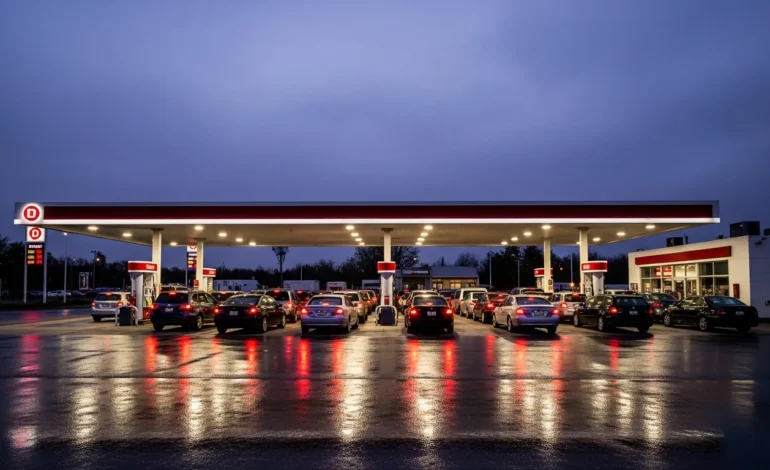
WASHINGTON, D.C. — In a major development that could reshape the American landscape, the national average for gasoline has eclipsed the $4 threshold in every state as the geopolitical standoff in the Middle East reaches a boiling point.
The sudden price surge follows the indefinite closure of the Strait of Hormuz, a critical maritime artery that facilitates nearly 20 percent of the world’s liquid petroleum consumption.
Energy analysts now warn that the current trajectory could push prices to $5 per gallon by mid-summer if the diplomatic and military impasse with Iran is not resolved immediately.
A Nationwide Economic Shock
For the first time in history, even states with traditionally lower fuel taxes, such as Mississippi and Texas, have seen pump prices climb above the $4 mark.
The disruption comes at a precarious time for the domestic economy, as the record-breaking travel surge expected for the holiday season is now threatened by skyrocketing fuel costs.
Logistics firms and independent truckers are reporting immediate hits to their bottom lines, with surcharges already being passed down to consumers in the form of higher grocery and retail prices.
The White House has faced mounting pressure from both sides of the aisle to release further reserves from the Strategic Petroleum Reserve (SPR), though experts suggest such moves may offer only temporary relief.
The Strait of Hormuz Standoff
The closure of the Strait remains the primary catalyst for the market volatility, as tankers remain anchored or are being diverted around the Cape of Good Hope.
This detour adds weeks to delivery schedules and significantly increases freight insurance premiums, costs that are being felt at every gas station in America.
Global markets are reacting with extreme caution to what many see as a geopolitical pivot that is testing Western alliances and energy security protocols.
Military officials in the region report that the waterway remains obstructed by Iranian naval assets, and a timeline for reopening the passage remains non-existent.
Calls for Domestic Energy Production
The crisis has reignited a fierce debate over American energy independence and the speed of the transition to renewable sources.
Proponents of increased domestic drilling are calling for an immediate lifting of federal leasing bans to offset the loss of Middle Eastern crude.
Conversely, clean energy advocates argue that the current shock proves the vulnerability of a fossil-fuel-dependent economy and are urging a faster rollout of electric vehicle infrastructure.
As the conflict enters its third week, the impact on the global supply chain continues to widen, affecting everything from manufacturing to international air travel.
Financial markets have mirrored the uncertainty at the pump, with energy stocks surging while consumer discretionary sectors face a sharp sell-off.
The administration has not yet announced a formal plan for federal intervention, though high-level diplomatic talks are reportedly underway in neutral territories.
Frequently Asked Questions
Why is the Strait of Hormuz so important to gas prices?
The Strait of Hormuz is the world’s most important oil transit chokepoint. Approximately one-fifth of the world’s total oil production passes through this narrow waterway, making any disruption a direct cause of global price spikes.
Will gas prices really reach $5 per gallon?
Many energy economists believe $5 is a realistic possibility if the blockade continues for another month. The lack of spare global production capacity makes the market highly sensitive to supply interruptions.
What can the government do to lower prices?
The government can release oil from the Strategic Petroleum Reserve, provide temporary gas tax holidays, or encourage domestic producers to increase output. However, these measures take time to affect prices at the pump.
How does this affect inflation?
Energy costs are a major component of the Consumer Price Index. Higher gas prices increase the cost of transporting goods, which typically leads to higher prices for food, clothing, and other essential items.