Why Does RFK Jr. Sound Like That? Understanding Spasmodic Dysphonia in 2026
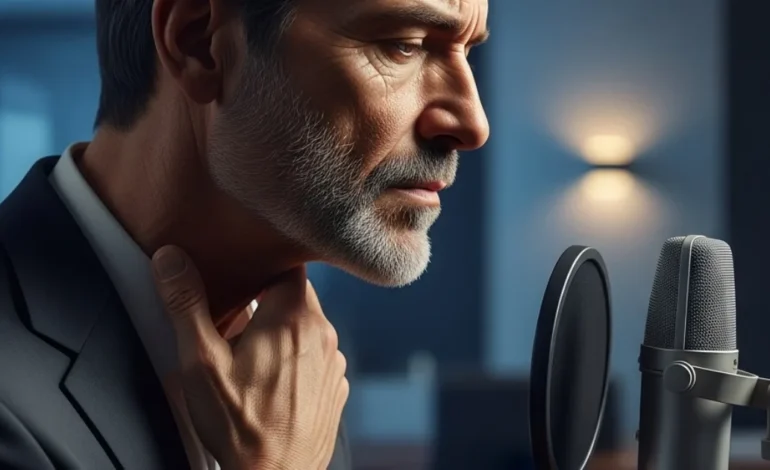
The Science Behind the Voice: Spasmodic Dysphonia Explained
In the high-stakes arena of American public life in 2026, the human voice has become a central focus of digital identity and authenticity. As we witness complex legal battles like the battle for the human voice, the unique vocal quality of Robert F. Kennedy Jr. remains one of the most searched health-related queries in the United States. His voice, characterized by a strained, quivering, or “strangled” quality, is not the result of aging or a temporary illness. Instead, it is the manifestation of a specific neurological condition known as Spasmodic Dysphonia.
Spasmodic Dysphonia (SD) is a focal dystonia, a localized movement disorder that affects the muscles within the larynx, or voice box. In a healthy individual, the vocal cords vibrate smoothly to produce sound. For those with SD, the brain sends involuntary signals that cause the vocal cords to spasm or tighten during speech. This interrupts the air flow and creates the distinctive breaks and tremors that have become synonymous with Kennedy’s public addresses.
The Onset and Evolution of RFK Jr.’s Condition
Robert F. Kennedy Jr. did not always have this vocal characteristic. He has publicly stated that the condition began to manifest in his early 40s, around 2001. Initially, the changes were subtle, often mistaken for a common cold or vocal fatigue. However, as the neurological disorder progressed, the spasms became more frequent and pronounced, eventually settling into the permanent vocal profile he possesses today.
The transition was particularly challenging for a man whose career depends heavily on public speaking and advocacy. Unlike many public figures who might retreat from the spotlight when facing health challenges—similar to the transparency seen in understanding Cardinal Dolan’s resignation and the subsequent transition of leadership—Kennedy chose to remain in the public eye. He has been remarkably open about the condition, often using it as a platform to discuss neurological health and the resilience required to maintain a high-profile career despite physical limitations.
Treatment Modalities and Management in 2026
As of 2026, there is no permanent cure for Spasmodic Dysphonia, but medical advancements have significantly improved the management of the symptoms. The most common treatment remains the injection of botulinum toxin (Botox) directly into the laryngeal muscles. These injections temporarily weaken the muscles, preventing the spasms and allowing for a smoother, though often breathier, voice. These treatments are not a one-time fix; they typically require repetition every three to four months as the effects wear off.
Beyond injections, many patients utilize specialized voice therapy to optimize their remaining vocal function. This involves learning breathing techniques and vocal exercises designed to reduce the strain on the larynx. In 2026, precision medicine has allowed for more targeted delivery of these treatments, reducing side effects such as swallowing difficulties. Kennedy has likely utilized a combination of these therapies to maintain his stamina during long campaign trails and public appearances.
The Psychological and Public Perception of Vocal Differences
The impact of a voice like Kennedy’s goes beyond the physical. In the context of American leadership, the voice is often equated with strength and authority. A tremulous voice can be misinterpreted by the uninformed as a sign of nervousness, weakness, or even cognitive decline. However, for many supporters, Kennedy’s voice has come to represent a sense of vulnerability and authenticity that contrasts with the polished, often AI-enhanced rhetoric of modern politics.
When he stands at a podium during national ceremonies, such as those explained in our guide on why flags are at half-mast today, his voice serves as a reminder of the human element in governance. It forces the audience to listen more intently, creating a unique rhetorical dynamic. This “forced listening” can actually increase the impact of his message, as listeners must focus more closely on his words rather than just the cadence of his speech.
Navigating a Public Career with a Speech Disorder
Managing Spasmodic Dysphonia while maintaining a rigorous schedule requires significant discipline. Public speakers with this condition often use high-quality, sensitive microphones that allow them to speak at a lower volume, reducing the physical strain on the vocal cords. They also prioritize hydration and vocal rest between engagements to prevent the spasms from worsening due to fatigue.
Kennedy’s ability to navigate the 2026 political landscape despite these challenges has sparked broader conversations about disability and inclusion in high-level leadership. It highlights the fact that a physical impairment in one area—such as vocal production—does not correlate with a lack of intellectual or leadership capability. His presence continues to challenge traditional American standards of what a leader “should” sound like, paving the way for more diverse representations of health and ability in the public sphere.
Frequently Asked Questions
Is Spasmodic Dysphonia a sign of a more serious neurological disease?
Generally, no. Spasmodic Dysphonia is typically a “focal” dystonia, meaning it is limited to the muscles of the larynx. While it is a neurological condition, it does not usually indicate the presence of broader neurodegenerative diseases like Parkinson’s or ALS. Most individuals with SD live otherwise healthy lives, though they may experience other minor focal dystonias, such as eye blinking or writer’s cramp, in some cases.
Can surgery fix the voice of someone with Spasmodic Dysphonia?
There are surgical options, such as selective laryngeal adductor denervation-reinnervation (SLAD-R), which aims to permanently alter the nerve signals to the vocal cords. However, these surgeries are complex and do not guarantee a perfect voice. Many patients, including high-profile figures, often prefer the controlled, reversible nature of Botox injections over the risks associated with permanent laryngeal surgery, which can sometimes result in permanent breathiness or difficulty swallowing.
Does stress make the vocal spasms worse?
Yes, stress and emotional tension are well-known triggers that can exacerbate the symptoms of Spasmodic Dysphonia. When a person is under pressure, the muscles in the neck and throat naturally tighten, which can intensify the involuntary spasms of the vocal cords. This is why public speaking can be particularly difficult for those with the condition, as the physiological response to being on stage compounds the neurological symptoms.
Is the condition hereditary or contagious?
Spasmodic Dysphonia is not contagious. While the exact cause is often unknown (idiopathic), researchers believe it involves a combination of genetic predisposition and environmental triggers. There is some evidence that it can run in families, suggesting a genetic component, but many cases appear spontaneously without a clear family history. It is not something that can be caught from or passed to others through contact.
How does RFK Jr. manage long speeches without losing his voice?
Managing long speeches involves a combination of medical treatment, vocal pacing, and technology. By receiving regular Botox treatments, the severity of the spasms is reduced. Additionally, using amplified sound systems allows him to speak softly, which puts less pressure on the vocal cords. Strategic pauses and staying well-hydrated also help manage the physical toll that prolonged speaking takes on the laryngeal muscles.