Global Powerhouses Descend on U.S. Soil as 2026 FIFA World Cup Countdown Hits Ten Days
MIAMI, Fla. — The vanguard of global football has arrived on American shores, signaling the final countdown to a sporting event of unprecedented scale and ambition.
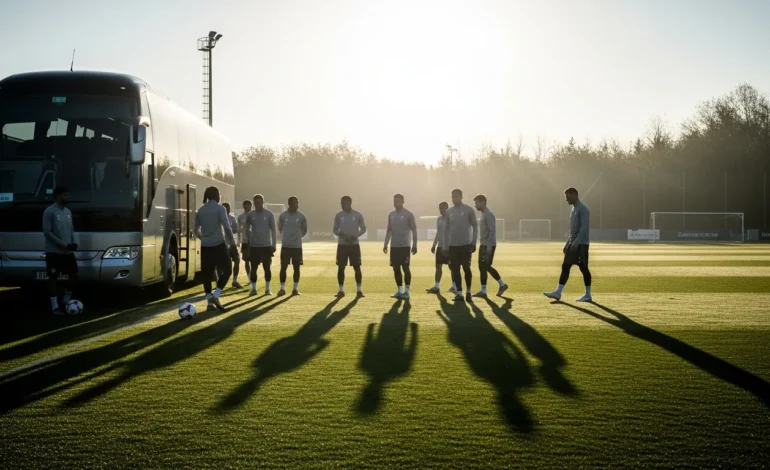
With exactly ten days remaining until the 2026 FIFA World Cup kicks off, national teams from across the globe have begun occupying high-security training hubs in Florida and other strategic U.S. locations.
Australia and South Africa were among the first delegations to touch down, arriving under heavy security at their respective pre-tournament camps early Monday morning.
The arrival of these international powerhouses marks the beginning of the largest logistical operation in FIFA history, as the tournament prepares to host 48 teams for the first time.
A Tournament of Unprecedented Scale
The 2026 edition of the World Cup is a joint venture between the United States, Mexico, and Canada, featuring a record-breaking number of matches and host cities.
The expansion from 32 to 48 teams has necessitated a massive overhaul of training infrastructure across North America to accommodate the influx of athletes and support staff.
- Forty-eight national teams will compete in 104 matches over 39 days.
- Sixteen host cities across three nations will facilitate the tournament.
- Over 10,000 credentialed personnel are expected to manage the training hubs.
- Security protocols have been elevated to National Special Security Event (NSSE) status in several U.S. jurisdictions.
This tournament arrives at a pivotal moment for American athletics, as experts analyze the massive soccer surge currently challenging traditional sports dominance in the United States.
Logistical Fortresses and Training Hubs
Florida has emerged as a primary gateway for teams arriving from the Southern Hemisphere and Europe, utilizing world-class facilities in Miami, Orlando, and Fort Lauderdale.
The Socceroos of Australia have established their base in a secluded, state-of-the-art facility designed to mimic the humid conditions expected during the group stages.
While the Australian national team focuses on the pitch, back home, officials continue to navigate high-stakes legal battles regarding environmental contamination that have dominated recent domestic headlines.
Meanwhile, the South African delegation, known as Bafana Bafana, has taken up residence in a high-performance center in the Florida interior, emphasizing recovery and acclimatization.
U.S. Customs and Border Protection (CBP) and the Department of Homeland Security have established dedicated processing lanes for World Cup athletes to ensure seamless entry into the country.
Economic and Security Implications
The economic impact of the arriving teams is already being felt in local municipalities, with hotel bookings and service industry demand reaching peak levels.
Security remains the paramount concern for FIFA and the host nations, with federal agencies coordinating to protect team hotels and training grounds from potential threats.
Law enforcement officials have implemented temporary flight restrictions (TFRs) over several training sites to prevent unauthorized drone activity and ensure athlete privacy.
FIFA officials have expressed confidence that the infrastructure is ready to handle the increased load, despite the logistical complexities of a tri-country hosting arrangement.
As the remaining teams prepare to arrive over the next 72 hours, the eyes of the world are firmly fixed on the United States for what is being billed as the most inclusive World Cup ever staged.
Frequently Asked Questions
When does the 2026 FIFA World Cup officially begin?
The tournament is scheduled to commence on June 11, 2026, with opening ceremonies and matches held simultaneously across the three host nations.
How many teams are participating in the 2026 World Cup?
For the first time in the history of the competition, 48 national teams will participate, an increase from the 32-team format used since 1998.
Which cities are serving as the primary training hubs?
While matches are spread across 16 cities, primary training hubs are concentrated in regions with high-density sporting infrastructure, including Florida, Texas, and California.
Is security different for this World Cup compared to previous years?
Yes, due to the expanded field and the multi-national hosting, security coordination involves three different federal governments and dozens of local law enforcement agencies under an integrated command structure.