Chip Manufacturing Costs Surge as Malaysian Ringgit Hits 4.02 Against Greenback
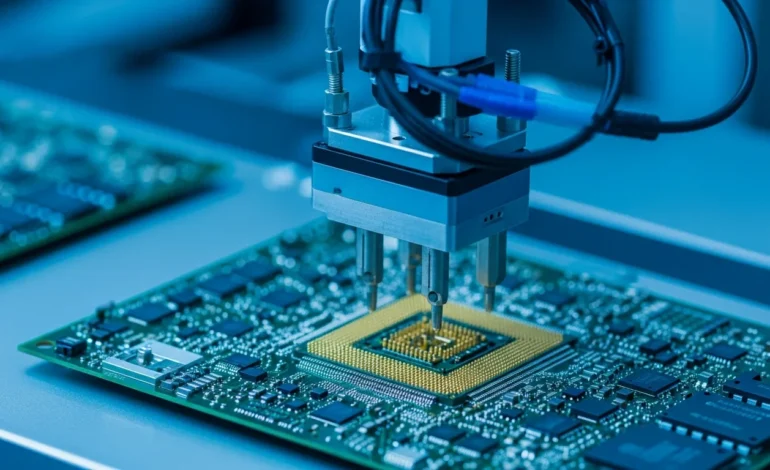
The high-precision silicon wafers moving through Kuala Lumpur’s cleanrooms just became more expensive to export as the Malaysian ringgit enters a period of sharp volatility. Analysts expect the currency to oscillate between 4.02 and 4.04 against the US dollar this week, directly impacting the cost of goods for global electronics giants.
Bank Muamalat Malaysia Bhd chief economist Mohd Afzanizam Abdul Rashid issued the forecast as the ringgit closed last week at 4.0280, a significant drop from 3.9625 just seven days prior. This shift is primarily fueled by a deepening diplomatic stalemate between Washington and Tehran, which has kept energy costs stubbornly high.
Geopolitical Friction and Energy Overheads
The 100-day mark of the current US-Iran standoff is approaching, leaving the Strait of Hormuz—a vital artery for global energy—in a state of calculated suspension. Elevated fuel prices are exerting upward pressure on global inflation, making the energy-intensive process of chip fabrication more costly for Southeast Asian manufacturers.
Investors are increasingly edgy as a proposed 60-day ceasefire memorandum remains unsigned, with both sides searching for political leverage rather than a quick resolution. This geopolitical quagmire has bolstered the US dollar’s safe-haven appeal, further draining liquidity from emerging markets like Malaysia.
Tariff Threats and Domestic Political Heat
Adding to the currency’s woes is a proposed 10% tariff on Malaysian goods following a US Section 301 investigation into labor practices. While the Ministry of Investment, Trade and Industry (MITI) notes that no final determination has been made, the mere threat of protectionist policies is dampening market sentiment.
On the home front, investors are bracing for high-stakes snap elections in Johor and Negeri Sembilan. These polls are being viewed as a referendum on the federal government’s reformist mandate, adding a layer of domestic political risk to an already fragile economic backdrop.
The Silicon Shield Under Pressure
The ringgit’s depreciation is a double-edged sword for Malaysia’s tech sector, which is a cornerstone of the global semiconductor supply chain. While a weaker currency can make exports more competitive, the rising cost of imported raw materials and specialized machinery often offsets these gains.
With Malaysia’s 13th Malaysia Plan (2026-2030) betting heavily on AI and the digital economy, sustained currency volatility could slow the infrastructure investments needed to meet these goals. Markets are now looking toward new US trade balance data, scheduled for release on June 9, to determine if the greenback’s dominance will face a correction.
Related Coverage
- White House Signals Imminent Nuclear Accord with Iran Amid Lingering Military Warnings
- Fed’s Inflation Fight Triggers Global Stagflation Alarm as Emerging Markets Fracture
Frequently Asked Questions
How does the US-Iran stalemate impact the Malaysian ringgit?
The stalemate keeps global energy prices high, which increases inflationary pressure and drives investors toward the safety of the US dollar, causing regional currencies like the ringgit to weaken.
What is the significance of the upcoming US trade balance data?
Due on June 9, this data will reveal the strength of US demand for foreign goods; a narrower-than-expected deficit could further strengthen the dollar against the ringgit.
Why are the state elections in Johor and Negeri Sembilan affecting the currency?
These snap polls are seen as a test of the federal coalition’s stability. Political uncertainty often leads investors to pull capital out of local markets, putting downward pressure on the currency.
What is the Section 301 investigation mentioned in the report?
It is a US trade probe into labor practices that could result in a 10% tariff on Malaysian exports, potentially increasing the cost of electronics and components for American consumers.