$5.5 Billion Infrastructure Test: SoFi Stadium Anchors Record Monday World Cup Slate
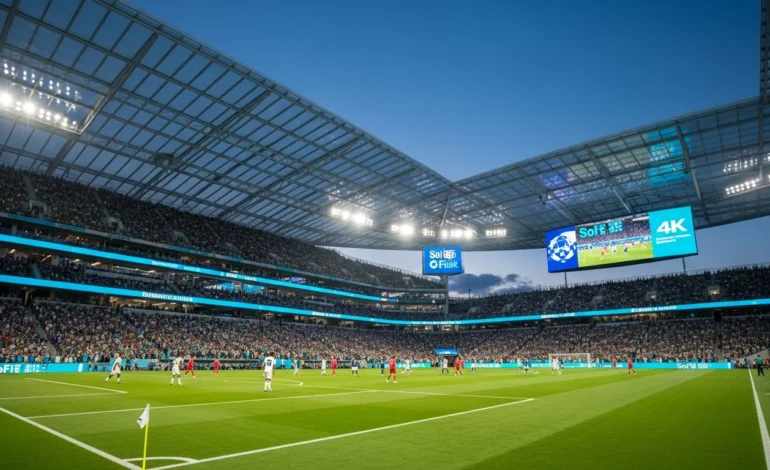
$5.5 billion—the total private investment in SoFi Stadium—marks the highest capital expenditure for a single sporting venue in global history. This massive infrastructure investment faces a critical operational stress test as Iran meets New Zealand in the final match of a four-game U.S. slate on Monday, June 15, 2026.
Kickoff is scheduled for 6:00 PM PT, marking the conclusion of a day that sees the United States host four separate World Cup fixtures for the first time. The match is expected to draw a significant international television audience, supported by a domestic rights environment where media values have surged 94 percent since the 2022 cycle.
Media Rights and Ad Spend Projections
Broadcasters FS1 and Telemundo are projecting a combined $850 million in advertising spend for the tournament, reflecting the high commercial stakes of the expanded 48-team format. Fox Corporation paid approximately $485 million for the English-language rights, betting on the high-volume viewership generated by 104 total matches.
The match between Iran and New Zealand serves as a key anchor for the Group G opener. While Iran is making its fourth consecutive World Cup appearance, New Zealand returns to the global stage via the Oceania Football Confederation (OFC) qualification path.
Logistical and Technical Overhead
The Los Angeles Host Committee has activated a regional transportation plan supported by $18.4 million in state and federal transit funding. This plan includes $1.75 flat-rate fares on LA Metro and dedicated shuttle services to manage the influx of spectators without traditional stadium parking.
Maintaining the venue’s world-class standards required a technically complex conversion, including the installation of natural grass grown 1,600 miles away in Washington state. The pitch was transported in refrigerated strips and is maintained by LED grow lights operating 18 hours a day to meet FIFA’s rigorous specifications.
The ‘Tehrangeles’ Economic Factor
A unique commercial and security variable for this fixture is the presence of the world’s largest Iranian diaspora in the Los Angeles region, often referred to as “Tehrangeles.” Local businesses and hospitality venues in the Westwood and Beverly Hills corridors report record booking demand, though political tensions surrounding the national team have increased security overhead for stadium operations.
Beyond the group stage, SoFi Stadium is positioned as a primary revenue driver for the tournament’s knockout rounds. The facility is scheduled to host a high-margin quarterfinal match on July 10, further solidifying its role in a tournament projected to add $41 billion to global GDP.
Related Coverage
- Analyzing the soccer surge and shifting sports dominance in the United States
- Geopolitical implications as the U.S. and Iran approach a historic nuclear accord
Frequently Asked Questions
What is the specific seating capacity for the World Cup configuration at SoFi Stadium?
For the 2026 FIFA World Cup, SoFi Stadium’s capacity has been adjusted to approximately 69,650 seats to accommodate the expanded pitch and media requirements.
Which other major global events are scheduled for this venue in 2027 and 2028?
Following the World Cup, SoFi Stadium is slated to host Super Bowl LXI in 2027 and will serve as a primary venue for the 2028 Summer Olympic Games.
How much federal funding was allocated specifically to the Los Angeles transit region for this event?
The Los Angeles-Long Beach-Anaheim urbanized area received $9,603,284 in federal transit funding to support the eight matches hosted at SoFi Stadium.