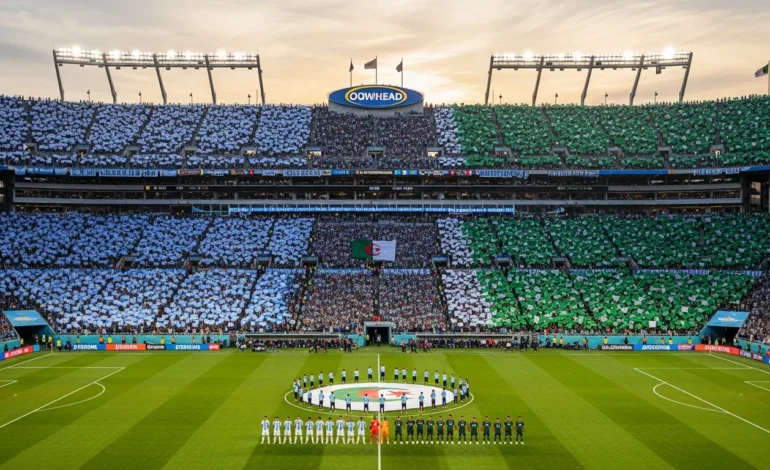
France-Senegal MetLife Clash Tests Revenue Projections for Expanded 48-Team World Cup Format
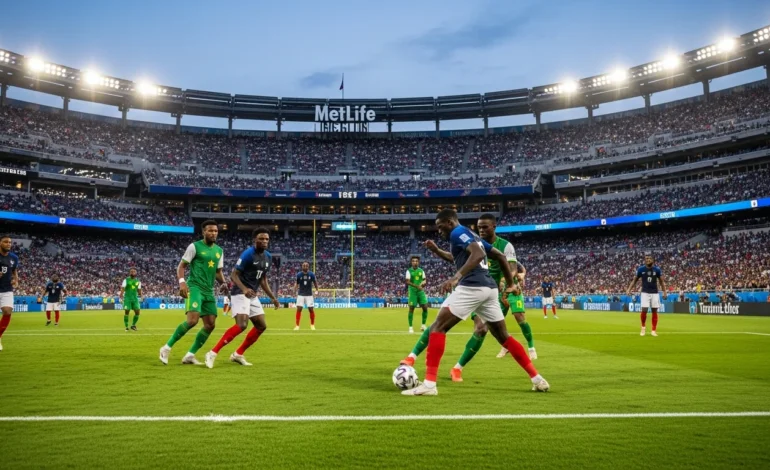
MetLife Stadium’s 82,500-seat capacity will reach 100% utilization today as France faces Senegal, anchoring a multi-billion dollar economic windfall for the New York-New Jersey corridor. This Group I fixture serves as a primary stress test for the tournament’s expanded 48-team format, which has increased the total match inventory to 104 games across North America.
The 12:00 p.m. local kickoff marks the first major European-African powerhouse clash at the venue, designated officially as New York New Jersey Stadium for the duration of the event. Market analysts are monitoring the match as a key indicator of daytime viewership resilience for domestic rights holders FOX Sports and FS1.
Security Infrastructure and Multi-Agency Logistics
A multi-agency task force led by the New Jersey State Police and federal partners has deployed a Tier 1 security framework to manage the massive influx of international spectators. This operational overhead is factored into the broader tournament budget, which relies on high-margin ticket sales and premium hospitality packages to offset logistical costs.
The scale of the 2026 event is unprecedented, marking the first time three nations have shared hosting duties simultaneously. Federal authorities have implemented restricted airspace protocols over East Rutherford to ensure the safety of the sell-out crowd and high-profile delegations.
Commercial Stakes and Group I Standings
France enters the pitch as a top-seeded European heavyweight, while Senegal remains a premier African contender with significant market appeal in the Global South. The outcome of today’s match will dictate the commercial trajectory of Group I, influencing secondary market ticket pricing for subsequent rounds.
- The match serves as a high-stakes rematch of the 2002 World Cup opener, where Senegal secured a historic 1-0 upset against the then-defending champions.
- Current betting markets show high volatility, reflecting the historical precedent and the tactical evolution of both squads over the last two decades.
- Winning this fixture provides a critical path to the knockout stages, which are projected to generate the highest per-match advertising revenue in soccer history.
Related Coverage
- Explore how the surge in soccer interest compares to traditional American leagues in our 2026 analysis of the most famous sports in the USA.
- Monitor how real-time data integration is changing the industry through the Associated Press and Kalshi prediction market partnership.
Frequently Asked Questions
What is the official seating capacity for the 2026 World Cup matches at MetLife Stadium?
For major international soccer events during the 2026 tournament, the stadium is configured to hold approximately 82,500 spectators, though actual attendance figures can fluctuate slightly based on media and security allocations.
Why is the stadium referred to as ‘New York New Jersey Stadium’ during the tournament?
FIFA regulations typically require host venues to use non-commercial names if the primary stadium sponsor is not an official FIFA partner, leading to the temporary neutral designation.
How does the 48-team format differ from previous World Cup cycles?
The 2026 edition features 16 additional teams compared to the 32-team format used since 1998, resulting in a significantly larger group stage and a total of 104 matches instead of the traditional 64.
Which networks are broadcasting the France vs. Senegal match in the United States?
English-language broadcast rights in the U.S. are held exclusively by FOX Sports, with the match being televised on either the main FOX network or FS1.