High-Bitrate Blossoms: How Portland’s 2026 Rose Parade Synced 100-Year Traditions with 8K Streaming
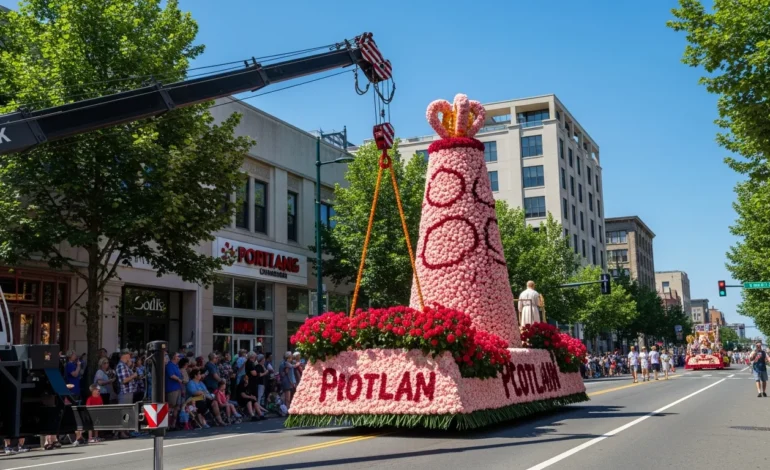
The 8K live stream currently beaming Portland’s “Petals of Progress” to a global audience represents a massive leap in how we consume local heritage. This week’s Grand Floral Parade proved that traditional floral displays and high-end digital broadcasting can coexist seamlessly.
The event took place in mid-June 2026, attracting hundreds of thousands of spectators to the streets of Portland, Oregon. As the centerpiece of a month-long festival, the parade showcased the city’s ability to scale public events for a global digital era.
The Hybrid Evolution of the Grand Floral Parade
For the first time in the festival’s history, organizers merged the Grand Floral and Starlight Parades into a single, continuous experience. The route began in the daylight with traditional floral floats and transitioned into a neon-lit nighttime spectacle as dusk fell.
This logistical feat was supported by specialized picture-in-picture TV broadcasting on KATU and KUNP. This technology allowed viewers to follow the 4-mile route in real-time without traditional commercial interruptions, maintaining the event’s narrative flow.
The 2026 theme, “Petals of Progress,” explicitly celebrated the intersection of Portland’s history and its future in innovation. Over 60 floats, marching bands, and equestrian units participated, many utilizing localized power arrays to fuel complex lighting effects.
Digital Infrastructure and Economic Impact
The festival is estimated to have generated over $60 million in local economic impact. This surge was bolstered by the arrival of Fleet Week ships and the crowning of the Rose Queen at the Veterans Memorial Coliseum.
Volunteers spent more than 15,000 hours decorating the floats with fresh flowers and organic materials. This manual craftsmanship was paired with a sophisticated digital distribution strategy that reached millions of viewers via global streaming platforms.
- Grand Marshal: Portland Timbers captain Diego Chará led the procession through downtown.
- America 250: A specialized fireworks show celebrated the U.S. Semiquincentennial.
- CityFair: The waterfront hub featured classic rides integrated with mobile-first vendor systems.
Engineering the Future of Public Spectacle
By prioritizing “Petals of Progress,” Portland is positioning its heritage as a testing ground for sustainable event logistics. The integration of high-performance broadcasting ensures that local traditions remain relevant in an increasingly connected world.
This shift toward high-bandwidth event coverage mirrors Nvidia’s market dominance in AI chip processing, which is increasingly powering the backend of global live-streamed spectacles. As digital literacy grows, programs like Tech Help Tuesdays are becoming essential for ensuring all citizens can access these new digital gateways.
Frequently Asked Questions
What made the 2026 Grand Floral Parade unique?
It was the first time the festival combined the Grand Floral and Starlight Parades into a single “hybrid” event that transitioned from daylight floral displays to illuminated nighttime floats.
How did the festival celebrate America’s 250th anniversary?
The 2026 festival featured a special “America 250” fireworks show and themed floats specifically designed to honor the U.S. Semiquincentennial.
What was the economic impact of the 2026 event?
The festival is estimated to have contributed over $60 million to the local Portland economy through tourism, local vendor sales, and hospitality.
How many hours did volunteers work on the floats?
Volunteers dedicated over 15,000 hours to decorating the floats using strictly organic materials and fresh flowers.