Supreme Court Ruling Ends the Era of the One-Day Election for 2026 Midterms
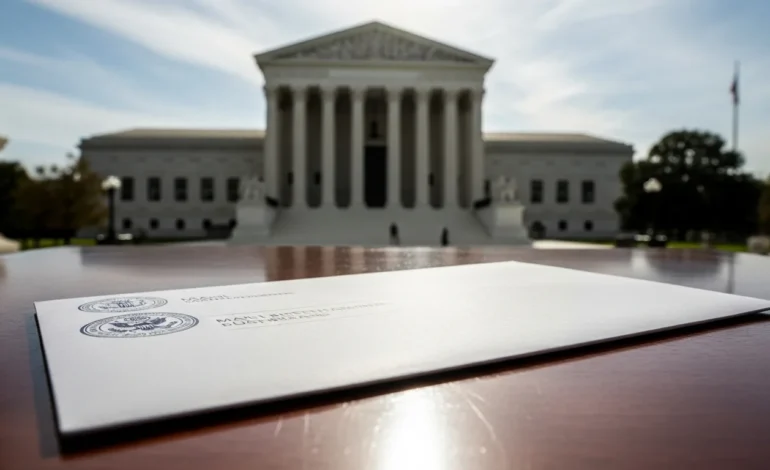
For the election workers who once prided themselves on a swift and certain tally, Tuesday’s ruling marks the quiet death of the one-day election. The Supreme Court’s decision to validate mail-in ballots arriving after the polls close ensures that the 2026 Midterms will be defined by weeks of suspense.
The 6-3 ruling released Tuesday permits states to tally ballots that land in election offices days after the polls close, provided they are postmarked by Election Day. This decision effectively dismantles the “independent state legislature” theory that sought to limit the power of state courts in federal contests.
Reporting from the Court’s final session of the term, Mary Bruce detailed how the ruling clarifies that state courts and election officials hold the authority to extend deadlines. Chief Justice John Roberts delivered the opinion as part of a final batch of high-stakes decisions released during the last week of June.
The Death of the Midnight Tally
Political analysts are already tearing up their 2026 projection models for the House and Senate. The ruling guarantees that “Election Night” is now a misnomer in battlegrounds like Pennsylvania and Arizona where margins are historically razor-thin.
Election officials in several swing states had requested this clarity to avoid the procedural chaos seen in previous cycles. They argued that a uniform standard for postmarked mail would prevent thousands of voters from being disenfranchised by simple postal delays.
A National Standard for the Ghost Vote
Legal experts suggest this ruling creates a more consistent national framework for mail-in voting. By shielding these deadlines from legislative interference, the Court has effectively standardized the “grace period” for late-arriving mail.
- Ballots must be postmarked by 11:59 PM on the first Tuesday of November to remain valid.
- State courts now have the final say on whether local postal issues warrant further counting extensions.
- Election certification deadlines in several states may need to be pushed back to accommodate the longer window.
While the decision provides the clarity officials sought, it also invites a period of prolonged public uncertainty. The “ghost vote”—ballots that exist but haven’t been counted—will likely haunt candidates and markets for weeks after the polls close.
The decision was one of several high-profile rulings released on the same day as the Court prepared for its summer recess. It serves as a definitive answer to years of litigation that followed the 2020 and 2022 election cycles.
Related Coverage
- Georgia Braces for High-Stakes June 16 Runoffs as Congressional Control Hangs in the Balance
- Associated Press Strikes High-Stakes Deal to Stream Election Data Directly to Kalshi Prediction Markets
Frequently Asked Questions
Does this ruling apply to ballots without a postmark?
No, the Court specified that ballots must have a verifiable postmark dated on or before Election Day to be counted under these state extensions.
Can individual states still set their own earlier deadlines?
The ruling allows states to count late ballots but does not force states with stricter laws to extend their windows unless their own state constitutions require it.
How will this affect military and overseas voters?
This decision provides extra security for overseas voters, ensuring that international mail delays do not automatically result in a discarded vote.