Supreme Court Vacates DOE Furnace Mandates as Gas Industry Defends 55% Market Share
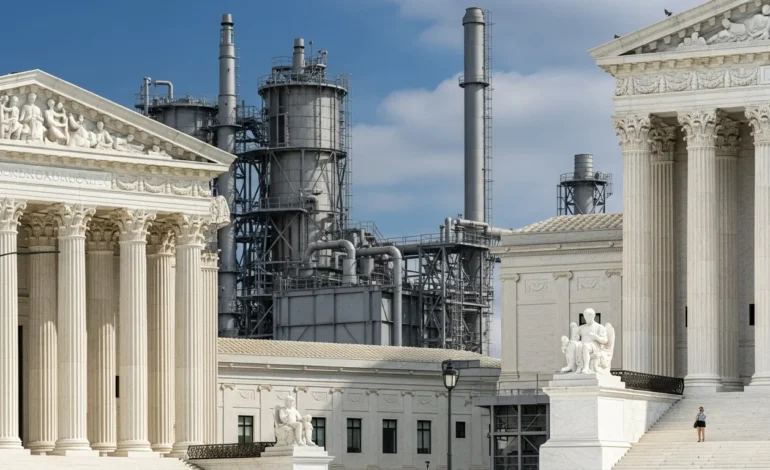
A multi-billion dollar regulatory shift is underway as the Supreme Court dismantles efficiency mandates that would have reshaped the American appliance market. On Tuesday, June 30, legal analysts confirmed the high court has vacated a D.C. Circuit decision that previously upheld Department of Energy (DOE) conservation standards for consumer furnaces and commercial water heaters.
The decision remands the case in light of the federal government’s own admission in an April 2026 brief that its 2023 standards were based on a “too-narrow” understanding of the law. This rare concession by the U.S. Solicitor General effectively halts the implementation of rules that critics argued were de facto bans on non-condensing gas appliances.
The Death of Deference in Energy Oversight
The ruling leans heavily on the precedent set by Loper Bright Enterprises v. Raimondo, which requires courts to exercise independent judgment rather than deferring to agency interpretations. Gas associations successfully argued that the DOE improperly stretched the Energy Policy and Conservation Act (EPCA) to favor condensing appliances over traditional models.
By forcing a technical shift to high-efficiency condensing units, the DOE was accused of ignoring the EPCA’s requirement to preserve products with distinct “performance characteristics.” The Supreme Court’s intervention suggests that long-standing DOE interpretations will now face stricter judicial scrutiny under the post-Chevron framework.
Market Implications and New Rulemaking
Non-condensing units currently account for approximately 55 percent of the natural gas furnaces on the U.S. market, representing a massive segment of the HVAC industry. Manufacturers and trade groups warned that the 2023 rules would have forced millions of homeowners into expensive structural renovations to accommodate new venting requirements.
The DOE is reportedly considering a new rulemaking process to correct the identified errors and align with the Solicitor General’s revised legal position. This development could trigger a domino effect, calling into question dozens of other appliance efficiency regulations currently in the federal pipeline.
Related Coverage
- Crude oil prices have plummeted below $90 per barrel for the first time in 2026, shifting the global energy landscape.
- Federal policy shifts aimed at domestic price stability are sparking fears of global stagflation and economic pressure on emerging markets.
Frequently Asked Questions
What was the primary legal argument against the DOE standards?
Petitioners argued the DOE exceeded its authority under the Energy Policy and Conservation Act (EPCA) by creating standards that effectively eliminated non-condensing gas appliances. They contended the ability to use existing venting systems is a “performance characteristic” that federal law prohibits agencies from eliminating.
Will gas furnaces and water heaters remain on the market?
Yes, the Supreme Court’s decision to vacate the previous ruling means the 2023 standards are no longer enforceable in their original form. This allows manufacturers to continue producing non-condensing models while the DOE recalibrates its regulatory approach.
How does the Loper Bright ruling affect this case?
The Loper Bright precedent ended the practice of judicial deference to federal agencies, meaning the DOE can no longer rely on its own “reasonable” interpretation of ambiguous statutes. Courts must now independently determine if the DOE’s efficiency mandates align with the specific text of the EPCA.