Federal Officials Raise Wildfire Preparedness to Level 4 as 54 Large Blazes Scorch the West
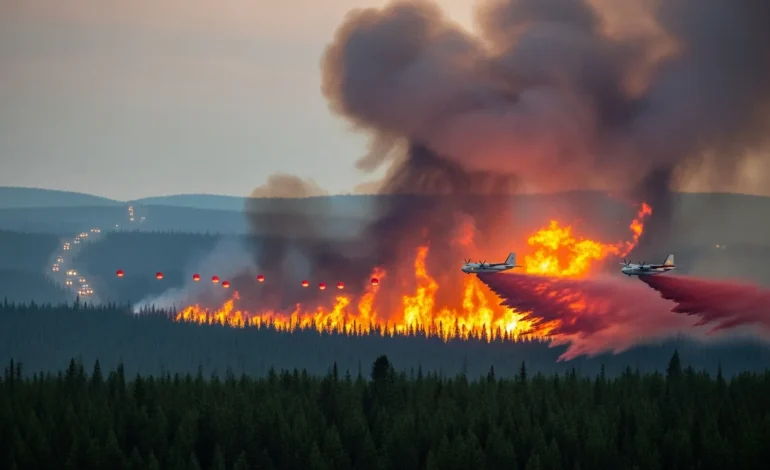
The National Interagency Fire Center officially raised the National Preparedness Level to 4 on Tuesday morning—a threshold rarely reached before the peak of July—as 54 uncontained large fires consume nearly half a million acres across the United States. This escalation signals that federal authorities have committed more than half of the nation’s specialized firefighting teams to active incidents.
Resource Depletion and Regional Flashpoints
The Great Basin Area is currently the center of suppression efforts, operating at its own Preparedness Level 4 with 13 uncontained large fires. In Utah, the Cottonwood and Wild Goose fires have triggered evacuations and road closures near the towns of Beaver and Fillmore as flames threaten residential structures.
A new incident, designated LAC-227268, was reported in Los Angeles County at 4:42 a.m. on Tuesday. This fire is burning on private land, and officials have not yet confirmed the containment status as local crews move to prevent its spread into adjacent brush.
National Deployment Statistics
The National Interagency Fire Center (NIFC) reported 83 new initial attack fires on Monday alone. The scale of the current response includes the following metrics:
- 8,261 total personnel deployed to active wildfire incidents nationwide.
- 11 Complex Incident Management Teams (CIMTs) committed to large-scale fire suppression.
- 474,026 total acres burned by currently active uncontained blazes.
The transition to Level 4 indicates that a significant portion of the nation’s firefighting aircraft and crews are committed to existing incidents. If fire activity continue at this pace, federal agencies will be forced to prioritize which structures and habitats receive protection based on available manpower.
Projected Strain on Federal Emergency Budgets
The early shift to Preparedness Level 4 indicates that federal wildfire suppression budgets will face extreme pressure well before the typical peak of the fire season in August. This accelerated timeline often leads to “fire borrowing,” where agencies must divert funds from forest management and prevention programs to cover immediate suppression costs.
Related Coverage
- Heat safety mandates and record temperatures in the American South
- Severe weather patterns impacting central U.S. travel and safety
Frequently Asked Questions
What are the different National Preparedness Levels?
The scale ranges from 1 to 5, with Level 5 being the highest, representing a situation where national resources are fully committed and international assistance may be required.
What happens when the country reaches Level 4?
At Level 4, more than half of the nation’s incident management teams are committed, and the NIFC begins prioritizing the allocation of scarce resources like heavy tankers and specialized crews.
Does this affect air travel or national parks?
While most national parks remain open, specific areas near active fires may be closed to the public; smoke from these 54 fires can also cause regional flight delays and air quality alerts.