Intelligent Automation in Oil & Gas: What It Is, How It Works, and Where It Pays Off
Key takeaway: Intelligent automation in oil & gas combines AI, machine learning, and IoT sensors to run energy operations with less manual work and fewer surprises. It powers predictive maintenance, drilling optimization, digital twins of platforms and refineries, and automated safety and emissions monitoring — with operators like Shell, BP, and Aramco reporting billion-dollar-scale results.
What intelligent automation in oil & gas actually means
Intelligent automation in oil & gas is the combination of artificial intelligence, machine learning, robotic process automation (RPA), and Internet of Things sensors applied to energy operations. It goes beyond simple rule-based scripts: the systems read unstructured documents, watch live equipment data for anomalies, and support engineering decisions in near real time.
Practical use cases fall into three groups, according to a 2026 industry guide: intelligent document processing that pulls data from engineering drawings, inspection logs, and reports; machine-learning anomaly detection that flags abnormal pressure readings or compressor problems and automatically opens work orders; and generative AI summarization that drafts maintenance reports for engineers to review and approve rather than write from scratch (Vidi Corp).
The main use cases: where intelligent automation in oil & gas pays off
The technology spans the whole value chain — upstream exploration and drilling, midstream pipeline management, and downstream refining. The highest-value applications consistently cluster around a few areas:
- Predictive maintenance: AI models analyze vibration, temperature, and flow data to forecast failures before they halt production. Shell’s program, built on the C3 AI platform, monitors more than 10,000 pieces of equipment and ingests data from over three million sensor streams globally (MDPI / JRFM).
- Drilling and production optimization: AI improves well placement and hydrocarbon recovery. Shell’s GeoSigns digital twin for seismic imaging played a pivotal role in discovering 10 million barrels of oil in the Gulf of Mexico (ResearchGate review).
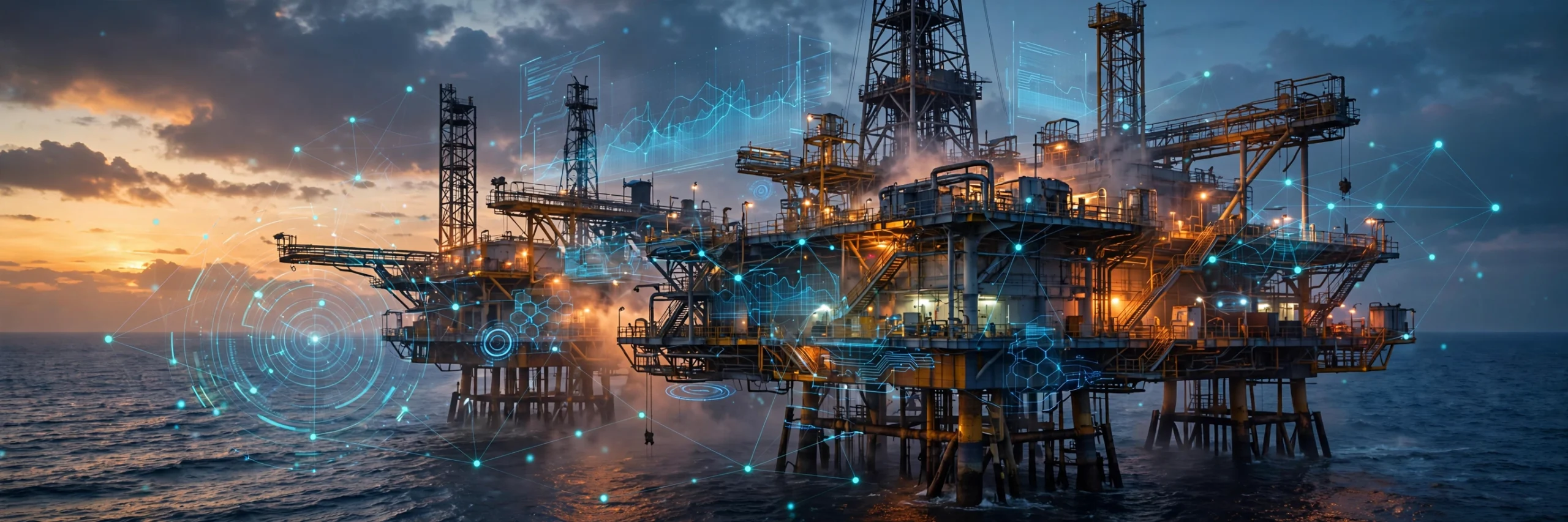
- Digital twins: Live virtual models of platforms and refineries let operators simulate performance and plan maintenance remotely. BP’s APEX system creates digital twins of production systems; in Trinidad and Tobago it rerouted flows during pipeline maintenance, preserving production that would otherwise have been lost (ResearchGate review).
- Safety and emissions monitoring: Computer vision and drones detect hazards and identify equipment defects in real time. In Angola, ExxonMobil’s autonomous inspection drones cut inspection times by around 60%, while TotalEnergies uses drone-mounted spectrometers to measure methane emissions (Zawya).
- Generative AI for engineering work: AI agents now handle drilling analysis, stuck-pipe prevention, end-of-well reporting, and compliance documentation. In August 2026, Gain.Energy launched Upstrima, a dedicated AI marketplace of ready-to-use agents for oil & gas engineering (Business Wire via MarketMinute).
What it delivers: real results from real operators
The numbers reported across the industry are striking, though they come from company reports and analysts rather than independent audits — treat them as direction, not gospel. McKinsey’s August 2026 analysis mapped more than 550 AI use cases in upstream oil and gas, estimating near-term value of roughly $65 billion a year, with a path to $230 billion as autonomous operations mature (LinkedIn / Sharada Bharath).
Operator-level results: Shell’s AI maintenance program is reported to have cut unplanned downtime by 35% and maintenance costs by 20% — about $2 billion in annual savings; BP’s digital twins are credited with 30,000 extra barrels of oil in one year (MDPI / JRFM). Saudi Aramco has claimed around $4 billion in savings from about 500 AI use cases, and ADNOC’s ENERGYai platform — built by AIQ with Microsoft and G42 — is a reported $340 million investment over three years (Spherical Insights via Newspub).
Analysis: why most projects are still stuck in pilot mode
This section is analysis, not a reported fact. The technology clearly works at flagship scale, but adoption is uneven: industry analysis notes only 3% of senior executives call AI a differentiating factor in transformation, even as AI tools are common. The gap is rarely the algorithm — it’s fragmented data across disconnected systems, integration with legacy equipment, cybersecurity constraints, and workforce adoption (Perfection Geeks; Spherical Insights).
McKinsey’s analysis also flags a commercial paradox worth watching: AI is designed to reduce the drilling days, service hours, and interventions that oilfield service companies bill for — an estimated $17 billion of services revenue could be exposed. The efficiency is real; how the savings get shared between operators and suppliers is still being negotiated (LinkedIn / Sharada Bharath).
Practical takeaways
For operators and engineers evaluating intelligent automation in oil & gas: start with the use case, not the platform. Predictive maintenance and digital twins have the most mature track record and the clearest ROI. Budget for data infrastructure first — companies with consolidated, clean operational data (like Sonangol’s new corporate data center in Angola) get value faster than those bolting AI onto siloed legacy systems (Zawya). And treat vendor savings claims as starting points for pilots, not guarantees.
Frequently asked questions
What is intelligent automation in oil & gas?
It is the use of AI, machine learning, robotic process automation, and IoT sensors to run energy operations with less manual effort — predictive maintenance, drilling optimization, digital twins, automated document processing, and AI-driven safety monitoring.
How is intelligent automation different from regular automation in oil & gas?
Regular automation follows fixed rules, like scheduled pump checks. Intelligent automation learns from data: it detects sensor anomalies, forecasts failures, reads unstructured documents, and drafts reports — then asks a human to approve the action.
Which companies are leading in oil & gas automation?
Shell, BP, Chevron, TotalEnergies, ExxonMobil, Saudi Aramco, and ADNOC all run large-scale AI and digital twin programs. Aramco reports roughly $4 billion in savings from about 500 AI use cases; Shell’s system monitors over 10,000 pieces of equipment globally. These figures come from company and analyst reports, not independent audits.
Does intelligent automation improve safety in oil & gas?
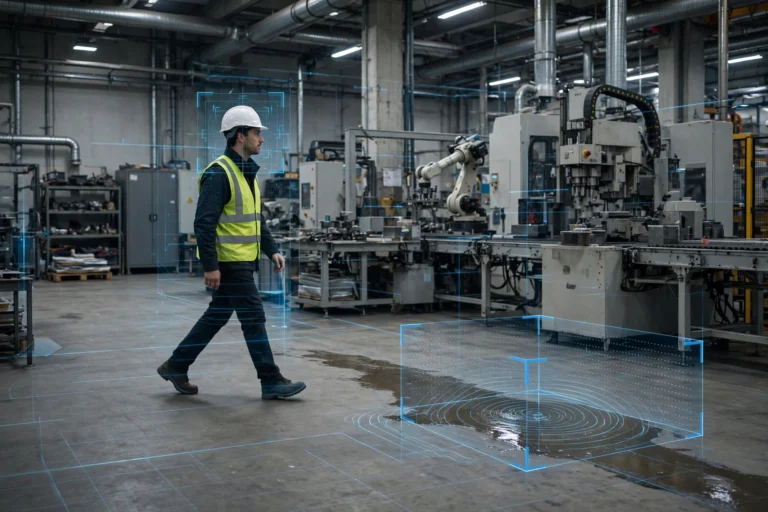
Yes. Computer vision monitors PPE compliance and detects hazards in real time, drones inspect dangerous locations without exposing workers, and predictive systems flag equipment problems before they become incidents. Digital twins let teams rehearse risky operations virtually first.
How much does the AI in oil & gas market cost to enter?
Industry estimates put the global AI in oil & gas market at about $4.28 billion in 2026, growing roughly 13% a year. A predictive maintenance pilot can be modest; enterprise platforms like ADNOC’s ENERGYai run into the hundreds of millions.
Sources
- Vidi Corp — Robotic Process Automation in Oil & Gas: 2026 Guide
- Perfection Geeks — AI in the Oil and Gas Industry: 12 Use Cases & Benefits (2026)
- LinkedIn / Sharada Bharath — AI Is Changing the Deal in Oil and Gas (McKinsey analysis)
- MDPI / Journal of Risk and Financial Management — Financial Performance Outcomes of AI-Adoption in Oil and Gas
- ResearchGate — Digital Twins in the Upstream Oil and Gas Industry: Trends, Applications, and Challenges
- Spherical Insights via Newspub — AI in Oil and Gas 2026 (finance strategy analysis)
- Zawya — AI Strengthens Angolan Oilfield Operations (press release)
- Business Wire via MarketMinute — Gain.Energy Launches Upstrima (Aug 18, 2026)