Our Smart Solutions Explained: What Smart Solutions Are and How They Work in 2026
Key takeaway: “Smart solutions” is an umbrella term for connected, sensor-driven technology — smart home gear, industrial IoT, smart buildings, and AI-powered software — that collects data and acts on it automatically. No single company owns the phrase “our smart solutions”; hundreds of vendors use near-identical wording. This guide explains what the term covers, the four main types, 2026 market data, and how to evaluate a vendor.
If you typed “our smart solutions” into a search box, you probably landed on a vendor page — or a dozen of them — each promising connected devices, automation, and intelligent software. Here is the honest version: the phrase is generic marketing copy (“our” just means the vendor’s own offerings), not a brand or a product. What matters is the category underneath it, which is large, growing, and worth understanding before you buy anything.
What “our smart solutions” actually means
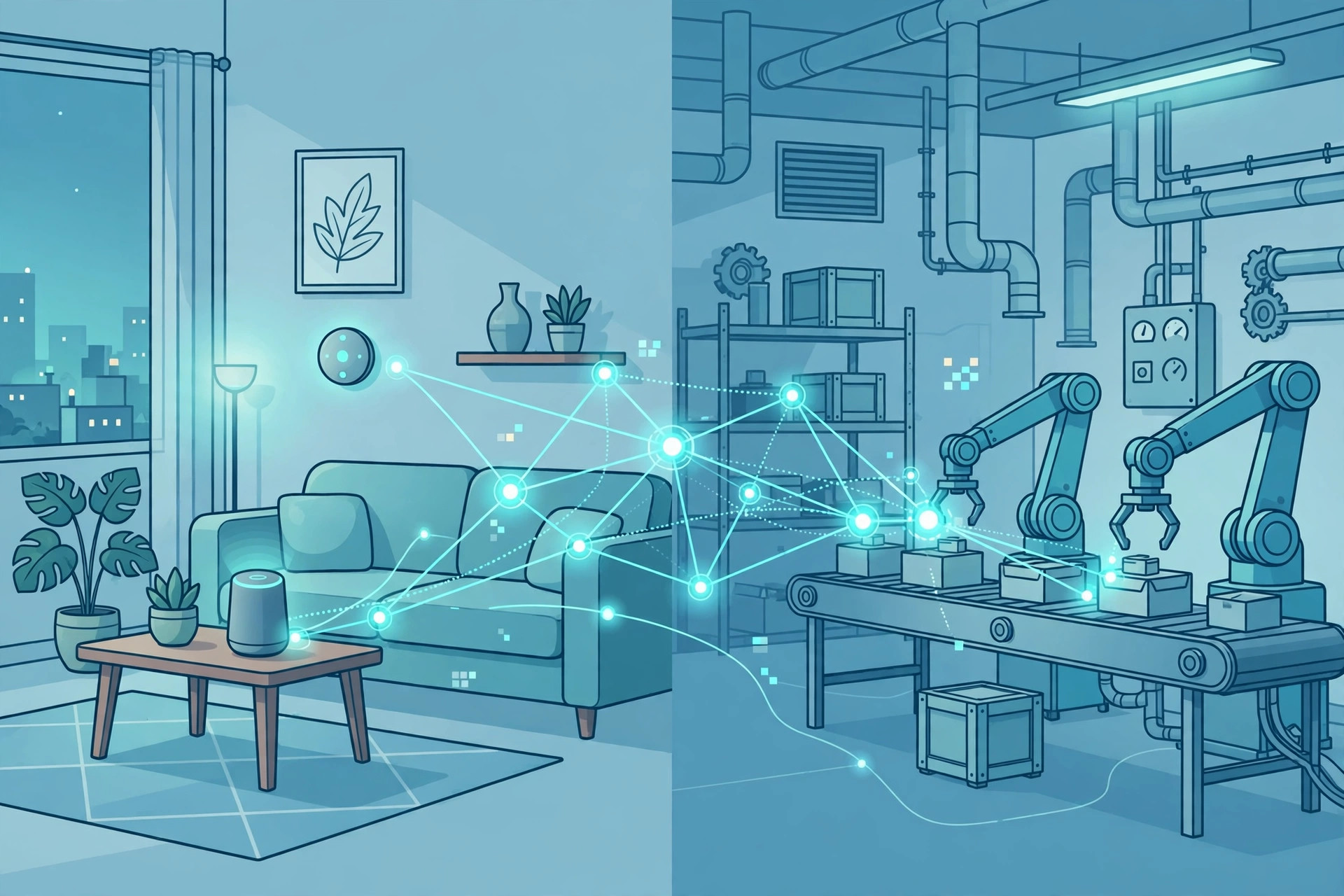
Strip the possessive and you get “smart solutions” — industry shorthand for products and services that combine sensors, connectivity, and software so that physical things can be monitored and controlled remotely, or run themselves. A thermostat that learns your schedule, a factory sensor that predicts a motor failure, a building system that dims lights when rooms empty out — all count.
The reason the phrase shows up everywhere is that it describes a capability, not a category. IT integrators, home-automation installers, industrial equipment makers, and software firms all sell some version of it, which is why a search for “our smart solutions” returns results from Germany to India to the UK with little in common. There is no canonical company to explain — so this article explains the landscape instead.
The four main types of smart solutions
Nearly every offering labeled “smart solutions” falls into one of these buckets:
| Type | What it covers | Typical buyer |
|---|---|---|
| Smart home | Thermostats, cameras, locks, lighting, voice assistants, appliances that connect over Wi-Fi or Thread | Homeowners and renters |
| Industrial IoT (IIoT) | Machine sensors, predictive maintenance, digital twins, connected robotics on the factory floor | Manufacturers, logistics operators |
| Smart buildings and cities | HVAC optimization, access control, energy dashboards, street-level monitoring | Facilities teams, municipalities |
| Enterprise software | AI automation, analytics platforms, workflow tools that make business processes self-running | IT and operations leaders |
For background on the factory side, see our explainers on industrial automation and IoT and how factories actually use automation; for the software side, our guide to end-to-end process automation.
Why smart solutions matter in 2026
The numbers explain why every vendor wants in. IDC’s smart home device tracker recorded 892.3 million units shipped worldwide in 2024, with a forecast of 931.1 million for 2025 — and Statista projects 82.1% of households in its tracked countries will use smart home technology in 2026, rising to 92.5% by 2029. (SQ Magazine’s 2026 statistics roundup, citing IDC and Statista.)
On the industrial side, analyst estimates for 2026 vary widely by scope — from about $113 billion (360iResearch via MarketResearch.com) to roughly $603 billion (Precedence Research). The spread itself is the takeaway: definitions differ, but every forecaster agrees the direction is up, driven by predictive maintenance, energy optimization, and AI analytics on sensor data.
Interoperability is finally catching up. The Connectivity Standards Alliance finalized Matter 1.5 on November 20, 2025, adding cameras, video doorbells, and intercoms to the cross-brand smart home standard, followed by a 1.5.1 maintenance update on March 31, 2026. (The Gadgeteer.) For buyers, that means a Matter-certified device from one brand increasingly works with Apple Home, Google Home, Alexa, and SmartThings at once — less lock-in than the ecosystem wars of a few years ago.
How to evaluate a smart-solutions vendor
Whether it’s a home installer or an industrial integrator, run through the same checklist:
- Interoperability first. Prefer devices and platforms built on open standards (Matter, Thread, OCPP, open APIs) over proprietary ecosystems you can’t leave.
- Ask about security. Connected devices are attack surface. Look for regular firmware updates, encrypted communication, and ideally local control that works without the vendor’s cloud.
- Price the whole thing. Hardware is often the cheap part; subscriptions, installation, and energy costs decide the real bill. Get itemized quotes.
- Check scalability. A solution that works for one room or one production line should work for twenty. Ask for reference customers at your scale.
Analysis: when “smart” is just marketing
Analysis — not a verified fact: The phrase “our smart solutions” is a tell. Vendors with a genuinely differentiated product usually name it — a specific platform, device, or patented process. Companies leaning on the generic phrase are often resellers or integrators packaging other people’s hardware. That’s not disqualifying (integration is real work), but it means you should ask exactly what is theirs: the hardware, the software, or just the installation. The answer tells you who to call when it breaks.
Frequently asked questions
What does “our smart solutions” mean?
It’s generic vendor wording for that company’s connected-technology offerings — typically IoT devices, automation software, or integration services. The “our” is just the company referring to its own products; the meaningful part is “smart solutions,” the umbrella term for sensor-driven, connected technology.
Is there a company called Our Smart Solutions?
No single dominant company owns the name. Hundreds of businesses worldwide — from German communication-equipment makers to UK recycling-service firms to Indian home-automation installers — use “smart solutions” in their branding. If you landed on a specific company’s page, treat it as one vendor among many and compare.
What are examples of smart solutions?
Everyday examples include smart thermostats, video doorbells, and voice assistants (smart home); vibration sensors that predict machine failures (industrial IoT); automated HVAC and lighting in office buildings (smart buildings); and AI tools that route support tickets or reconcile invoices automatically (enterprise software).
How big is the smart solutions market in 2026?
Smart home device shipments are forecast at 931.1 million units for 2025 (IDC, via SQ Magazine), with 82.1% household penetration expected in 2026 (Statista). Industrial IoT estimates for 2026 range from about $113 billion to $603 billion depending on the analyst’s scope. All major forecasts point to continued growth.
Sources
- SQ Magazine — Smart Home Statistics 2026 (IDC shipment data, Statista penetration forecasts)
- The Gadgeteer — Matter 1.5 Cameras and Doorbells: Smart Home Security in 2026
- MarketResearch.com — Industrial IoT Market, Global Forecast 2026–2032
- Precedence Research — Industrial IoT Market Size & Trends 2026–2035