What Is Matcha? Origin, Taste, Benefits, and How to Make It
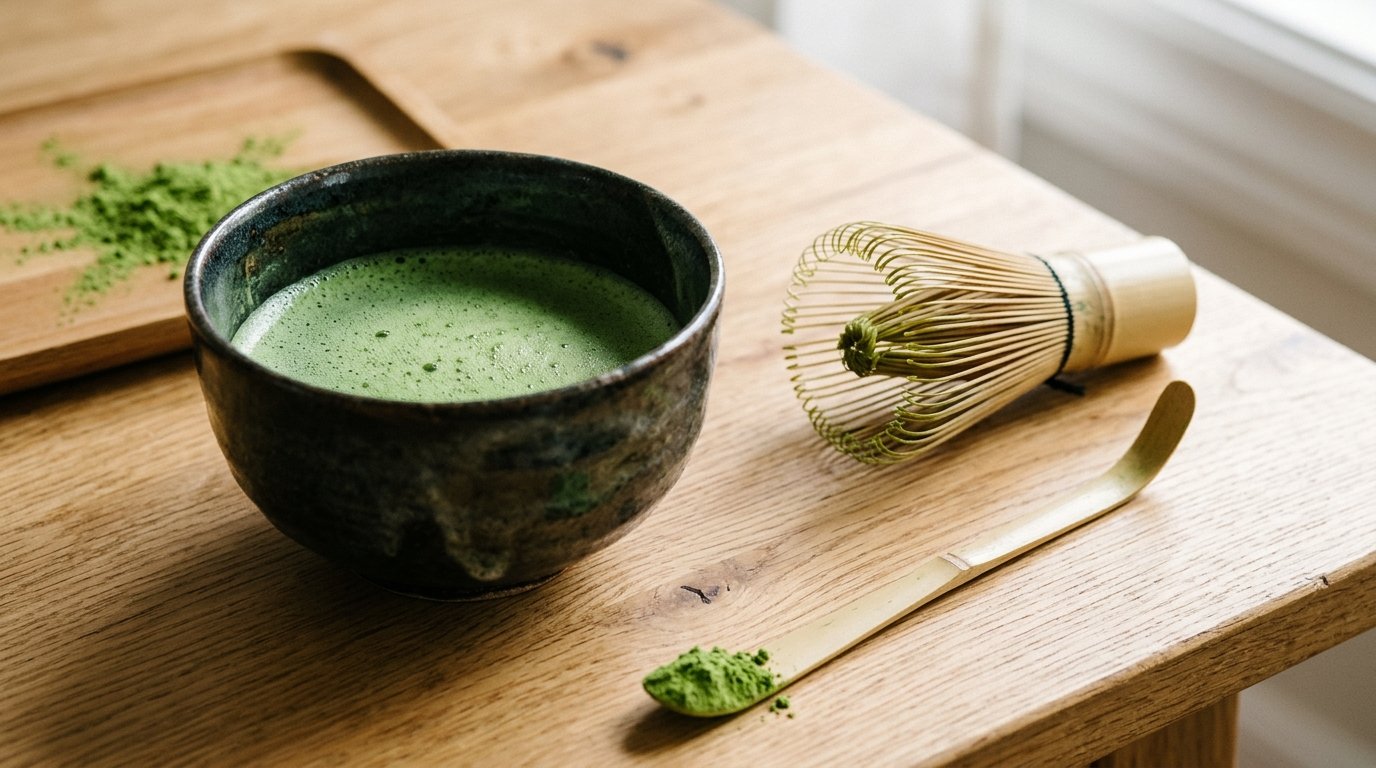
Matcha is a finely ground Japanese green tea powder made from shade-grown leaves of the Camellia sinensis plant. Unlike regular green tea—where you steep whole or bagged leaves and discard them—matcha is whisked directly into water or milk so you consume the entire leaf. That difference explains its bright jade color, creamy texture, and concentrated flavor and nutrient profile.
While matcha is now a staple in U.S. cafés and home kitchens, its roots trace back centuries to Japanese tea traditions, where Buddhist monks drank powdered tea to stay alert during long meditation sessions. Today, it is enjoyed whisked plain with hot water, poured over iced milk, or mixed into smoothies and baked goods.
How Matcha Is Made (And Why It Looks So Bright Green)
Matcha comes from the same botanical plant as black, oolong, and regular green tea, but its farming and processing set it apart. Three to four weeks before harvest, farmers shade the tea bushes under bamboo mats or shade cloths to block direct sunlight (PMC7796401).
In low light, the plant slows growth and increases two signature compounds:
- Chlorophyll: Creates matcha’s electric-green color, with shade-grown leaves averaging about 5.65 mg/g compared to 4.33 mg/g in standard green tea (PMC7796401).
- L-theanine: A natural amino acid that produces a savory, mellow sweetness rather than sharp bitterness (PMC7796401).
After harvest, producers steam the leaves to halt oxidation, dry them flat, and remove stems and veins to make raw leaf flakes called tencha. Granite stone mills then slowly grind the tencha into a fine powder so friction heat does not scorch its aroma or color.
What Does Matcha Taste Like?
Fresh matcha tastes earthy, gently grassy, and savory—a flavor called umami—with a light natural sweetness and a smooth finish. Because L-theanine softens tea astringency, good matcha should never taste harshly bitter or chalky. When matcha tastes overly sharp or fishy, the usual cause is stale, low-grade powder or boiling water that scorches the leaves.
Ceremonial vs. Culinary Matcha: Understanding the Grades
Most matcha is sold as ceremonial grade or culinary grade (plus an in-between latte or daily grade). Although Japan has no single legal grading standard, reputable producers use these labels to reflect harvest timing and best use.
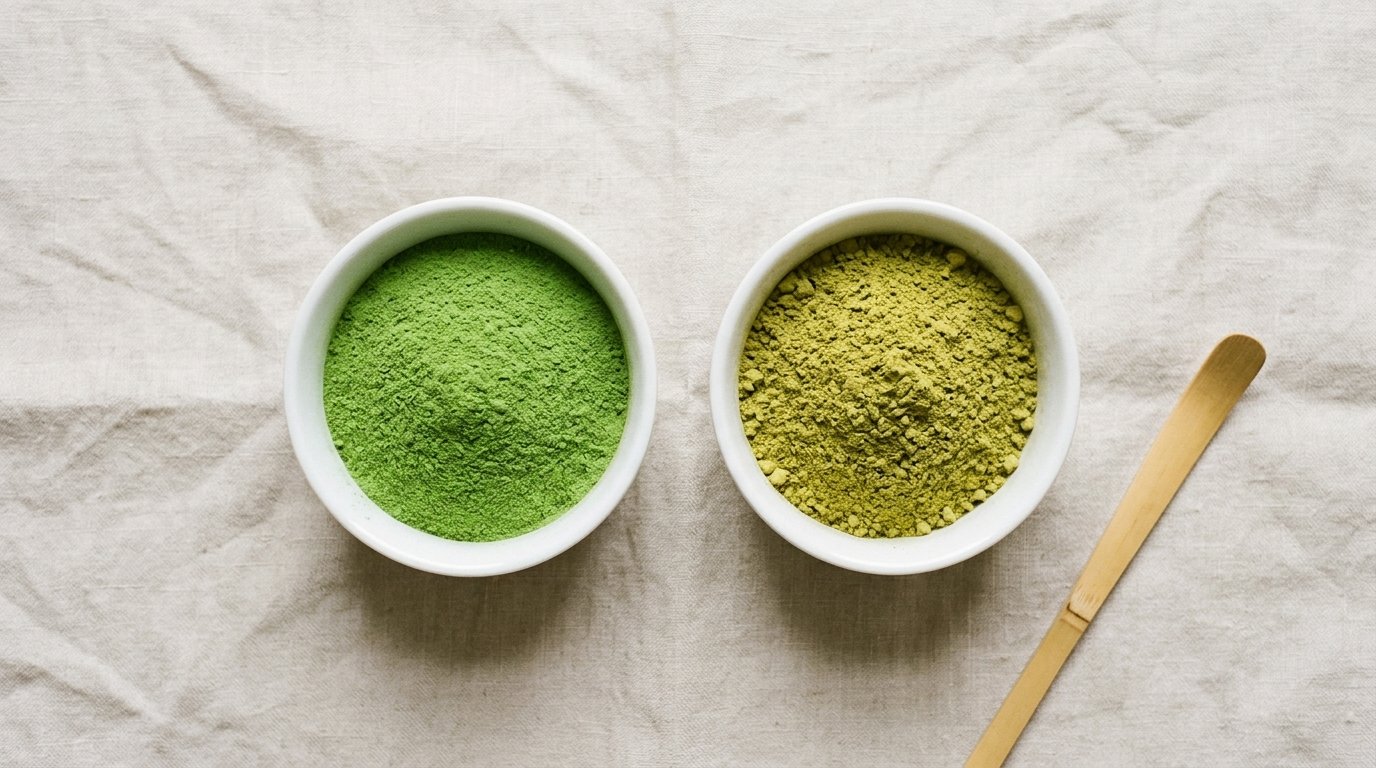
| Feature | Ceremonial Grade | Culinary Grade |
|---|---|---|
| Harvest | First harvest (youngest top leaves) | Later harvests (more mature leaves) |
| Color | Vibrant, electric jade green | Deeper yellow-green or olive tone |
| Flavor | Sweet, creamy, rich umami, low bitterness | Bolder, more astringent tea punch |
| Best Use | Whisked with water (usucha), plain | Lattes, smoothies, baking, and desserts |
If you drink matcha straight with water, ceremonial grade is worth the cost. For iced lattes, oatmeal, or baking, fresh culinary or latte-grade matcha cuts through milk and sweeteners better at a lower price.
Matcha vs. Regular Green Tea and Coffee
Because you drink the whole leaf, matcha delivers more caffeine and polyphenols than steeped green tea, while usually containing less caffeine than drip coffee.
- Caffeine content: Lab analyses measure 18.9 to 44.4 mg of caffeine per gram of matcha, putting a standard 2-gram (1 level teaspoon) serving around 40 to 80 mg (Acibadem Fact-Check). By comparison, a brewed green tea bag averages about 30 mg, and an 8-ounce coffee averages about 96 mg.
- Steadier alertness: Many people prefer matcha over coffee because pairing L-theanine with caffeine is linked in small human trials to calmer, steadier focus (PMC7796401). Caffeine tolerance still varies by person.
Evidence-Based Health Benefits and Practical Considerations
Matcha supplies catechins such as EGCG, chlorophyll, and vitamin C (PMC7796401). Viral marketing often claims matcha has “137 times the antioxidants” of green tea, but nutrition reviews note that number compared matcha to a single low-grade teabag; against typical brewed green tea, matcha provides roughly two to three times the catechins per cup (Acibadem Fact-Check).
Keep three practical points in mind for daily use:
- Watch café sugar: A medium sweetened café matcha latte can contain 20 to 30 grams of added sugar, offsetting its clean profile (Acibadem Fact-Check).
- Buy tested, origin-labeled brands: Since you consume the whole leaf, pick Japanese-grown matcha (such as Uji, Nishio, or Kagoshima) from brands that share purity testing.
- Keep portions moderate: The European Food Safety Authority considers up to 400 mg of total daily caffeine safe for most healthy adults, with lower limits during pregnancy (Powerlogy). One to two servings daily fits comfortably.
How to Make Matcha at Home
Whisking smooth, lump-free matcha takes under two minutes with a small mesh strainer and a bamboo whisk (chasen) or handheld frother.
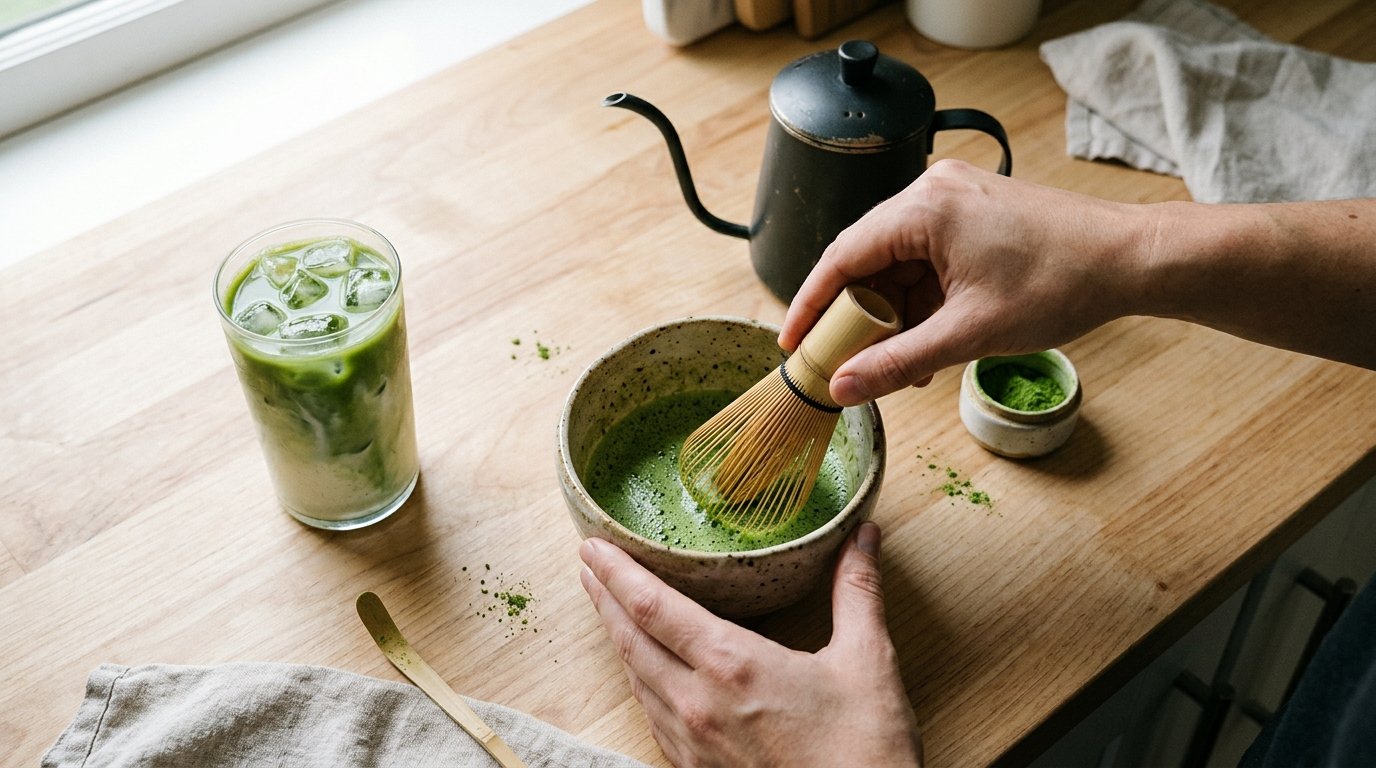
- Sift the powder: Sift 1/2 to 1 teaspoon (1 to 2 grams) of matcha into a bowl or wide mug to break up clumps.
- Add hot—not boiling—water: Pour in 2 ounces (60 ml) of water heated to about 175°F (80°C). Boiling water makes matcha bitter.
- Whisk briskly: Whisk in a quick “W” or “M” motion for 15 to 20 seconds until fine green microfoam covers the surface.
- Serve your way: Drink it plain (usucha), top with warm water, or pour over ice and milk for an iced matcha latte.
How to Store Matcha Fresh
Light, heat, air, and moisture rapidly dull matcha’s color and flavor. Store it in an opaque, airtight tin away from the stove—or sealed in the fridge—and finish an opened tin within four to eight weeks.
Frequently Asked Questions About Matcha
Does matcha have more caffeine than coffee?
Usually no. One level teaspoon (2 grams) delivers roughly 40 to 80 mg of caffeine versus about 96 mg in an 8-ounce brewed coffee, though double-scoop lattes can match coffee.
Can you drink matcha every day?
Yes. Most healthy adults can drink one to two plain or lightly sweetened servings daily while staying well within moderate caffeine guidelines.
Why does my homemade matcha taste bitter?
Bitterness usually comes from water above 180°F (82°C), using culinary-grade powder with plain water, or using oxidized powder.
Related Kitchen Guides on USABite
Building a better morning routine or practicing everyday kitchen fundamentals? Pair your matcha with these practical step-by-step guides on USABite:
- How Long to Boil Eggs: Exact Chart for Soft, Jammy & Hard — a quick high-protein breakfast alongside your morning matcha.
- How to Cook Rice Perfectly Every Time: A Complete Stovetop Guide — master fluffy stovetop rice for Japanese-inspired bowls.
- How to Make Pasta from Scratch: Easy Homemade Dough Guide — another hands-on kitchen skill if you enjoy making staples from scratch.