Biden Reverses Long-Standing Policy, Authorizes Ukraine to Strike Inside Russian Territory
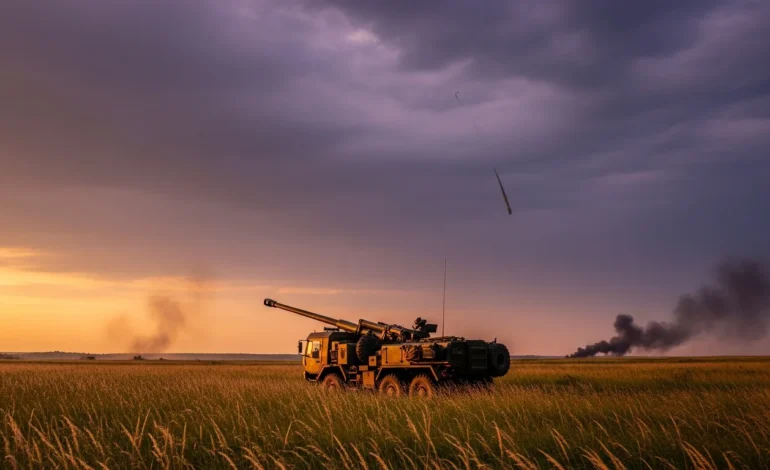
WASHINGTON, D.C. — In a major development that could reshape the global security landscape, President Biden has officially authorized Ukraine to deploy American-provided weaponry for direct strikes against targets within Russian territory.
The policy reversal, confirmed by senior administration officials on May 30, 2026, allows the Ukrainian military to conduct counter-fire operations across the border specifically to defend the besieged Kharkiv region.
This decision marks a tectonic shift in the White House’s approach to the conflict, breaking a long-standing prohibition intended to prevent a direct military confrontation between NATO and the Kremlin.
A Strategic Pivot for the Kharkiv Defense
The authorization is strictly limited to targets located near the Kharkiv border where Russian forces have launched a massive, multi-pronged offensive in recent weeks.
Ukrainian officials have long argued that the inability to strike Russian staging grounds, fuel depots, and artillery batteries across the border created a “sanctuary” for Moscow’s forces.
Under the new guidelines, Ukraine can use U.S.-supplied rockets and artillery to neutralize threats before they cross into sovereign Ukrainian territory.
- Ukraine may use GMLRS and HIMARS systems for cross-border strikes.
- The authorization does not currently extend to long-range ATACMS missiles for deep strikes.
- Targeting is restricted to military assets directly involved in the Kharkiv offensive.
The move comes as military analysts warn that U.S. weapons stockpiles are reaching critical lows, raising questions about the sustainability of increased munitions expenditure on multiple fronts.
Navigating the Escalation Ladder
The Biden administration had previously resisted this move for over two years, fearing that American weapons hitting Russian soil would trigger a catastrophic escalation or the use of tactical nuclear weapons by Vladimir Putin.
However, the deteriorating situation on the ground in northeastern Ukraine reportedly forced a reassessment within the National Security Council and the Pentagon.
The shift follows intense lobbying from European allies, several of whom had already signaled their support for Ukraine using Western arms to defend against cross-border incursions.
Critics of the administration’s previous caution argue the delay allowed Russia to solidify its gains, while proponents of the restriction remain concerned about the Kremlin’s potential response to American hardware impacting its internationally recognized borders.
Geopolitical Repercussions and Global Stability
This policy change highlights the increasingly volatile nature of modern diplomacy as the U.S. balances its support for Kyiv with broader regional stability.
The decision stands in stark contrast to other recent shifts in U.S. military posture, such as when President Trump suspended major arms sales to Taiwan in an effort to de-escalate tensions and prioritize reconciliation with Beijing.
In Moscow, the Kremlin has already issued a stern warning, suggesting that the use of U.S. weapons on Russian soil would be viewed as direct American participation in the war.
U.S. officials maintain that the policy remains “defensive in nature” and does not signal an intent to support an invasion of Russian territory or a change in the fundamental objectives of the war.
Frequently Asked Questions
What specific weapons can Ukraine now use inside Russia?
Ukraine is authorized to use shorter-range systems provided by the U.S., such as Guided Multiple Launch Rocket Systems (GMLRS) and High Mobility Artillery Rocket Systems (HIMARS), specifically for counter-fire against Russian assets attacking the Kharkiv region.
Why did the Biden administration change its policy now?
The shift was driven by the urgent need to defend Kharkiv from a renewed Russian offensive. Russia was using its own territory as a safe zone to launch attacks, and Ukraine lacked the permission to strike back at the source of those threats using American gear.
Does this mean Ukraine can strike anywhere in Russia?
No. The authorization is geographically limited to the border areas near Kharkiv. The U.S. still maintains a prohibition on using long-range weapons, like ATACMS, for strikes deep into the Russian interior.
How has Russia responded to this announcement?
The Russian government has characterized the move as a dangerous escalation and has warned of “asymmetric” responses, though specific retaliatory measures have not yet been implemented.