AI-Native Workforce: Class of 2026 Graduates Into a Generative Economy
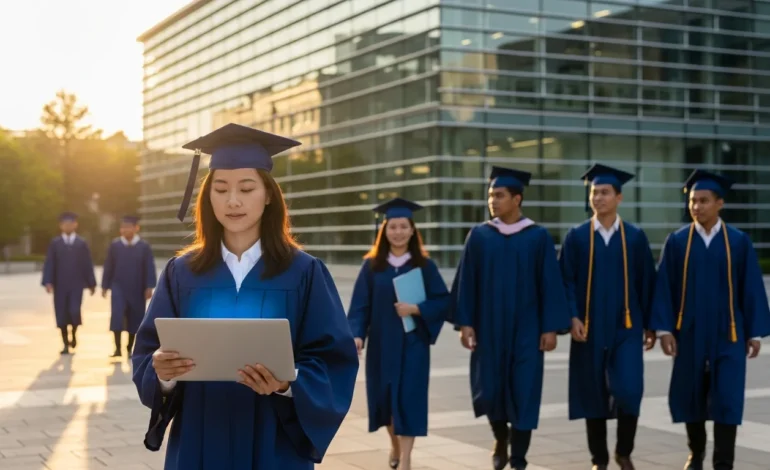
The neural processing unit in a 2026 graduate’s tablet does more than render graphics—it likely drafted their first-year syllabi and optimized their final-year capstone projects. Today, June 16, 2026, marks the peak of a graduation season where the Class of 2026 officially transitions from the classroom to a workforce dominated by automated intelligence.
This cohort is the first to complete a full four-year collegiate cycle in the post-pandemic era. They entered campus just as generative AI exploded into the mainstream, forcing a total overhaul of academic integrity and digital ethics across every department.
The Rise of ‘Actual Intelligence’ and Speaker Backlash
Commencement speakers at major universities are ditching traditional platitudes for hard truths about digital ethics. At several large state ceremonies in the Midwest and West Coast today, the message is clear—adapt or be automated.
Not every message is landing well with a generation wary of job displacement. Former Google CEO Eric Schmidt was recently booed at the University of Arizona after suggesting AI would inevitably shape the world, while Apple co-founder Steve Wozniak drew cheers at Grand Valley State for praising “actual intelligence” over silicon-based models.
Economic Realities and the Green Energy Boom
The employment landscape looks significantly different than it did four years ago. Graduates are finding the most friction-less paths to employment in the green energy and healthcare sectors rather than traditional white-collar software roles.
- Over 4 million students are projected to receive degrees during this academic cycle.
- Wind turbine technicians and solar installers are among the fastest-growing roles, with some sectors seeing 50% growth projections.
- Healthcare remains a massive hiring engine, with nurse practitioners and medical managers in high demand due to an aging population.
Debt Reform and Campus Tensions
Average student loan debt has seen a slight decrease for the first time in years. This shift stems from the 2024-2025 federal reforms, including the “One Big Beautiful Bill Act,” which introduced the Repayment Assistance Plan (RAP) to cap monthly payments at a percentage of income.
Ceremonies have not been entirely celebratory, as protests regarding immigration and foreign policy continue to disrupt events. At UCLA and other major hubs, administrators have maintained hybrid commencement models to manage security while ensuring global families can witness the milestone.
Related Coverage
- Nvidia Market Dominance: AI Chip Giant Eyes $2.6 Trillion Valuation After Record Earnings
- What is an American Degree Transfer Program? A 2026 Comprehensive Guide
Frequently Asked Questions
How did AI change the curriculum for the Class of 2026?
The 2023-2024 AI surge forced universities to move away from traditional take-home essays toward oral exams, proctored assessments, and projects that require the ethical integration of large language models.
What specific federal reforms lowered student debt for this class?
The One Big Beautiful Bill Act (OBBBA) implemented beginning in 2024 established new loan limits and simplified repayment into two primary tracks: a tiered standard plan and the income-driven Repayment Assistance Plan.
Why is June 16 a significant date for the Class of 2026?
This date represents the statistical peak of the 2026 graduation season, coinciding with the largest state university ceremonies in the Midwest and West Coast.
Which sectors are hiring the most 2026 graduates?
Green energy (specifically solar and wind infrastructure) and healthcare lead the market. Data science and cybersecurity also remain strong, though entry-level white-collar roles in traditional tech have seen increased competition due to automation.