AI-Driven Hardware and 16K Displays Transform Las Vegas for InfoComm 2026
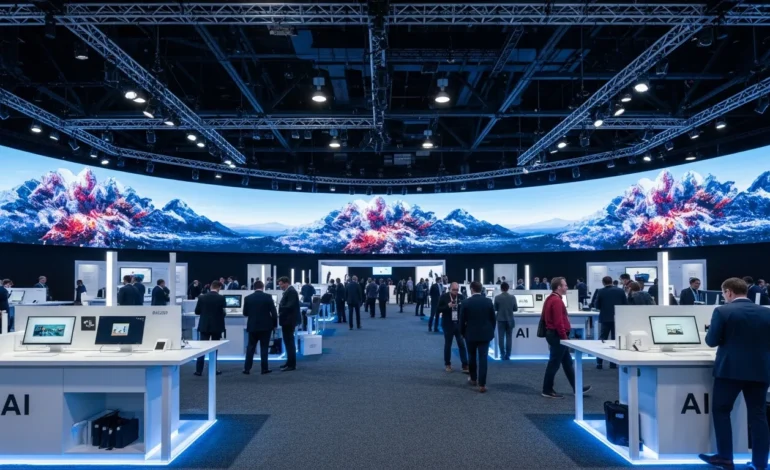
The conference room wall you are looking at isn’t just a screen—it is an intelligent 16K surface that tracks your movements and adjusts audio beams to follow you as you walk. This level of sensory immersion is no longer a prototype, but the standard being set today at the Las Vegas Convention Center.
InfoComm 2026 opened its major exhibits this Monday morning, drawing over 30,000 professionals to the heart of Nevada. Produced by the Audiovisual and Integrated Experience Association (AVIXA), the event serves as the primary stage for the global pro AV industry.
The Intelligence Layer: AI Moves into the Glass
This year’s show features a record-shattering number of AI-integrated hardware displays. Unlike previous years where AI lived in the cloud, these 2026 models process data locally to optimize image quality and spatial audio in real-time.
More than 700 exhibitors are currently filling the convention halls with new product launches. The most visible trend involves 16K resolution displays that offer clarity indistinguishable from reality to the human eye.
- Spatial Audio Systems: New hardware that creates 3D sound environments without the need for complex ceiling wiring.
- Esports Live Pavilion: A dedicated arena showcasing the latest in high-speed gaming broadcast technology.
- 110 Countries: International attendance has officially returned to pre-pandemic levels, signaling a full recovery for the global trade circuit.
Hybrid Work and Immersive Learning
Keynote sessions on Monday are focusing heavily on the evolution of the hybrid workspace. The goal is to eliminate the “distance tax” felt by remote workers through holographic presence and auto-framing camera arrays.
Education is also seeing a massive overhaul through immersive tech. Schools are moving toward persistent virtual classrooms where students can interact with physical objects that have digital overlays.
Sustainability in the Silicon Age
Sustainability has emerged as a primary theme for the 2026 conference track. Manufacturers are debuting displays made from recycled rare-earth metals and systems that draw 40% less power than 2024 models.
This shift toward green AV is driven by new international regulations and corporate ESG mandates. Las Vegas will continue to host the event under a multi-year agreement, cementing the city as the hub for integrated experience innovation.
The move toward “agentic” hardware—devices that interpret their environment rather than just displaying data—suggests that the next generation of offices will be entirely hands-free. We are witnessing the death of the remote control and the birth of the responsive environment.
Related Coverage
- Nvidia Market Dominance: AI Chip Giant Eyes $2.6 Trillion Valuation After Record Earnings
- Silicon Valley Elites Unveil ‘Enhanced Games’ as Doping-Friendly Athletic Competition Debuts in Las Vegas
Frequently Asked Questions
What is the ‘Esports Live’ pavilion at InfoComm 2026?
It is a dedicated space where attendees can watch live gaming tournaments while learning about the specialized audio-visual hardware required to broadcast high-frame-rate competitive gaming to global audiences.
What makes the 2026 16K displays different from previous 8K models?
Beyond the pixel density, the 2026 displays integrate dedicated AI processing units that upscale lower-resolution content in real-time while using spatial sensors to adjust brightness based on viewer proximity.
How does the return of international attendance affect the show?
With visitors from 110 countries, the event has transitioned back into a global marketplace, allowing for cross-border manufacturing deals and the standardization of AV protocols across different continents.
What is the focus of the sustainability track?
The track focuses on circular manufacturing, specifically how companies can reclaim materials from decommissioned LED panels and reduce the carbon footprint of large-scale digital signage installations.