Intercepting Apophis: Global Space Agencies Finalize RAMSES Mission Hardware
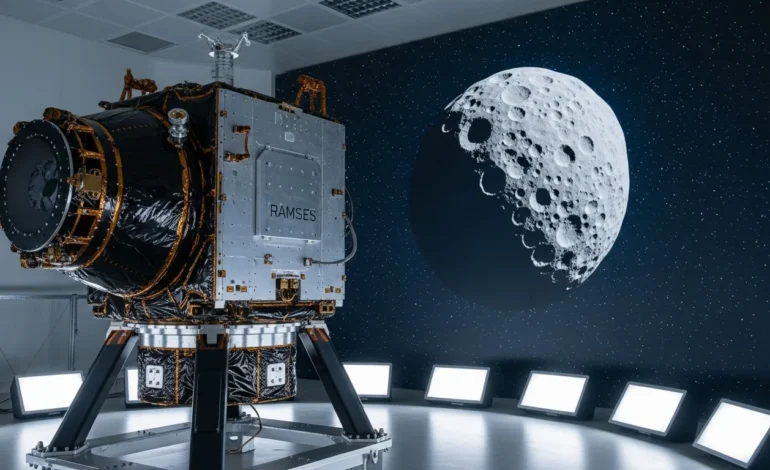
A spacecraft interceptor is currently being designed to shadow a 1,100-foot space rock as it skims Earth’s orbital backyard. This isn’t a sci-fi pitch—it is the engineering reality being finalized this week in Italy.
The RAMSES Mission Workshop kicked off Monday, June 15, 2026, in Padua, bringing together the brightest minds from the European Space Agency (ESA) and JAXA. Their target is Apophis, an asteroid scheduled for an uncomfortably close flyby on April 13, 2029.
Engineering a Planetary Shield
RAMSES stands for Rapid Apophis Mission for Space Safety. The mission architecture focuses on deploying a suite of high-precision sensors to map the asteroid’s internal structure before Earth’s gravity begins to warp it.
Engineers are currently debating payload selections that can withstand the unique tidal forces of the 2029 encounter. NASA is also on the ground in Padua, coordinating technical sessions to ensure global data synchronization.
The Padua Connection and Timing
Padua was selected for its deep-rooted history in astronomical discovery. The workshop runs through June 17, followed immediately by the Apophis T-3 Workshop on June 18-19.
This “T-minus three years” milestone is the final window for hardware lock-in. If the mission doesn’t launch soon, the window to study the asteroid’s physical properties before its orbital shift will close forever.
- Primary Goal: Characterize physical properties and internal density of Apophis.
- Participants: ESA, JAXA, NASA, and international planetary defense coordinators.
- Format: Hybrid sessions allowing remote global engineering teams to contribute in real-time.
The Data Legacy of a Near-Miss
While Apophis is not expected to hit Earth in 2029, the encounter is a rare opportunity to test planetary defense protocols. The mission will provide the first-ever high-resolution look at how a large asteroid reacts to planetary gravitational stress.
The data gathered will serve as a blueprint for future deflection missions. By understanding the asteroid’s internal structural integrity, scientists can better predict how “kinetic impactors” might break apart a threat in the future.
Frequently Asked Questions
How close will Apophis actually get to Earth?
Apophis will pass within 20,000 miles of Earth’s surface. This is closer than the geostationary satellites that provide your GPS and television signals.
Will the RAMSES mission attempt to move the asteroid?
No, RAMSES is an observation and characterization mission. Its job is to gather the data needed to build future defense systems should a real threat emerge.
Can the public see Apophis during the 2029 flyby?
Yes, the asteroid will be visible to the naked eye for about two billion people across Europe, Africa, and parts of Asia. It will look like a fast-moving star crossing the night sky.