Robotic Process Automation in Life Sciences: What It Is and How Pharma Teams Use It
Key takeaway: Robotic process automation in life sciences is the use of software bots to handle repetitive digital tasks in pharmaceutical, biotech, and research organizations — from processing clinical trial data and adverse event reports to regulatory filings and supply chain paperwork. It cuts human error, speeds up compliance-heavy workflows, and can save thousands of staff hours per month, while leaving scientific judgment firmly with humans.
What robotic process automation in life sciences actually means
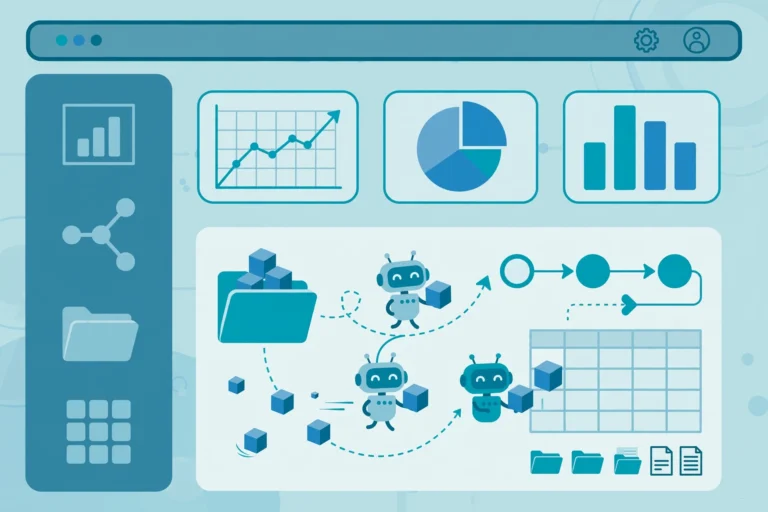
Robotic process automation (RPA) in life sciences means deploying software “bots” that mimic the clicks, data entry, and document handling a human performs on a computer. These bots move data between systems, fill out forms, check regulatory documents, and generate reports — the rule-based, repetitive work that fills back offices at pharmaceutical companies, biotech firms, and contract research organizations.
It is not the same as lab robotics. Physical robots pipette samples and run high-throughput screening; RPA bots live entirely in software, operating across the enterprise systems — clinical trial databases, safety databases, ERP platforms, regulatory submission portals — that keep a drug company running. Precedence Research estimates the pharma and healthcare RPA segment reached $6.115 billion in revenue in 2025, up from $3.823 billion in 2023, making it the fastest-growing segment of the RPA market.
Where pharma teams actually use RPA
The pharmaceutical industry runs on paperwork with strict rules attached: DelveInsight’s use-case survey lists regulatory compliance and reporting, pharmacovigilance (adverse event reporting), clinical trial management, manufacturing and supply chain optimization, and sales and marketing automation as the core RPA areas in pharma. A closer look at the most valuable ones:
- Pharmacovigilance case processing. When a doctor or patient reports a suspected side effect, the report must be entered into safety databases and forwarded to regulators — often under tight deadlines. Industry analyses report that RPA can cut pharmacovigilance case processing time by as much as 45%, with potential multi-million-dollar annual savings for large manufacturers.
- Clinical trial data handling. Bots extract, clean, and transfer clinical data between systems, manage trial master files, and reconcile records across contract research organizations — work that life sciences workflow automation initiatives increasingly target.
- Regulatory compliance and audit trails. RPA logs every action it takes, producing built-in audit trails that help companies demonstrate compliance with Good Manufacturing Practices and data-integrity rules. Because a bot never deviates from its programmed steps, error rates in repetitive compliance tasks drop sharply.
- Supply chain and finance back offices. Order creation, delivery tracking, invoice reconciliation, rebate and chargeback processing, and supplier onboarding are all rule-based processes that RPA handles well.
What the results look like in practice
A widely cited implementation example comes from the Piramal Group, a global pharma conglomerate: after deploying UiPath’s RPA platform, the company automated 60 business processes within the first two years and saved roughly 5,760 staff hours per month. That is the pattern across the industry: the return comes not from one magic process, but from stacking dozens of medium-sized automations.
Industry estimates put around 45% of pharma front- and back-office jobs as automatable in whole or part, which explains why life sciences is considered unusually well-positioned for RPA: few other industries combine this volume of repetitive digital work with such heavy documentation requirements.
Analysis: where RPA pays off — and where it does not
The following is analysis, not a verified statistic. RPA earns its keep fastest in processes that are high-volume, rule-based, and span multiple systems that do not talk to each other — legacy systems without APIs are exactly where bots shine, since they work through the same user interfaces humans use. In practice, that makes regulatory reporting, safety case intake, and order-to-cash workflows the best first targets.
It is a poor fit for judgment-heavy work: signal detection in pharmacovigilance still needs human medical reviewers, and process changes still need validated change control. Smart teams pair RPA with AI agents that handle less structured decisions — the bot does the data moving, the AI or the human does the thinking. Also relevant: manufacturing automation on the shop floor solves a different problem (physical processes), so budget for the two separately.
Frequently asked questions
What is robotic process automation in life sciences?
It is the use of software bots to automate repetitive, rule-based digital tasks inside pharmaceutical, biotech, and research organizations. Common targets include clinical trial data management, adverse event reporting, regulatory submissions, and supply chain paperwork — tasks where speed and error-free documentation matter.
How is RPA used in pharma?
The five main uses are pharmacovigilance case processing, clinical trial management, regulatory compliance and reporting, manufacturing and supply chain optimization, and sales and marketing automation. Pharma companies report the fastest returns from high-volume, rule-based processes that span multiple disconnected systems.
Is RPA compliant with pharmaceutical regulations?
Yes, when implemented correctly. RPA bots execute steps exactly as programmed and log every action, which creates the audit trails regulators expect. However, the bots themselves must be validated like any computerized system used in a regulated process, and changes require controlled change management.
What is the ROI of RPA in pharmaceuticals?
Published examples show substantial returns: one pharma conglomerate automated 60 processes and saved roughly 5,760 staff hours per month within two years. Pharmacovigilance case processing time can drop by up to 45%. Returns accumulate as companies stack dozens of automated processes rather than from any single one.
Sources
- Precedence Research — Robotic Process Automation Market Size, by industry, 2023–2025
- DelveInsight — Top Use Cases of Robotic Process Automation in the Healthcare Segment
- Ideas2IT — RPA in Pharmaceutical Industry 2026: Latest Trends & Applications
- GGS IT Consulting — RPA Application in the Pharmaceutical Industry (Piramal Group case)
- PharmaShots — Robotic Process Automation in Pharmaceutical Industry (RPA in Pharma)