The Leading Thermal and Infrared Metrology Companies in the USA: A 2026 Industry Guide
The Strategic Importance of Thermal Metrology in 2026
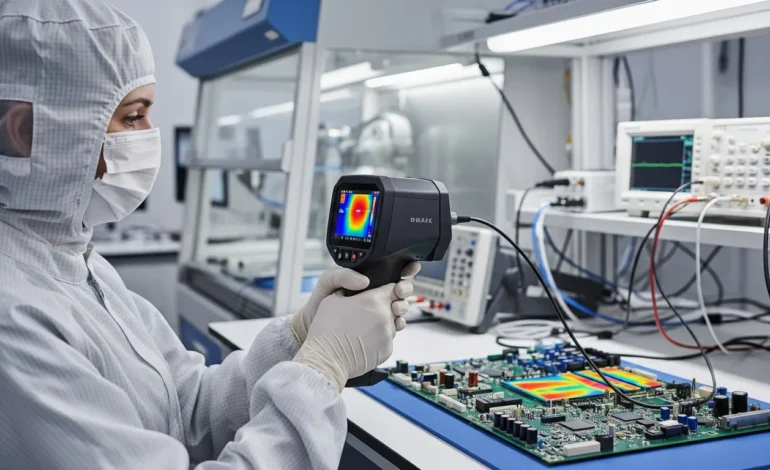
In May 2026, the American industrial landscape is undergoing a profound transformation driven by the resurgence of domestic semiconductor fabrication and the rapid expansion of high-density data centers. Thermal and infrared metrology—the science of measuring heat and infrared radiation with extreme precision—has moved from a niche engineering requirement to a critical pillar of national infrastructure. As Nvidia’s market dominance continues to push the boundaries of AI chip heat dissipation, the demand for sophisticated thermal measurement tools has reached an all-time high.
American companies are leading the charge in developing sensors that can detect temperature fluctuations at the sub-micron level. This precision is vital for preventing catastrophic failures in everything from power grids to the latest electric vehicle batteries. Furthermore, the 2026 regulatory environment emphasizes energy efficiency and carbon footprint reduction, making infrared thermography an essential tool for building inspections and industrial waste-heat recovery. For American businesses, choosing the right metrology partner is no longer just about compliance; it is about maintaining a competitive edge in a high-tech global economy.
The Titans of Infrared: Teledyne FLIR and Fluke Corporation
When discussing thermal metrology in the United States, Teledyne FLIR remains the undisputed heavyweight. Headquartered in Wilsonville, Oregon, Teledyne FLIR provides the foundational technology for both commercial and defense sectors. In 2026, their focus has shifted toward “intelligent thermal sensing,” where cameras are equipped with edge-computing AI to identify thermal anomalies without human intervention. Their Boson and Lepton micro-camera cores are now integrated into thousands of third-party American products, from firefighting drones to smartphone attachments.
On the industrial and maintenance side, Fluke Corporation (a subsidiary of Fortive) continues to dominate the handheld and benchtop metrology market. Based in Everett, Washington, Fluke has spent the last two years updating its entire line of thermal imagers to support the “Industrial Metaverse.” Their tools now allow technicians to overlay thermal data onto augmented reality (AR) headsets, enabling real-time troubleshooting of complex electrical systems. Fluke’s commitment to NIST-traceable calibration ensures that their measurements hold up under the strictest legal and safety audits required by US law.
Defense and Aerospace Innovators: L3Harris and Leonardo DRS
The defense sector requires a level of precision and durability that exceeds standard commercial specs. L3Harris Technologies, based in Melbourne, Florida, is a primary provider of advanced infrared systems for the US military and aerospace agencies. Their metrology focus is on long-range multispectral imaging, which allows for the detection of heat signatures through smoke, fog, and even certain types of camouflage. As geopolitical tensions rise, the US government has prioritized the domestic production of these sensors to ensure supply chain security.
Leonardo DRS, another major player with significant US operations, specializes in uncooled infrared detectors. Their technology is pivotal for the latest generation of night-vision goggles and vehicle-mounted thermal sights. These companies are currently navigating a complex trade environment where trade policy shifts and tariffs have incentivized the “onshoring” of sensor component manufacturing. This shift has led to a surge in specialized metrology labs across the Rust Belt and the Silicon Prairie, focusing on the verification of American-made infrared focal plane arrays.
Specialized Calibration and Laboratory Services
Beyond the hardware manufacturers, the US ecosystem relies on high-end calibration and metrology service providers. Companies like Transcat and Keysight Technologies provide the essential service of ensuring that thermal equipment remains accurate over time. Metrology is not a “set it and forget it” field; thermal sensors drift, and in industries like aerospace or medical device manufacturing, a drift of even 0.5 degrees Celsius can lead to catastrophic failure or regulatory fines.
- NIST Traceability: Most top-tier US metrology companies provide calibration that is traceable to the National Institute of Standards and Technology (NIST), ensuring a unified standard of measurement across the country.
- On-Site Services: For massive industrial plants, companies like Mikron (a LumaSense brand) offer on-site infrared calibration, reducing downtime for critical infrastructure.
- Custom Sensor Development: Smaller firms like Seek Thermal are carving out a niche by providing affordable, high-resolution thermal cores for startups and specialized research applications.
The Future of Thermal Metrology: AI and Hyperspectral Imaging
Looking ahead toward the end of 2026, the industry is moving toward hyperspectral infrared imaging. This technology doesn’t just measure temperature; it identifies the chemical composition of the objects being viewed based on their infrared emission spectra. This has massive implications for the American agricultural sector, where thermal metrology is being used to detect crop diseases and water stress before they are visible to the naked eye. As AI continues to integrate with these hardware solutions, the role of the metrologist is evolving from a data collector to a data strategist, interpreting complex thermal patterns to predict future outcomes.
Frequently Asked Questions
What is the difference between thermal imaging and infrared metrology?
Thermal imaging is the process of creating a visual representation of temperature differences, often used for qualitative assessments like finding a leak. Infrared metrology is the quantitative science of measuring those temperatures with high accuracy and precision, typically involving calibrated instruments that provide specific numerical data points traceable to national standards like NIST. Metrology focuses on the “how much” rather than just the “where.”
Are there ITAR restrictions on buying high-end thermal cameras in the USA?
Yes, many high-performance thermal and infrared sensors are subject to International Traffic in Arms Regulations (ITAR) and Export Administration Regulations (EAR). Cameras with high frame rates (typically above 9Hz) or specific resolution thresholds are considered dual-use technology. This means they require specific licenses for export and, in some cases, strict internal controls even within US-based companies to ensure the technology does not reach unauthorized foreign nationals.
How often should industrial thermal sensors be calibrated?
Most industry experts and manufacturers recommend a calibration interval of 12 months. However, in high-stakes environments like semiconductor cleanrooms or aerospace testing facilities, calibration may occur every six months. Factors such as environmental exposure, frequency of use, and the required precision of the data will dictate the specific schedule. Regular calibration ensures that the sensor’s “drift” is accounted for, maintaining the integrity of the metrology data.
Can I use a smartphone thermal attachment for professional metrology?
While smartphone attachments from companies like Seek Thermal or FLIR are excellent for basic inspections and DIY projects, they generally lack the precision and calibration stability required for professional metrology. Professional-grade tools have larger sensors, better thermal sensitivity (NETD), and more robust internal calibration mechanisms. For legal compliance, safety audits, or precision engineering, a dedicated, NIST-traceable metrology instrument is almost always required.
Which US state is the hub for infrared technology development?
While several states have significant clusters, California and Oregon are the primary hubs. Southern California hosts many aerospace-focused infrared firms due to the historical presence of the defense industry. Oregon, specifically the “Silicon Forest” area near Portland, is home to Teledyne FLIR and several specialized sensor startups. Additionally, Texas and Florida have growing sectors focused on the integration of thermal sensors into autonomous systems and defense platforms.