Crumbling Labs and a Race Against Time: Rollins Unveils $125M Rescue for Aging Ag Research Hubs
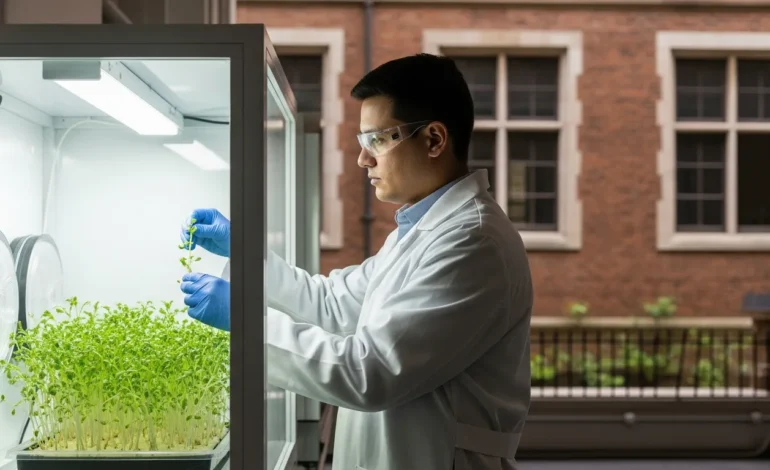
For the researchers at America’s land-grant universities, the daily reality of innovation isn’t a sleek, high-tech glass box—it is often a bucket catching drips from a 50-year-old ceiling. Agriculture Secretary Brooke L. Rollins addressed this structural decay Tuesday, announcing a $125 million annual investment to modernize the nation’s crumbling agricultural research infrastructure.
The funding, provided through the Research Facilities Act Program, aims to reverse decades of structural neglect that officials warn has left the American food supply vulnerable. Rollins unveiled the initiative during a USDA roundtable with university leaders, alongside Education Secretary Linda McMahon, who emphasized the human cost of training the next generation in facilities past their prime.
This capital injection is a direct result of President Trump’s Working Families Tax Cuts initiative. The administration is positioning the move as a critical firewall against global supply chain volatility and domestic food shortages.
NIFA Director Dr. Jaye L. Hamby noted that the funds are specifically targeted at a massive backlog of deferred maintenance. Many university laboratories currently in use lack the specialized power grids or climate control systems required for modern gene-editing and climate-resilience studies.
A Foundation in Structural Decay
The USDA’s assessment reveals a grim picture of facilities that have transitioned from assets to liabilities. These aging structures are no longer just an eyesore; they represent a bottleneck that prevents critical discoveries from reaching farmers and ranchers in the marketplace.
The investment is also expected to bolster programs like the Gus Schumacher Nutrition Incentive Program by improving the labs where nutrition science is conducted. By modernizing these hubs, the government hopes to accelerate breakthroughs that could lower food costs for struggling families.
The Deadline for National Security
Universities have a narrow window to claim their share of the FY 2026 funding, with a hard application deadline set for July 17, 2026. The program offers awards ranging from $100,000 for planning to $30,000 for large-scale research complexes.
This push for agricultural dominance comes as global stagflation alarms shadow the American economy, making domestic self-sufficiency more paramount than ever. The “infrastructure gap” in farming research represents a quiet but dangerous erosion of the nation’s competitive edge against international rivals.
Just as U.S. weapons stockpiles face critical lows, the decay of agricultural labs signals a broader crisis in national readiness. For the USDA, fixing a roof today is the only way to ensure there is a harvest tomorrow.
Frequently Asked Questions
What are the specific funding levels for university projects?
The program is structured into four levels: Level I for planning ($100,000–$200,000), Level II for small facility upgrades ($250,000–$2 million), Level III for mid-scale construction ($2 million–$10 million), and Level IV for large-scale research complexes ($10 million–$30 million).
Which institutions are eligible to apply for these grants?
Eligibility is restricted to institutions that receive funds under capacity and infrastructure programs, primarily focusing on 1862, 1890, and 1994 Land-grant Universities, as well as State Agricultural Experiment Stations.
Is there a matching fund requirement for this program?
Yes, the Research Facilities Act Program requires a cash match to ensure local investment and stewardship of taxpayer resources, though specific waiver conditions may apply for certain institutions.
When will the funding be awarded to the selected universities?
Following the July 17, 2026, application deadline, the USDA National Institute of Food and Agriculture (NIFA) will conduct a merit-based review process, with award announcements expected later in the fiscal year.